Amarnath Yatra Concludes With Sacred Cave Rituals Amid Weather Challenges

This year’s 57 day yatra, which began on July 3 along both the traditional Pahalgam route: Reports
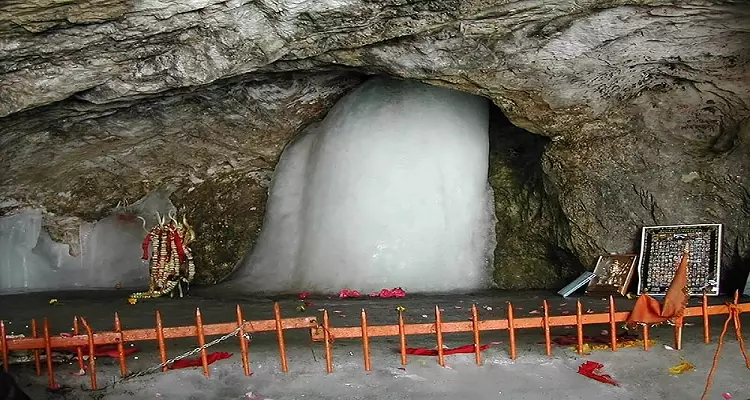
SRINAGAR: The annual Amarnath Yatra drew to a solemn close on Friday as the Chhari Mubarak—the revered holy mace of Lord Shiva—entered the 3,888‑meter cave shrine before sunrise, marking the spiritual culmination of the pilgrimage.
In the dim, icy silence of the Himalayan cavern, traditional Vedic rituals, puja, and the ceremonial installation of the mace were performed at the very spot where Lord Shiva is believed to have narrated the Amar Katha, the secret of immortality, to goddess Parvati. The atmosphere reverberated with hymns as Mahant Deependra Giri, custodian of the Chhari Mubarak, led dozens of sadhus and devotees through the ancient rites that have defined this tradition for centuries.
This year’s 57‑day yatra, which began on July 3 along both the traditional Pahalgam route and the shorter Baltal track, faced repeated weather‑related disruptions. Persistent rainfall and track damage forced suspension of the general pilgrimage from August 9, and although the Baltal route reopened briefly, the Pahalgam axis remained closed for regular pilgrims due to ongoing restoration work. Despite these obstacles, about 4.8 lakh pilgrims had visited the cave shrine by August 8, many braving difficult terrain and unpredictable weather to offer prayers at one of Hinduism’s most sacred sites.
The Baltal route, preferred by most pilgrims for its same‑day return convenience to the base camp 96 km north of Srinagar, remained the primary access point during the latter half of the yatra. In contrast, the 34‑km Chandanwari–Amarnath track via Pahalgam—traditionally a two‑night journey with halts at Sheshnag and Panchtarni—saw significantly reduced footfall due to closures.
Pilgrim numbers had already begun declining sharply in late July, affected by disruptions along the Jammu–Srinagar National Highway (NH44) and a series of weather hazards. Officials and pilgrimage managers also noted that the premature melting of the naturally formed ice Shivling inside the cave—a phenomenon increasingly linked to rising temperatures—may have further contributed to the reduced turnout.
The natural ice‑lingam melted dramatically this year, losing over 90 per cent of its form within the first week of the yatra. Warmer temperatures and the sheer volume of early‑season pilgrims accelerated the process, leaving many devotees disappointed.
Yet countless others continued their journey, believing the divine presence to be independent of the physical ice form. Mahant Deependra Giri echoed this sentiment, remarking that even after hundreds of thousands of visitors, “the divine form of God was still present there. These are natural occurrences that remain entirely beyond human control.”
Authorities had initially expected the 2026 yatra to surpass previous records, but the final tally fell short. More than 4.14 lakh pilgrims visited the shrine in 2025 , compared with over 5.12 lakh pilgrims in 2024, the highest in twelve years. In 2012, a total of 621,145 pilgrims—the only year on record when the Amarnath Yatra crossed the six‑lakh mark—offered prayers at the revered cave shrine, nestled high in the Kashmir Himalayas at an altitude of 3,888 metres (12,756 feet).
A spokesman for the Shri Amarnathji Shrine Board (SASB) confirmed that the pilgrimage concluded with the traditional final rituals and installation ceremony amid Vedic chanting, accompanied by prayers for sustained peace, harmony, progress, and prosperity in Jammu and Kashmir and the rest of the country. The Shravan Purnima, coinciding with Raksha Bandhan, witnessed serene religious fervour as the Chhari Mubarak arrived at the cave after a night halt at Panchtarni—the third and final stop on its ascent.
Mahant Giri emphasised peace, unity, and communal harmony during the rituals. He noted that people of different faiths have historically supported the yatra and praised J&K’s centuries‑old ethos of brotherhood. He and the accompanying sadhus offered prayers for the well‑being of the nation, with special focus on lasting peace and prosperity in the region.
Following the cave ceremonies, the procession began its descent toward Panchtarni for the night halt and will proceed via Sheshnag and Chandanwari to Pahalgam on Saturday.
The formal visarjan and concluding rituals are scheduled for August 30 along the Lidder River in Pahalgam. Afterward, the Chhari Mubarak will return to its abode at Dashnami Akhara in Srinagar in the first week of September, marking the final closure of this year’s pilgrimage.
Officials reiterated that most pilgrims prefer visiting in the initial weeks of the yatra, when the ice‑lingam is typically at its full height and glory.
However, this year’s unusually rapid melting—beginning just days after the yatra commenced—altered the experience for many. Even so, countless devotees expressed profound fulfillment simply in reaching the sacred cave, describing the journey itself as a source of inner peace and spiritual completeness.
The Chhari Mubarak began its final ascent on August 2, carrying with its Mahant Giri’s enduring message of unity and harmony—an appeal that has long been woven into the spiritual fabric of the Amarnath Yatra.