Two Scares in Two Days: Pilots Fully Trained, Say Experts

“This could have ended worse because the aircraft was at its weakest point, just after touchdown, hurtling down a wet runway with limited traction," said Capt. Sai Krishna Kumar, a deputy chief flying instructor.
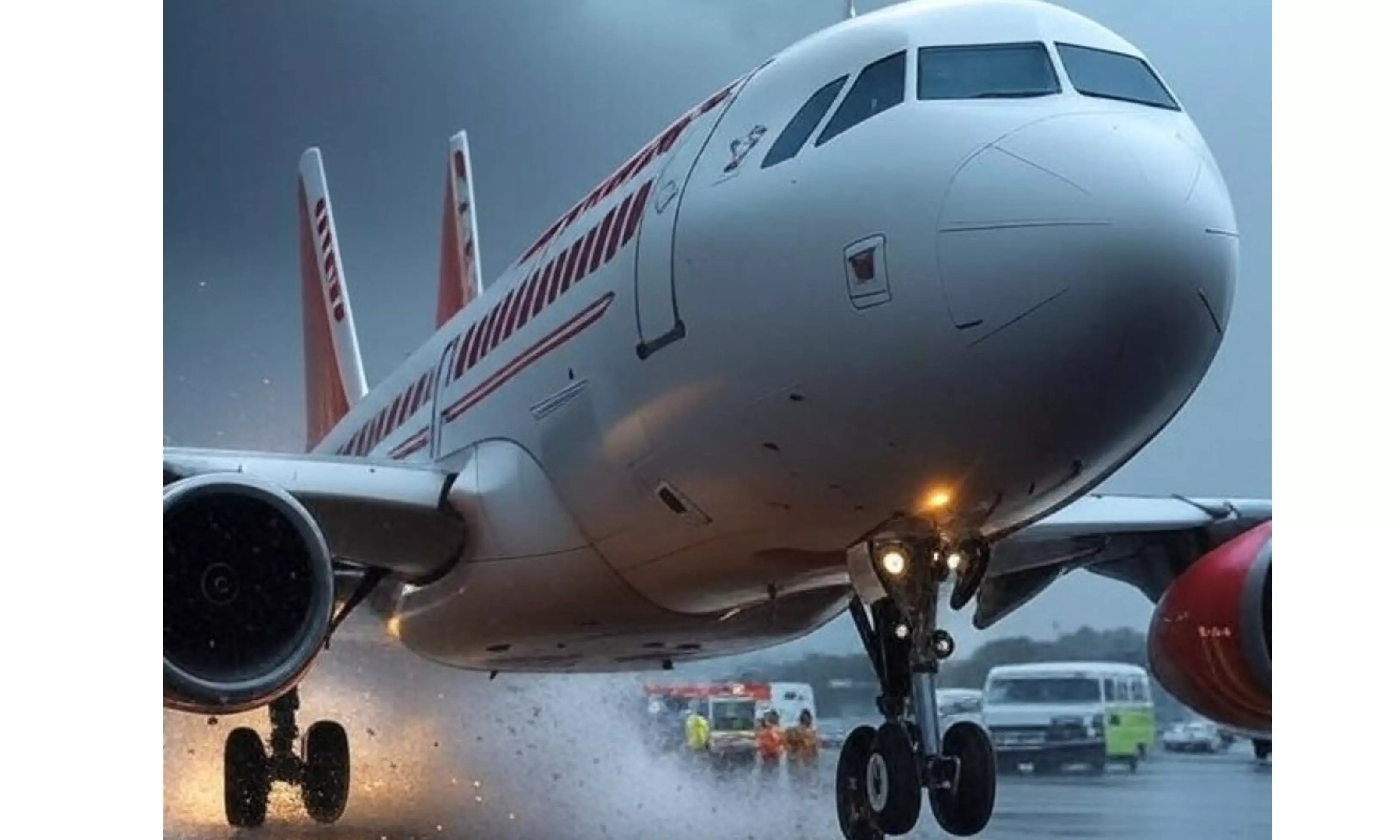
Hyderabad: The Air India aircraft that skidded off the runway in Mumbai during heavy rain could have faced a much worse situation, said aviation experts on Monday, as they tried to explain the two major aircraft-related incidents that occurred over two days, the other being the engine fire on a Delta Airlines Boeing 767 aircraft in the US.
“When aircraft land in rain, especially on wet runways the friction between the tyres and the tarmac reduces. In some cases the plane may aquaplane, which means the tyres lose grip because of a thin layer of water between the rubber and the runway, this reduces braking efficiency and increases the stopping distance required especially if the aircraft is carrying heavy payload,” explained Capt. Sai Krishna Kumar, a deputy chief flying instructor.
“This could have ended worse because the aircraft was at its weakest point, just after touchdown, hurtling down a wet runway with limited traction.”
He said that in such conditions, pilots are trained to touch down at the first possible point on the runway to maximise stopping space. “If this isn’t possible, the safer option is to perform a go-around, making another attempt or diverting to another airport,” added Sai Krishna.
Aviation experts also explained that the wind direction plays a key role, “What starts as a headwind (blowing against the aircraft’s front) can suddenly shift to a tailwind (towards the aircraft’s tail) due to turbulent weather, as often happens during monsoon. This can reduce lift and stability during landing,” said an aviation expert.
A retired senior ATC official said that Mumbai, with its long-standing record of heavy monsoon rain was especially prone to such challenges. “Pilots are fully trained during their early phase to handle poor visibility, crosswinds, bad weather and even single-engine landings,” he said.
A flight instructor who wished to remain anonymous said that pilots get details about the weather and runway conditions through Metar (Meteorological Terminal Aviation Routine Weather Report ) before landing. “In case the pilots aren’t fully confident, they can circle in the air or divert to another airport. A firmer landing, not a soft one, can also help by cutting through water on the runway and improving grip. That might have helped prevent what happened,” he said.
“With the growing number of flights and weather unpredictability, such incidents are rare but may increase unless carefully managed, but it’s always better to delay or divert than to risk an unsafe landing,” he added.
Meanwhile, pointing to the incident in the US where an engine of the Delta Airlines Boeing 767 caught fire mid-air, aviation experts said such incidents are serious emergencies. “Most engine fires are caused by bird strikes or engine flame-outs during take-off when fuel is flowing but not enough air is available for combustion. Sometimes it can also happen due to a break in the engine or a foreign object entering it,” said Suman Saurabh, a flight instructor.
“Modern aircraft have multiple fire detection systems in the engine, cockpit, cargo hold, lavatories and cabin. These use heat, smoke or flame sensors to alert the crew. Depending on where the fire is detected, pilots take action accordingly like shutting down the engine, activating fire extinguishers or declaring an emergency, In all these cases aircraft systems detect the problem immediately,” he added.
“Although mid-air fires are rare, they are dangerous not just because of the flames but because of the systems they can affect. Pilots have to make decisions in seconds. Unlike mechanical issues that develop gradually, a fire can spread quickly, putting everyone onboard at risk, electrical short circuits, fuel leaks and overheating parts like wires or electrical components can also lead to a fire,” said Captain Arun Chauhan, a commercial pilot.
