AAP’s J&K Chief Mehraj Malik Walks Free, Vows to Continue ‘People‑Centric Struggle’

He urged young people to enter public life, arguing that only political participation can reshape society.
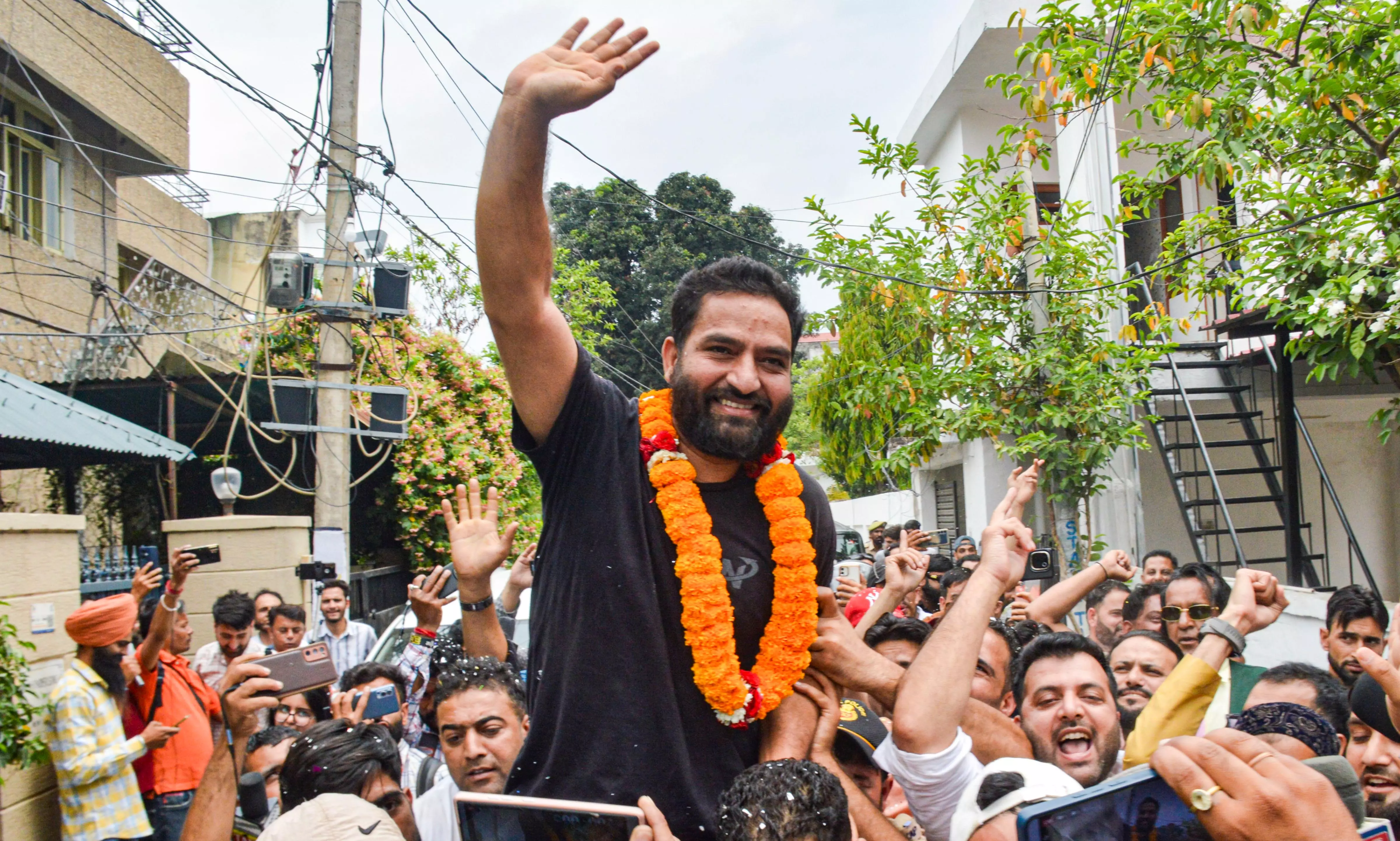
Srinagar: After eight months behind bars, Aam Aadmi Party (AAP)’s Jammu and Kashmir chief and legislator Mehraj Malikstepped out of Kathua jail on Tuesday, a day after the High Court of Jammu & Kashmir and Ladakh quashed his detention under the Public Safety Act (PSA).
Emerging from custody, he lamented the growing overlap between politics and legal action but insisted that meaningful change is impossible without political engagement. Malik said his struggle is rooted in ideas and public welfare, not political posturing, and reaffirmed that he would continue raising people’s issues with the same conviction.
He urged young people to enter public life, arguing that only political participation can reshape society. Malik stressed that his commitment to humanity guides his work, calling on citizens to rise above religious divisions and judge governance by performance rather than identity.
The AAP leader apologised to supporters for the hardships they faced during his imprisonment, saying that struggle is an unavoidable part of reform. He maintained that time would reveal the truth and that democracy allows people to judge right and wrong for themselves.
Reflecting on his jail term, Malik said he had hoped for policy‑driven governance but found little progress in key sectors such as education and public institutions. He criticised the shrinking political space in J&K, claiming that those who speak against the establishment face obstacles. Yet he insisted that politics remains the only path to real change, noting that major global shifts are shaped by political decisions. He also appealed to educated and capable individuals to step forward, arguing that ordinary people entering politics are often sidelined due to entrenched mindsets.
Malik’s detention last September had marked a rare moment in J&K’s political landscape, as he became the first sitting MLA to be booked under the PSA. The order, issued by the Doda District Magistrate, cited a series of FIRs and alleged threats to public order. A confrontation between Malik and the Doda Deputy Commissioner Harvinder Singh over flood relief and administrative issues had escalated tensions, leading to protests by government employees and his subsequent arrest. His detention drew criticism from several political parties, whose leaders described the move as politically motivated.
While setting aside Malik’s detention under the PSA, the High Court delivered a sharp rebuke to the administration, declaring that “shortcut justice” has no place in law. The court held that the authorities had misused the PSA, treating it as a convenient tool to bypass the ordinary criminal justice system rather than pursuing prosecution through established legal processes.
In an 88‑page judgment, Justice Muhammad Yousuf Wani observed that invoking the PSA against Malik—rather than allowing the regular criminal law to take its course—amounted to an unjustified and unconstitutional exercise of power. The court noted that such use of preventive detention violated the fundamental rights of the detenu, stressing that the PSA cannot be deployed as a substitute for due process or as a mechanism to sidestep the evidentiary standards required in criminal proceedings.
Throughout his custody, Malik maintained that the charges were exaggerated and aimed at derailing his reform efforts. His legal team argued that the PSA was invoked without adequate grounds, and the High Court ultimately agreed, ruling that the detention did not withstand judicial scrutiny. Now released, Malik says his purpose remains unchanged. He plans to resume public outreach soon, emphasising that governance must be rooted in empathy and that unemployment, not just drug abuse, is the real crisis facing the youth. End it
