70 Bastar Security Camps To Become Public Service Hubs, Announces Amit Shah
The move heralds the launch of the Bastar 2.0 roadmap where security camps, established in the remote areas of Bastar, are being ‘repurposed’ for public welfare utility works to reach development to the ‘last village’, thus denying any space for Maoism to stage a comeback to the tribal region.
Raipur: In his first visit to post-Naxalism Bastar in Chhattisgarh, Union home minister Amit Shah on Monday unveiled the first security camp-turned public service centre at Netanar near Jagdalpur, headquarters of Bastar.
The move heralds the launch of the Bastar 2.0 roadmap where security camps, established in the remote areas of Bastar, are being ‘repurposed’ for public welfare utility works to reach development to the ‘last village’, thus denying any space for Maoism to stage a comeback to the tribal region.
Bastar was declared Naxal-free region on March 31.
“Seventy of the 196 security camps established in Bastar to combat Naxalism will be developed into ‘seva kendras’ (public service centres) over the next one-and-a-half years”, Mr. Shah said.
The Union minister declared that the state government, sitting in Raipur, will be brought to the doorsteps of people in Bastar in the coming one and half years.
He described the inauguration of the ‘seva kendra’ at Netanar, the birthplace of the tribal freedom fighter Gundadhur, as a revolutionary event.
The centre has been named after the tribal freedom fighter.
The CRPF’s 80th battalion established a camp at Netanar in 2013 to combat Naxalism.
Maoists had once unleashed a reign of terror in Netanar by killing six jawans and destroying schools and hospitals in the area, he said and added that the area is now completely free from Naxal influence.
He said that there was a time when Maoists terrorized people by killing innocent tribals and stealing the childhood of the tribal kids by drafting them into their cadre.
The decades-long Leftwing Extremism had pushed Bastar to backwardness by halting all developmental works in the last 50 years. The loss will be made up in the coming four-five years by speeding up developmental works in the region, he said.
Mr. Shah said that the National Institute of Design (NID) has been asked to prepare a model for these public service centres which will not only provide all kinds of government services but also for skilling the locals for self-employment.
According to officials, the camps of the Central Para Military Forces in Bastar are being developed into platforms for public services by the state government in coordination with the Union home ministry.
These centres will act like a common service centre for people to provide services such as Aadhar updates, banking facilities, applications for income, caste and domicile certificates, ration card services, Ayusman Bharat cards, e-Shram registration, electricity bill payment, online applications, railway and bus ticket booking.
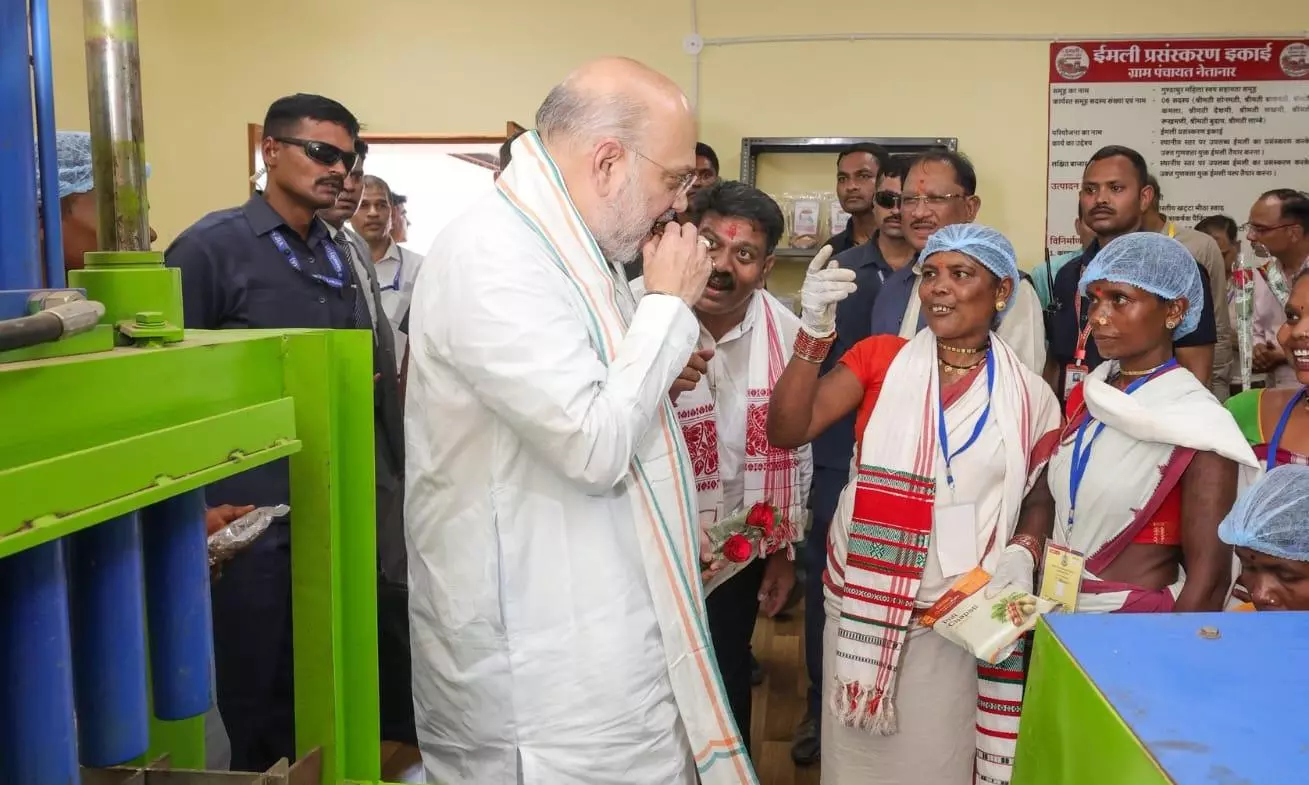
The Union minister interacted with the local tribal women to know about their livelihoods and tasted the tamarind grown in Bastar, exclaiming that it is sweet, not sour.
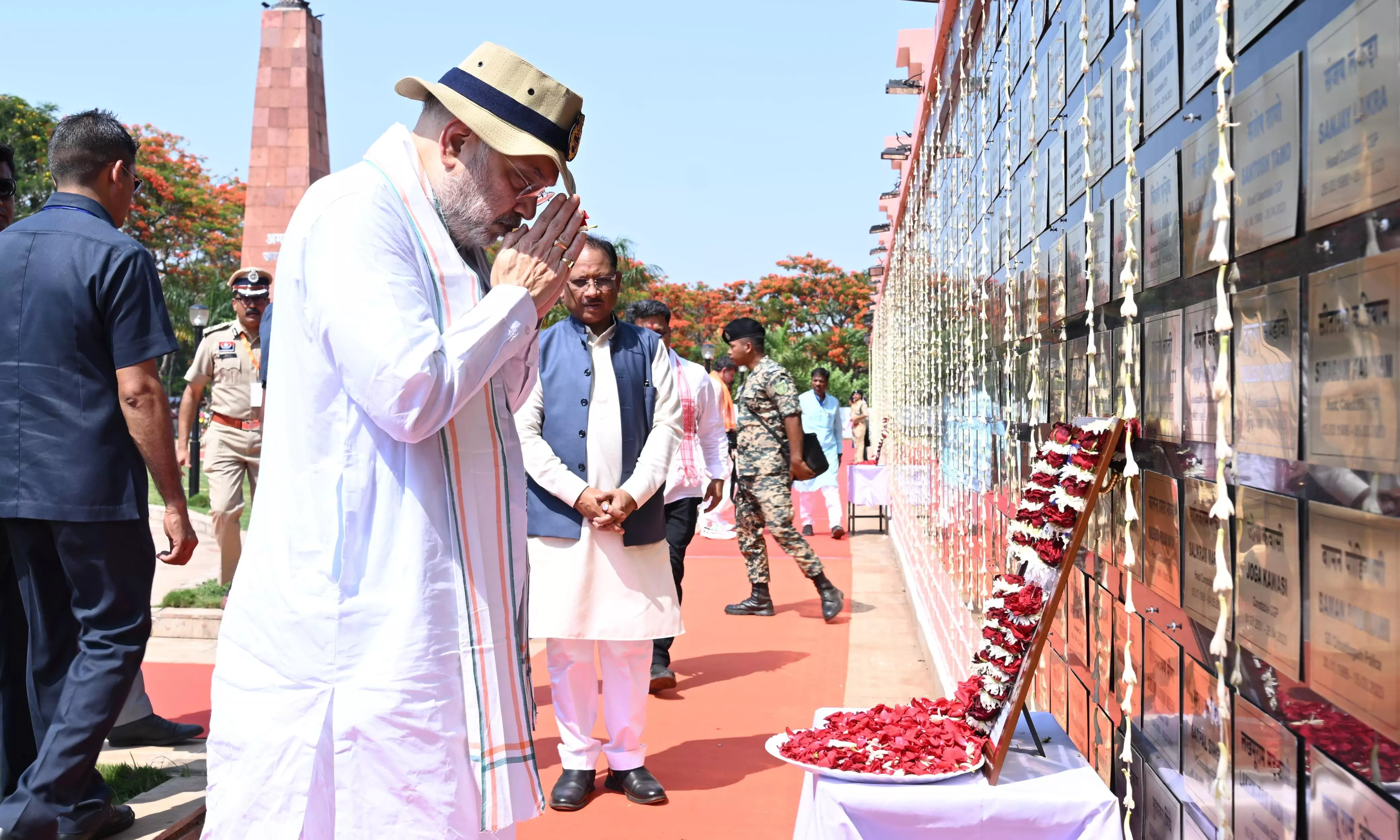
Earlier, he visited the ‘Amar Vatika’ in Jagdalpur and paid tribute to the jawans martyred in the fight against Naxalism.
He also interacted with the family members of the slain jawans on the occasion.
Mr. Shah who arrived in Raipur on Sunday night on his three-day tour to Chhattisgarh on Monday morning inaugurated the hi-tech Dial 112 service in the state by flagging off 400 Dial 112 vehicles.
He is scheduled to review the security situation in the post-Naxalism period in Bastar and also developmental works being carried out in the region at a high-level meeting during his stay in Bastar.
He is scheduled to chair the 26th meeting of the Central Zonal Council comprising the states of Chhattisgarh, Madhya Pradesh, Uttar Pradesh and Uttarakhand on Tuesday before winding up his three-day visit to Chhattisgarh on the same day.
