Pune Metro reflects how modern cities are being shaped for a "Viksit Bharat", Mr Modi observed
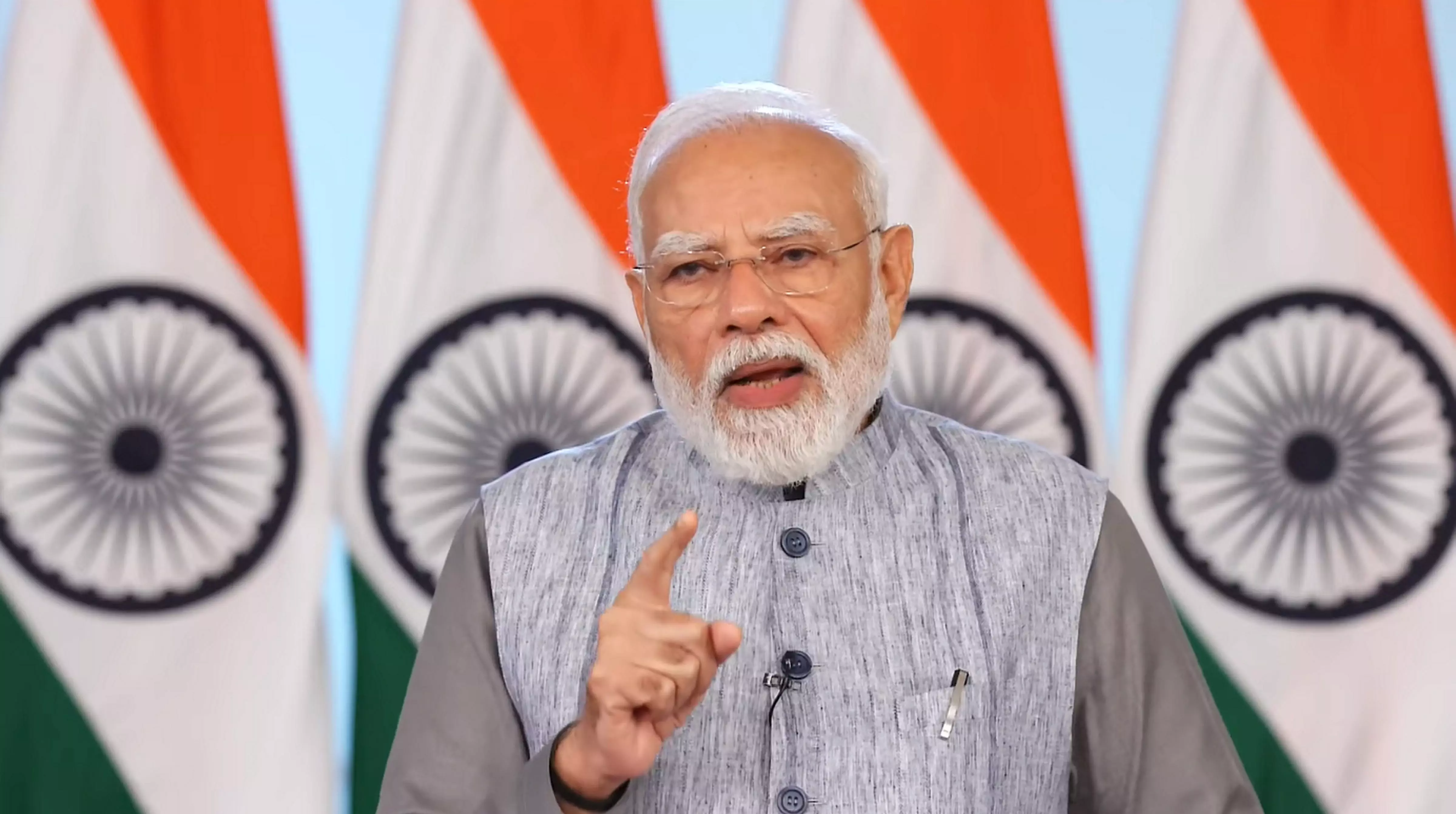
PM Modi inaugurates, lays foundation stone of Pune Metro Projects @NarendraModi Y/T
NEW DELHI: Underscoring that India is defeating poverty on the ground, Prime Minister Narendra Modi on Tuesday said around 50 crore people had overcome extreme poverty in India in the last 10-12 years of NDA rule. The Prime Minister said that India stands as a nation that is not only the fastest-growing economy but also the fastest poverty reducer.
Speaking after virtually inaugurating and laying the foundation stone for Pune Metro projects worth around `21,800 crores, Mr Modi pointed out that India's operational Metro network has increased nearly five-fold. He said that the metro network, which covered 248 km before 2014, now covers 1,200 km and stressed that better urban infrastructure will accelerate the country's economic growth.
Referring to two major achievements driving global discussion about India, the Prime Minister, citing the latest World Bank report, said that the nation has maintained the world's fastest growth rate amid difficult international conditions while lifting 50-crore citizens out of extreme poverty within just 10 to 12 years.
“Earlier, the fight against poverty was only in slogans; today India is defeating poverty on the ground,” Mr Modi said.
Observing that India's twin milestones as the fastest-growing economy and the fastest poverty reducer are interlinked, Mr Modi explained that a growing economy and expanding Budget enable higher public investment, while money once lost to scams and leakages now reaches beneficiaries directly.
The Prime Minister said that treasury investments in roads, rail, airports, Metros, electricity, water, and gas pipelines simultaneously improve living standards and generate employment. “Both these accomplishments are connected to each other,” he noted.
Recalling the launch of the "Garib Kalyan Mela" initiative during his tenure as Gujarat chief minister, Mr Modi said that the scheme focused on delivering welfare schemes directly to beneficiaries and encouraging them to overcome poverty. Stating that the mission initiated back then has continued uninterrupted as true good governance defined by the 'power to empower', he emphasised that this transformation is the result of years of deliberate and planned efforts rather than a sudden occurrence.
“Therefore, 50-crore Indians have defeated poverty,” he noted.
Explaining that poverty reduction benefits the wider nation beyond the families escaping deprivation, the Prime Minister pointed out that it revitalises the national economy and creates a new middle class whose purchasing power drives market demand and opens new possibilities from shops to factories. “Meaning, decreasing poverty in India is taking the economy of India to a new height,” he observed.
Claiming that the expansion of the Pune Metro reflects how modern cities are being shaped for a "Viksit Bharat", Mr Modi observed that beyond traditional markers like industries, cuisine, or local produce, urban centres are now judged by their competitiveness and "Ease of Living", both of which are enhanced by Metro networks that save commuting time and offer greater convenience.
The Prime Minister pointed out that saving a city's time boosts urban productivity, which in turn accelerates the national economy. “And when the economy grows, both the poor and the middle class benefit from it,” he asserted.
Citing the occasion as a prime example of pro-people and proactive governance, the Prime Minister highlighted that over the past 12 years, India's metro network has expanded to nearly 1,200 km across 26 cities, serving over 1 crore daily commuters. “Today the Indian metro network is counted among the top three metro networks in the world,” he said.
Observing that Maharashtra mirrored the national transformation since 2014, when only 10 to 11 km of metro lines were operational in the state, the Prime Minister pointed out that nearly 175 km are now in service, while construction is underway on over 680 km with an investment exceeding `2.5-lakh crores. “This money is going into the pockets of labourers, this money is giving employment to engineers, and this money is creating employment in shops and in factories,” he said.
Highlighting another distinctive aspect of the newly inaugurated Pune Metro corridor, the Prime Minister noted that the line has been constructed under the public-private partnership model through the combined efforts of the government and the private sector. “This is such a model of development whose success gives further momentum to the progress of the country,” he remarked.
Stating that every citizen and young son and daughter of India is working to build a Viksit Bharat with the nationwide spirit of "We Will Do It", Mr Modi noted that over the past 12 years the nation focused its energy on building rural roads, highways, expressways, new and electrified rail lines, long tunnels, and high bridges.
“Now in the coming years, along with this, the country is going to invest its energy in making its cities among the best cities in the world,” the Prime Minister asserted.
Emphasising that cities are major engines of economic activity rather than mere residential spaces and that hundreds of smaller towns must be transformed into growth hubs, Mr Modi highlighted the approval of the Urban Challenge Fund in February this year backed by `1-lakh crores in Central assistance to mobilise lakhs of crores in urban investment.
The Prime Minister urged local bodies and private sector partners to join this effort in mission mode. “I am confident that Maharashtra will expand its role in this even further,” he affirmed.
( Source : Deccan Chronicle )


Next Story