4 Years Of Cheetah Project: Breeding Females, Surviving 2nd Generation Cubs Mark Consolidation Phase

The review said that of the eight Namibian cheetahs introduced on September 17, 2022, three are surviving along with 22 of their India-born offspring, bringing the total surviving Namibian-origin population and progeny to 25.
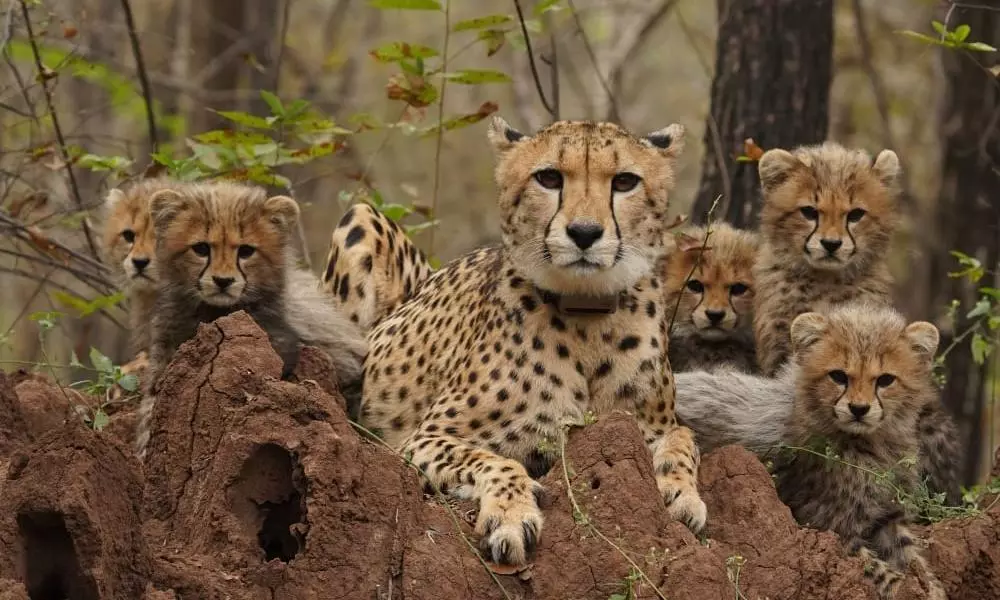
Bhopal: Breeding females and thriving second-generation cubs amply suggest that India’s Cheetah Project, launched in the Kuno National Park of Madhya Pradesh exactly four years ago, has entered the important consolidation phase.
India’s cheetah population has grown to 52, including 32 India-born cubs during the period.
A status report on the project titled, ‘Four years of cheetahs in India- A status review’, released by the Kuno National Park on the occasion of the programme entering the fifth year on Thursday, outlined the progress made in the project since its introduction on September 17, 2022.
“Four years on, the establishment of breeding females and survival of second-generation cubs marks an important consolidation phase in India’s cheetah reintrKuno National Parkduction programme”, Director, Cheetah Project, Uttam Kumar Sharma told this newspaper on Thursday.
The review said that of the eight Namibian cheetahs introduced on September 17, 2022, three are surviving along with 22 of their India-born offspring, bringing the total surviving Namibian-origin population and progeny to 25.
Similarly, of the 12 South African cheetahs introduced on February 18, 2023, eight are surviving, along with their ten India-born offspring, bringing the total surviving South African-origin population and progeny to 18.
Of these 18 cheetahs, 15 are in the Kuno National Park and three have been shifted to Gandhi Sagar Wildlife Sanctuary in Madhya Pradesh’s Mandsaur district a year and half ago.
This apart, nine Botswana cheetahs have been introduced on February 28, 2026.
Out of the total 49 cheetahs in Kuno, 17 cheetahs -ten males and seven females- are in the wild, while 32 cheetahs -five males, eight females and 19 cubs less than a year old- are inside the soft release bomas (enclosures), waiting to be released into the wild.
Highlighting the four-year journey of the project, the review report said that the first year was marked by learning, adaptation, setbacks and recovery, while the second year witnessed breeding and the survival of 13 cubs for more than a year.
The third year of the project was very challenging since the cheetahs were for the first time released into the wild and monitored round-the-clock across an interstate landscape covering 12 districts, where they successfully navigated and survived.
“Cheetahs have started exhibiting natural ecological behaviour”, the review said.
The focus of the conservationists of Kuno has now shifted from simply protecting the introduced cheetahs to establishing India-born cheetahs in the wild, the forest officer said.
