10th-Century Shivling Unearthed From Jhelum River; Preserved For Public Display In Srinagar

This Shivling is a vital archaeological discovery and a testament to our cultural legacy. Recognizing its historical significance, the Army handed it over to our department and we are dedicated to preserving and displaying such artifacts for public education and spiritual enrichment”: Director JKDAAM Kuldeep Krishan Sidha
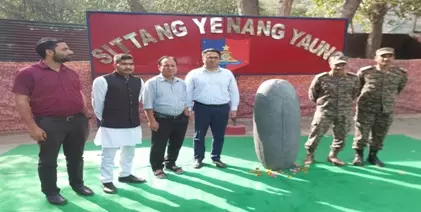
SRINAGAR: The Jammu and Kashmir Department of Archives, Archaeology and Museums (JKDAAM) on Sunday said that is thrilled to announce the discovery of a 10th-century AD stone-carved Shivling, measuring 137 cm long and 160 cm wide, retrieved from the Jhelum River near Khanpora in northwestern Baramulla district, during sand extraction by local workers.
This significant find illuminates the region’s rich cultural and historical heritage, the officials said. They added that the Shivling, initially secured by the Indian Army’s 22 Medium Regiment in Baramulla, has been handed over to the Department and is now preserved at Srinagar’s Sri Pratap Singh Museum for public viewing.
Director JKDAAM Kuldeep Krishan Sidha said, “This Shivling is a vital archaeological discovery and a testament to our cultural legacy. Recognizing its historical significance, the Army handed it over to our department and we are dedicated to preserving and displaying such artifacts for public education and spiritual enrichment.”
He added, “This collaborative effort ensures the artifact’s safety and underscores the importance of safeguarding Jammu and Kashmir’s archaeological heritage”.
He reiterated that the recovery of the Shivling “is not only an important archaeological find but also a testament to our enduring cultural legacy” and said, “The Department is committed to the preservation and respectful showcasing of such artefact for educational and spiritual enrichment of the public. This discovery represents a valuable addition to the cultural and historical heritage of Jammu and Kashmir, highlighting the importance of protecting and preserving the region’s rich archaeological legacy.”
