Why Do People in Strait of Hormuz Use Red Sand in Their Cooking?

14 March 2026 11:11 PM IST14 March 2026 11:11 PM IST
Hormuz Strait remains a hotspot for global tensions; analysts stress the need for multilateral cooperation to avert escalations.
Representational Image/X
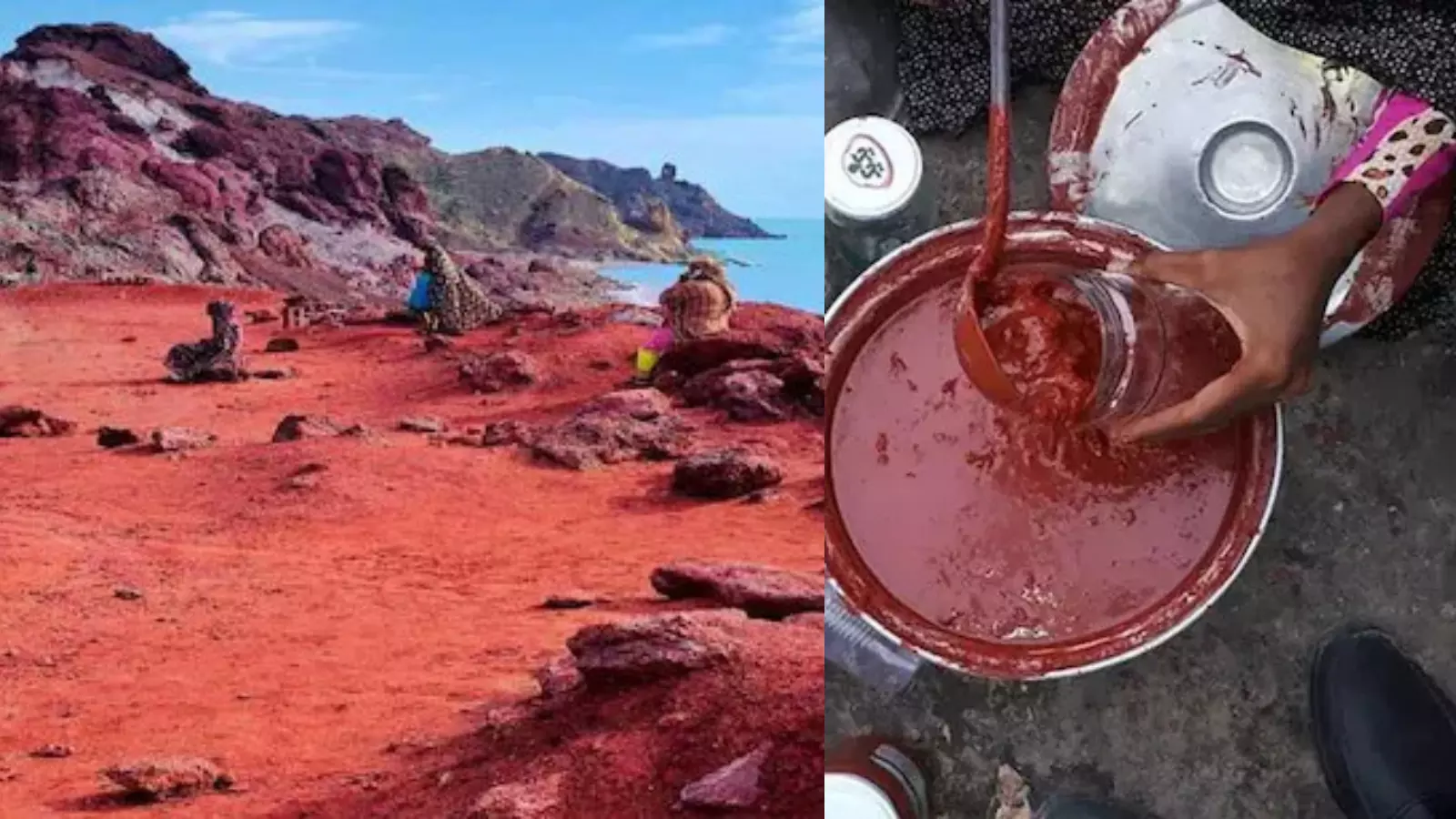
Due to the ongoing war, the Iranian government has decided to shut down this route, which led to many tankers and oil-carrying vessels being stranded in the middle of the water. Aside from the strait being considered as a critical point for global energy supply, this region also carries heavy significance for its unique soils and that is the reason it is also called the name "rainbow island." The most popular among these sands is gelak—which looks red due to its higher concentration of Iron Oxide, and it is apparently considered as edible by the localites belonging to that region.
The inhabitants treat this red-colored sand as a form of spice which they then again used to prepare one of their own cultural delicacies, which is called Sooragh. It is a fish sauce made using sardines that look deeply red and, of course, the reason is the addition of gelak into it, and as a result, aside from giving its signature color, this condiment also provides a very rich aroma. The Hormuzian residents also believe that this soil contains anti-microbial and purifying qualities which aid in preserving the food items for a longer duration under the intense heat conditions experienced in that region.
The process of preparing this dish is also time-taking, but is also very fascinating.
1. First it starts with a jar being coated with a layer of sea salt.
2. Then fresh sardines, which the locals refer to as Momegh, are cleaned and salted. After that, they’re packed into this jar and are left to sun-cure for a duration of two weeks.
3. In these two weeks, the process of fermentation starts to take place inside the sealed jar. After 14 days, when the fish are thoroughly fermented, they’re removed out of the jar and at this stage the red-colored gelak paste is applied to the fishes.
4. After applying the gelak paste, the fish are then again put back to rest in the jar, but this time adding dried sour orange peels and lime leaves.
5. After enclosing the cap for a second time, the dish is again left to stay idly in the hot sun approximately for a duration of 3 weeks.
And due to scrupulous patience, the final dish becomes ready to devour, which the locals pair up with bread called Tomshi. This Dish is a true testament in not only preserving older customs and traditions of a region, but also signifies a strong relationship between human beings and nature.
This Article is Written by Yoga Adithya, an Intern at Deccan Chronicle
( Source : Deccan Chronicle )

Next Story