Tigers, Tales, and Conservation: Seven Must-Reads by Jim Corbett for Young Readers This International Tiger Day

In Kumaon's wilds, Jim Corbett hunted with courage—and wrote with compassion.
In the dense, whispering forests of Kumaon, where the rustle of leaves could mean the passing of a breeze—or a stalking predator—Jim Corbett walked with a rifle in hand and a notebook in his heart. His encounters with man-eating tigers and leopards were not just tales of survival, but chronicles of empathy, courage, and a deep reverence for the wild.
Jim Corbett,a legendary hunter turned conservationist is best known for his books on hunting man-eating tigers and leopards in India. His notable works include Man-Eaters of Kumaon, The Man-Eating Leopard of Rudraprayag, and Jungle Lore. Corbett’s writings are celebrated for their vivid storytelling and deep respect for wildlife, making them timeless classics in nature literature. His efforts in wildlife conservation have left a lasting legacy, contributing significantly to the establishment of India’s national parks and wildlife reserves.
Roy E Hawkins, the manager of the Indian branch of Oxford University Pressin 1940s encouraged Corbett to write about his experiences. Hawkins also played a key role in publishing Corbett's works, including "Man-Eaters of Kumaon". The manuscript of his book Man-Eaters of Kumaon was received in 1944, and the book became a big success soon after it was first published by OUP in 1945. It remains a bestseller with several million copies sold to date.
Hawkins, the astute and visionary manager of the Indian Branch of Oxford University Press, saw in Corbett not just a hunter, but a storyteller of rare calibre. Their friendship was forged not in the jungles, but in the quiet corridors of publishing, where Hawkins nurtured Corbett’s raw narratives into literary masterpieces.
Oxford University Press became more than a publisher—it became the bridge between Corbett’s intimate world of jungle lore and the imaginations of readers worldwide. Through titles like The Man-Eating Leopard of Rudraprayag and My India, Corbett’s voice echoed with the cries of the forest, the pulse of rural India, and the silent dignity of its wildlife.
Even decades later, OUP honours Corbett’s legacy, celebrating his work and ensuring that his words continue to inspire conservationists, adventurers, and dreamers alike.
Here are some of Jim Corbett’s most notable books, published by Oxford University Press. These gripping tiger tales transcend mere adventure, offering profound insights into nature’s delicate balance between humans and the wild. Highlighting these works can ignite curiosity about India’s rich wildlife and foster values of conservation, coexistence, and the protection of our natural heritage.
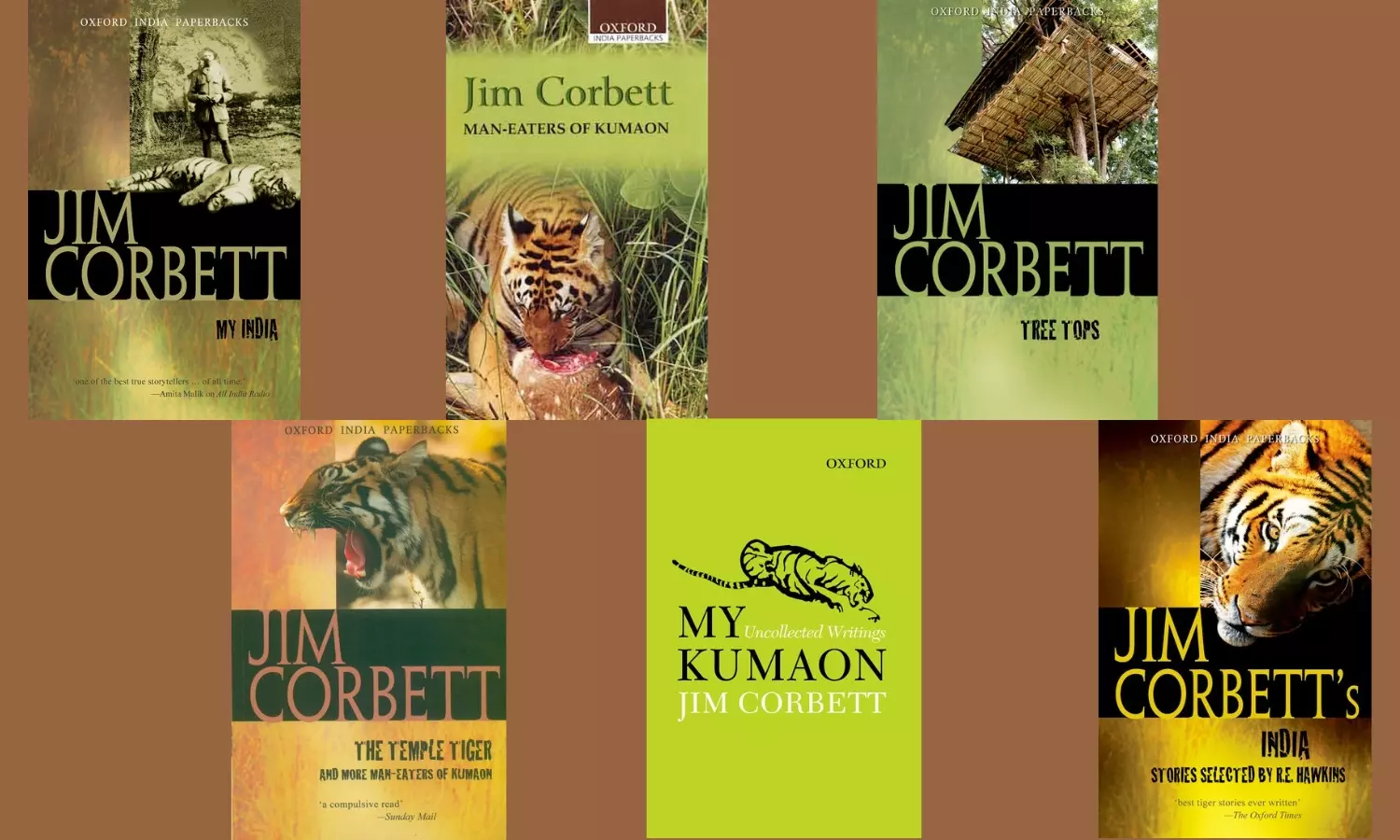
Man-Eaters of Kumaon
This is a timeless classic that chronicles ten riveting, real-life encounters between the legendary hunter and some of India’s most feared man-eating big cats. From the infamous Champawat Tiger - responsible for over 430 deaths and listed in the Guinness Book of World Record, to the elusive Chowgarh tigress, Corbett’s accounts are filled with suspense, empathy, and deep respect for the wild. He captures the shift from sport to responsibility.
Man-Eating Leopard of Rudraprayag
The Man-Eating Leopard of Rudraprayag is a gripping account of a leopard that spread terror across 500 square miles in Garhwal. Blending thrilling adventure with local lore, Corbett explores the region’s superstitions, rugged beauty, and the circumstances that turn a wild animal into a man-eater. He reflects not only courage but also a deep understanding and respect for wildlife. Beyond the thrilling narrative lies a critical conservation message: human-wildlife conflict often stems from ecological imbalance and human encroachment.
My India
This colorfully-written collection contains classic tales about the human beings who lived in the poignant rural world of the Indian foothills. Corbett, here, displays great sympathy and concern for these people through his sharp observations of their village life, traditions, and culture. Engaging the reader with great force, these stories will serve as an indispensable supplement for anyone who has enjoyed Corbett's narrative gifts before.
The Temple Tiger and More Man-Eaters of Kumaon
This is the Jim Corbett's fifth book and third and last about man-eaters. The book contains five stories--- the first one about ''The Temple Tiger'' and last one ''The Talla Des man-eater''. The temple tiger's story is unique in the sense that that tiger (not a man-eater) was never shot by Jim Corbett despite his best attempts. And the story of Talla Des man-eater is also fascinating and different among all Jim Corbett's other man-eating stories. In his own words---''the story of the Talla Des man-eater---which I have refrained from telling until I had written Jungle Lore''--- is considered best among many readers. Jim Corbett was slayer of man-eating tigers and leopards and was one of most prominent nature and wildlife conservative of his time. Several times he endangered his own life to save the lives of other common people for whom he had a great ambition of sacrifice. This book is gift to all Corbett Lovers and for whom nature is something of great value as was for Jim Corbett himself in those bygone days.
My Kumaon
My Kumaon is a deeply personal and richly curated volume that showcases Jim Corbett not only as a legendary hunter of man-eating tigers and leopards but also as a naturalist, conservationist, and writer. Compiled from archives as part of its centenary celebrations, the book includes Corbett’s unpublished writings, personal letters, and rare articles that trace the journey of his bestselling works. It reflects his deep empathy for the people of Kumaon, his evolving views on wildlife conservation, and his profound respect for the animals he once hunted.
Jungle Lore
Jungle Lore offers a glimpse into his life and experiences in the Kumaon region of India. It's considered a near-autobiography, detailing his deep connection with the jungle, its inhabitants (both human and animal), and his passion for conservation.The book explores Corbett's early life, his observations of the jungle, and his evolving understanding of the relationship between humans and nature.
Tree Tops
This is Jim Corbett's last book and the only one not set in India. It tells of Princess Elizabeth's visit to Tree Tops in Kenya, during which she learned George VI had died and that she was now Queen. Although there are the characteristically vivid descriptions of the area's wildlife, the book is tinged with a sense of foreboding and regret at losing his Kumaon home.
Jim Corbett’s India
This is a powerful collection of 22 of Corbett’s most iconic writings, drawn from his classics, blending thrilling accounts of tracking man-eating tigers and leopards with deeply human stories. His evocative descriptions reveal not just a master hunter, but a man ahead of his time, one who understood the fragile balance between humans and nature. From the feared Panar leopard to the Muktesar man-eater, each story is steeped in suspense, yet balanced with his heartfelt admiration for India’s people, forests, and wildlife.
