How Ohri’s Is Brewing Its Next Chapter With Qaffeine

Hyderabad has changed its eating habits more than once. And if there is one restaurant group that has managed to keep pace with those changes, it is Ohri’s.
Hyderabad has changed its eating habits more than once. And if there is one restaurant group that has managed to keep pace with those changes, it is Ohri’s.
There was a time when going out to eat in the city meant going to an Indian restaurant. Then came Oriental food, with Ming’s Court introducing Hyderabad to a different kind of dining experience. Gufaa turned the restaurant itself into an attraction, becoming one of the city’s early themed restaurants. When barbecue began finding a larger audience, Sahib’s Barbeque took that trend and made it part of the city’s dining vocabulary.
Ohri’s has always had a way of spotting where the city is going next. Now, the group is looking at something that has become almost a daily ritual for Hyderabad: coffee. Thus was born Qaffeine, the coffee shop on Banjara Hill Road No.10.
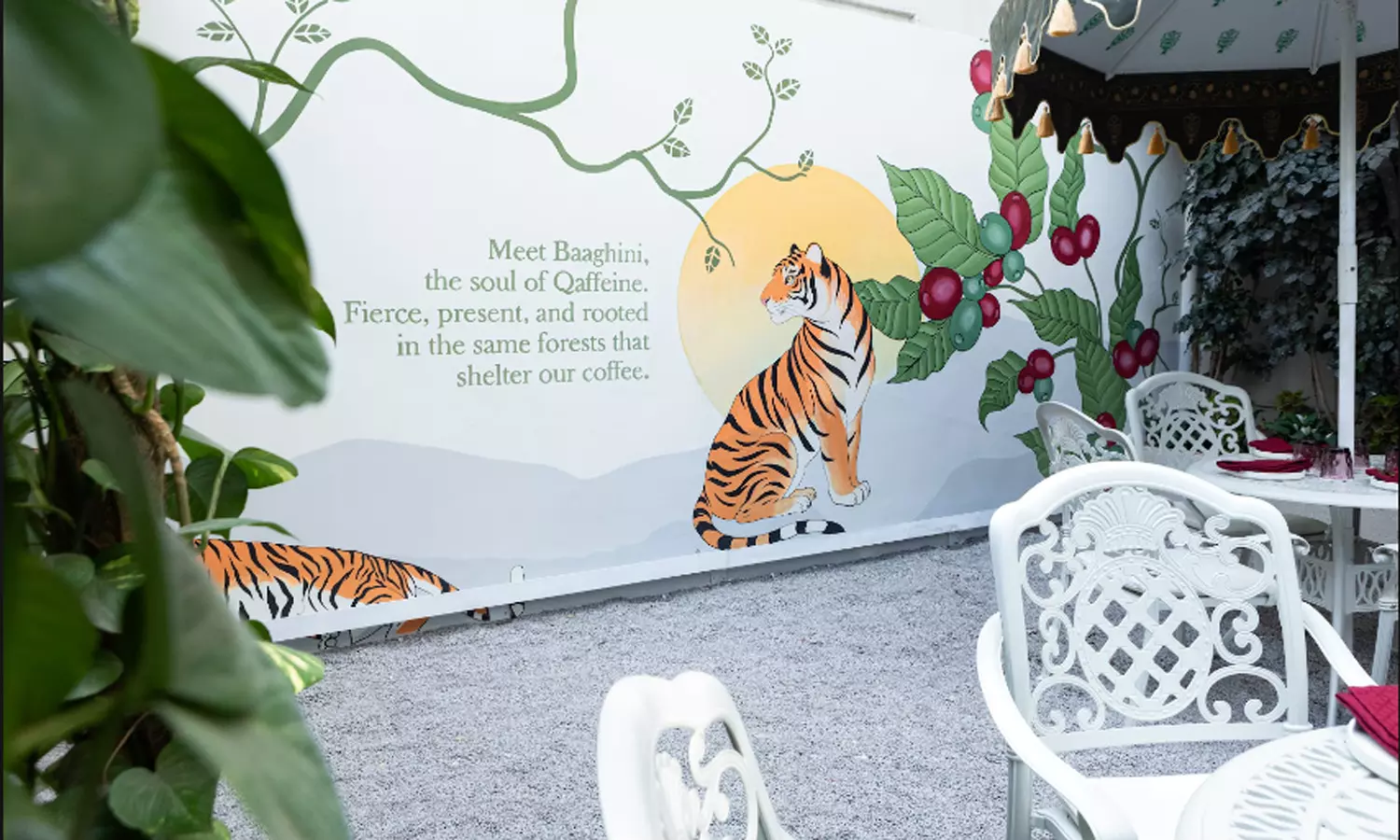
But this is not simply about opening another café and putting cappuccino and cold brew on the menu. The idea behind Baaghini, name of restaurateur Amar Ohri’s artisanal coffee blend, is to make Indian coffee the starting point, while creating the kind of place where people can linger over breakfast, meet friends, work for a while or simply sit with a cup of coffee and nowhere particularly urgent to go.
The journey to the concept took close to two years of research and thought, with the idea of taking the hospitality associated with Ohri’s and translating it into a café environment. Even the space is designed to feel warm rather than overly styled, with softer lighting and a relaxed atmosphere. The bigger idea, however, is in the cup.
India has several coffee-growing regions, each with its own character, and House of Baaghini at Qaffeine, brings together beans from six of them: Nagaland, Odisha, Coorg, Chikmagalur, Yercaud and Wayana chosen for the blend. The house blend uses predominantly Arabica with Robusta making up around 20 per cent.
For Ohri’s, the point is not simply to say that the coffee is Indian. It is to make people think about Indian coffee in the same way they think about coffees from more established international origins.
“We already know coffee from around the world. Italian, French, Panama beans, they are all being used. Our thought was, let’s carry forward the legacy of Indian coffee beans and deliver that to the guests,” says the hotel manager.
That same Indian-meets-contemporary approach runs through the food.
There is a familiar rhythm to the menu if you know Indian food, but the details keep shifting. Milind Gangaram Powar, head chef at Qaffeine, talks about taking dishes people already understand and creating another picture around them rather than simply reproducing what they have always looked like.
Take the vada pav. Instead of the usual potato filling, Baaghini uses a 50:50 combination of potato and beetroot. It is crumb-fried rather than prepared in the conventional batter, then paired with tamarind and mint chutneys and a homemade Maharashtrian-style garlic and chilli powder (techa).
Then there is avocado sev puri, another example of the kitchen taking a street-food memory and moving it somewhere else. The sev puri gets avocado, sweet curd, tamarind chutney and nylon sev, while the gol gappas are served in a Delhi-inspired style with sweet potato, green moong, and pomegranate.
The intention is not to make the food unrecognisable. It is to play with what people already know. That philosophy carries into breakfast, which perhaps makes the café’s proposition clearer than anything else. There are Indian breakfast options alongside English breakfast, truffle scrambled eggs, mushroom and cheese omelette, avocado toast, pesto chicken and open toasts. The idea is not to divide the day into rigid breakfast, lunch and dinner categories, but rather about creating an all-day dining space.
For the chef, it is also an opportunity to take familiar flavours and make them feel new. The signature croissant, for instance, comes with three butters: truffle, Maharashtrian-style and curry leaf. There is forest honey, an in-house orange and fig jam and, because sometimes familiarity has its place, Nutella.
The desserts follow the same line. There is salted caramel fudge and blueberry cheesecake, but the more playful creation is the rasgulla tiramisu, which takes an unmistakably Indian sweet and puts it into one of the most recognisable café desserts around.
The drinks are where the experimentation becomes even more apparent. The Mysore Silk, A Qaffeine signature and most ordered, uses jaggery, while the Grand Bazaar Chill combines coffee, milk, condensed milk and cardamom. The Madras Cold Fashioned brings coffee together with ginger and tamarind, with the acidity clarified into a smoother finish. There is also a cold brew with kokum and a pairing of espresso with cold-pressed orange juice, and a Gajak Latte that takes inspiration from the Indian sweet.
Among the signatures is one built around saffron, cinnamon and cardamom. Another section of the menu plays with coffee and coconut, including drinks layered with flavours such as matcha, strawberry and lavender.
And then there is the barrel coffee, perhaps the most experimental idea in the collection. Instead of using barrels that have previously held whisky or wine, Baaghini uses fresh barrels to avoid concerns around guests’ preferences. The beans spend 120 days inside the barrels under controlled conditions, picking up an earthy character through the process rather than through artificial flavouring.
It is deliberately being treated as a limited experiment. Only a finite number of cups can be produced, and the idea is to see how people respond before deciding what comes next.
That willingness to experiment is, in many ways, very Ohri’s. The group’s history in Hyderabad has never really been about doing the same restaurant repeatedly. It has been about understanding what diners are becoming curious about and creating an experience around it. Indian food gave way to Oriental cuisine. The restaurant became a theme. Barbecue became an experience. And now coffee is no longer something people simply drink after a meal. It has become a reason to go out.
Qaffeine is entering that culture with a distinctly Indian point of view. The coffee comes from Indian soil. The flavours travel through memories of gajak, cardamom, jaggery and tamarind. The food borrows from vada pav, sev puri and gol gappa while giving them a contemporary treatment. Even the croissant butter gets a regional intervention through curry leaf and Maharashtrian techa.
It is, in a way, the same Ohri’s instinct in a new setting: take something people know, understand how their tastes are changing and give them a reason to look at it differently.
After decades of giving Hyderabad new places to eat, perhaps the group’s next challenge is simpler…to give the city a new place to sit, sip and stay awhile.
