Can Art Feel More at Home? Priyanshi S on Rethinking How We Experience Art

Curator Priyanshi S on breaking the hierarchy between art, objects and audiences, rethinking the white cube and allowing artworks to find lives beyond the gallery.
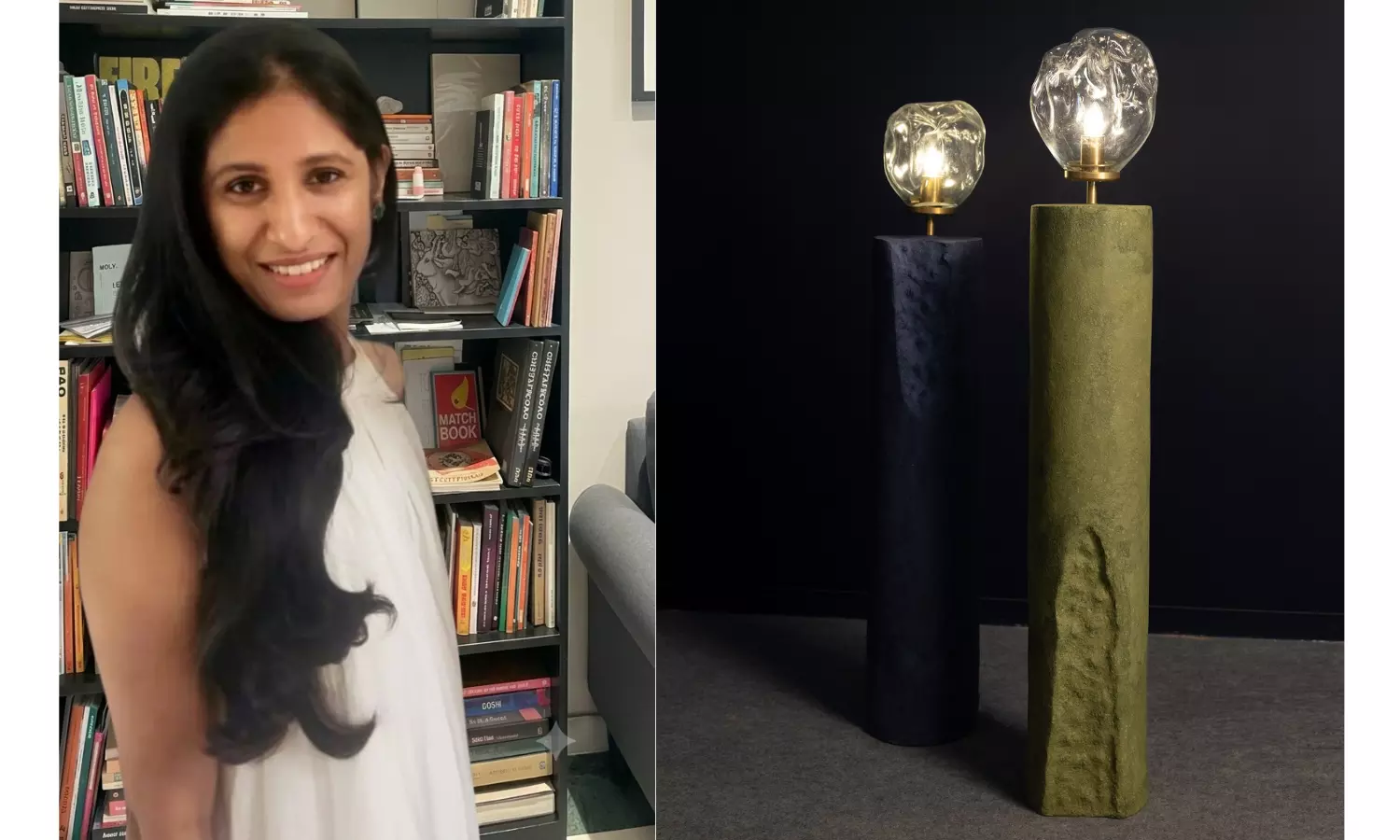
At GAP Contemporary in New Delhi, ‘The Still Life of Sentiments’, curated by Priyanshi S, turns the conventional gallery experience into something closer to a lived-in home. On view from September 11 to October 10, the exhibition brings contemporary art together with furniture, objects, books, lighting and design across a massive space. As the gallery begins a new chapter after more than two decades as Gallery Art Positive, the exhibition also asks a larger question about how we encounter, value and live with art.
For Priyanshi, the idea of a home offers a way to question the hierarchies that often shape the gallery experience. At home, she points out, objects do not necessarily occupy fixed positions of importance. Their significance shifts according to the setting and the people interacting with them.
Meghna Singh Patpatia, The Melancholist (2023), found object assemblage.
“Even at home, there isn’t a fixed hierarchy of any of the objects, artworks, or people; and changes with the setting, and the group of people interacting with it,” she says. “The aim with the exhibition is to break these constructed hierarchies and enjoy each piece for its own story.”
That approach extends beyond this exhibition to the way she sees GAP Contemporary’s new direction. Rather than prescribing a single way of looking at art, she sees the gallery as a place where audiences can form their own associations.
Boito, MOHENJO-DARO IN KOTPAD (twin textiles)
“That is the aim with GAP Contemporary as well, to create a tangential way of interacting with the arts, and help people build new relationships, and meanings with the art world,” she says.
The exhibition is deliberately not static either. Works can be added, removed or altered during its run, particularly as pieces find new homes. For Priyanshi, this fluidity is not simply a curatorial device to encourage repeat visits. It comes from her belief that artworks themselves have lives that continue to develop through different contexts.
“Why look at art as something that isn’t living?” she asks. “Each of these works, or pieces of design have their own stories, and lives to build, with the different contexts they are placed in.”
Boito, MOHENJO-DARO IN KOTPAD
Her own curatorial practice, she says, is about allowing those works to speak rather than imposing an elaborate narrative over them. “My endeavour with my practice is to not over dramatise, or play curate; but to actually have the faith in the works I am showing to shine through it all.”
Placing paintings and other artworks alongside furniture, books, lighting and everyday objects further shifts the context in which they are encountered. But Priyanshi does not see this as diminishing the art or making it secondary to the setting. Instead, she sees the domestic environment as closer to the eventual life of many artworks.
“The works of art we show in galleries are eventually meant to live in someone’s home; and hopefully become part of someone’s life,” she says.
The exhibition therefore offers another way of looking without taking away the traditional act of looking. “Even though the works are paired with furniture, design, books et al; they are still open to being viewed by the audiences visiting the gallery,” she says. “We are just showing the works in a new context, a new light; not hiding them from audiences.”
Urvi Sethna, FOLD
That question of context also feeds into the larger conversation around the white cube, the gallery format that has shaped modern art viewing for decades. Priyanshi is wary of treating its evolution as evidence that the gallery system itself has become obsolete.
“The concept, or term ‘white cube’ is about four decades old, and there were galleries prior to that,” she says. For her, the more pertinent question is how spaces respond to changing audiences and patterns of engagement. “Most structures, even the art gallery, need to adapt to evolving taste, demand, and consumer behaviour. This doesn’t deem the gallery system irrelevant, just in the need of evolution.”
Perhaps the most interesting part of that evolution is what happens when an artwork leaves the gallery altogether. ‘The Still Life of Sentiments’ allows for that possibility as works find buyers and move into private spaces. For Priyanshi, however, that does not mark the conclusion of an artwork’s story.
Vahe Ensemble, Soft Brass Chair
“The artwork is born in an artist’s studio, and is immortal hence, at least in the memory of the people who have seen, or interacted with it,” she says.
It is a thought that sits comfortably at the heart of an exhibition concerned with the movement of art between spaces and meanings. A gallery may frame the first encounter, but the life of an artwork can continue long after it has left the room in which it was first displayed. In bringing art closer to the language of home and everyday living, ‘The Still Life of Sentiments’ asks audiences to consider not only how they look at art, but what happens when art becomes part of the way they live.
