Beyond Butter Chicken: The Rise of Bihari Flavours in the Capital

17 March 2026 10:54 PM IST17 March 2026 10:54 PM IST
The Potbelly, Delhi is a story of bold mustard, rustic textures, and a restaurant that chose authenticity over adaptation, and won.
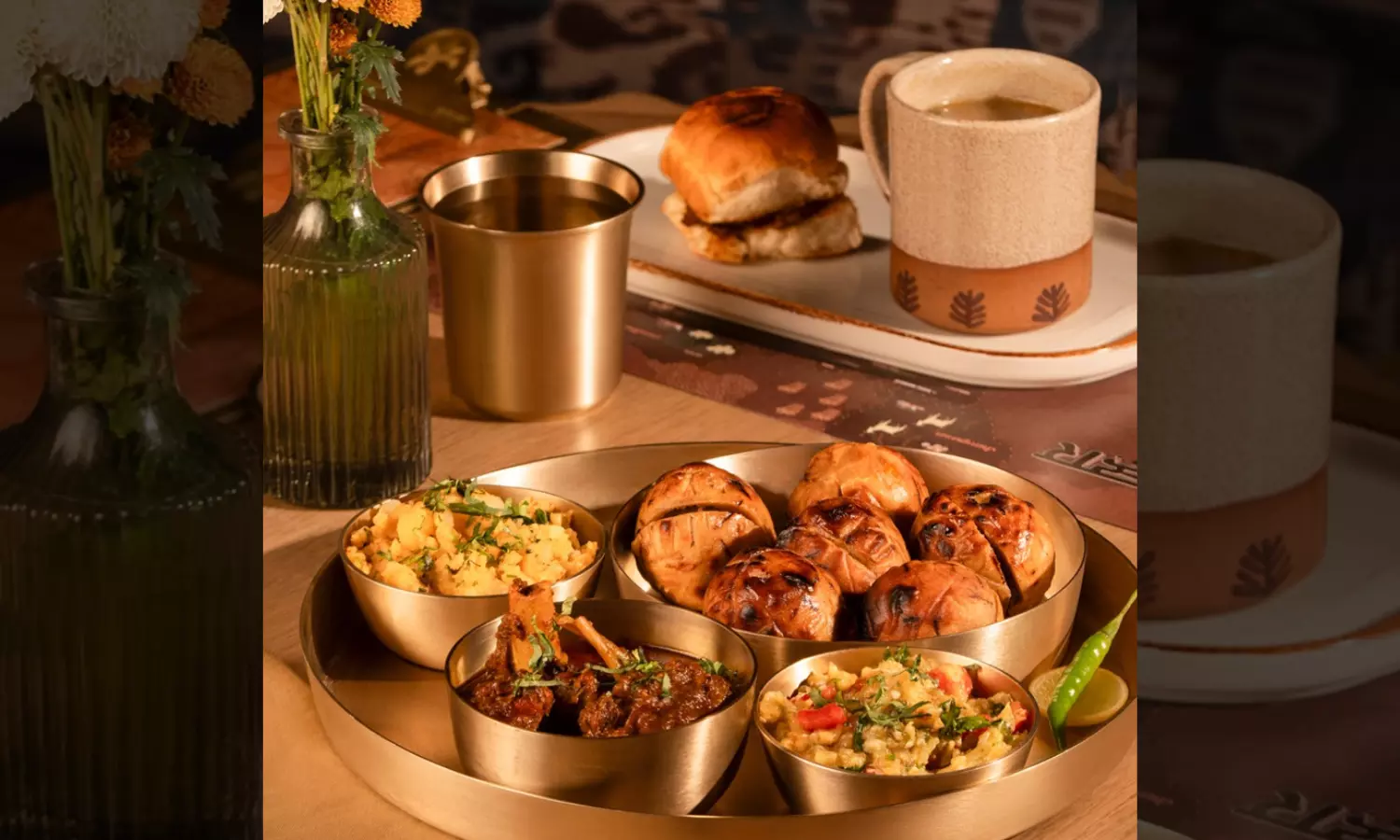
Representational Image
Delhi has always had a curious appetite. It does not just eat food, it adopts it, reshapes it, argues about it, and eventually makes space for it at its already crowded table. Some cuisines arrive with hype, others with nostalgia. And then there are the quiet entrants, the ones that do not shout for attention but slowly, stubbornly earn it. Bihari food in Delhi feels like one of those stories, and somewhere in that journey sits The Potbelly, doing its own thing without trying too hard to belong.
The first thing that strikes you is not the food. It is the intent. There is no attempt to disguise where the cuisine comes from, no overcompensation, no unnecessary polish to make it more Delhi friendly. If anything, the place embraces its roots even more strongly. The space itself feels like an extension of Bihar, with Madhubani inspired walls, terracotta lamps, and textures that feel handmade rather than designed. It does not scream luxury, but it does not need to. It feels personal.
And that same honesty carries onto the plate.
Bihari cuisine is not built to impress at first glance. It is rustic, deeply regional, and unapologetically bold, especially with its use of mustard. Not the gentle background note you might be used to, but a sharp, nose tingling presence that defines the bite. It is the kind of flavour that does not ease you in, it introduces itself immediately.
Take chokha, for instance. At its simplest, it is mashed vegetables, but that description does it no justice. This is not the buttery comfort mash you might expect. It is coarse, smoky, often raw in parts, carrying the heat of mustard oil and green chillies. It tastes alive. Pair that with litti, those deceptively dense wheat balls stuffed with sattu, and you begin to understand the cuisine’s rhythm. Earthy, filling, and built for sustenance rather than spectacle.
Then there is the way meat and fish are treated. There is restraint here. A fish preparation might skip heavy frying altogether and instead rely on steaming or gentle cooking, letting mustard, salt, and heat do the work. It can feel almost primitive if you are used to layered gravies, but give it a moment and it opens up beautifully, explained my food companion who tried the non-veg food at The Potbelly.
Even something as familiar as chaat takes a different turn. It is less about the sweet tangy explosion Delhi thrives on and more about balance, with earthy legumes, subtle spice, and textures that feel less engineered and more intuitive.
What is interesting is how close this food feels to its eastern neighbours, Bengal, Odisha, Jharkhand, yet how distinctly it holds its own. There is overlap in ingredients, in techniques, in that shared love for mustard oil and pungency. But Bihar’s version often feels less refined and more direct. Where Bengali food might smoothen edges, Bihari food keeps them intact.
And that is probably why it took time for Delhi to fully warm up to it.
Delhi, for all its diversity, has historically leaned toward either rich, indulgent flavours or familiar comfort zones. Bihari food sits somewhere else entirely. It does not rely on cream, butter, or heavy gravies. It does not dress itself up. It asks you to meet it halfway.
But over the last decade, something has shifted. Diners have become more curious, more willing to explore regional cuisines beyond the obvious. Add to that a significant migrant population carrying their food memories with them, and suddenly there is both demand and appreciation.
The Potbelly seems to have benefited from this shift, but it has not chased it.
Its menu, for the most part, has not tried to reinvent itself dramatically. There are tweaks, lighter oil here, a slightly softer spice profile there, but the core remains intact. That consistency builds trust. You know what you are getting, and more importantly, you know it has not been diluted to please you.
There is also something to be said about how the food feels. Despite the liberal use of mustard oil, despite the bold flavours, it does not sit heavy. It is the kind of meal that fills you up without weighing you down. A reminder that richness does not always have to come from excess.
While foodies are obsessed with the next big thing, places like this survive for a different reason. Not because they constantly evolve, but because they choose not to. They stay rooted, and in doing so, they become reference points.
You walk in curious, maybe even slightly unsure. You walk out understanding a cuisine that was always there, just waiting to be noticed.
And that, perhaps, is the real success, not in becoming Delhi’s favourite, but in getting Delhi to listen.
Must Try Dishes:
Litti Chokha
Sattu Drink
Fish in Mustard
Bihari Style Chaat
Champaran Mutton
Gulgule for dessert
What Stands Out:
Bold mustard flavours
Rustic textures
Minimal oil, slow cooking
Strong regional identity
What Might Surprise You:
Less gravy, more texture
Pungency over richness
Simple presentation, complex taste
Perfect For:
Slow lunches
Curious food explorers
Anyone tired of predictable Delhi menus
What To Expect:
Honest food
No fancy presentation
Flavours that stay with you longer than the meal
( Source : Deccan Chronicle )

Next Story