Crisis of Attention: Why Modern Life Is Making It Hard to Focus

As digital noise overwhelms daily life, experts warn of an escalating “popcorn mind” epidemic draining our ability to concentrate
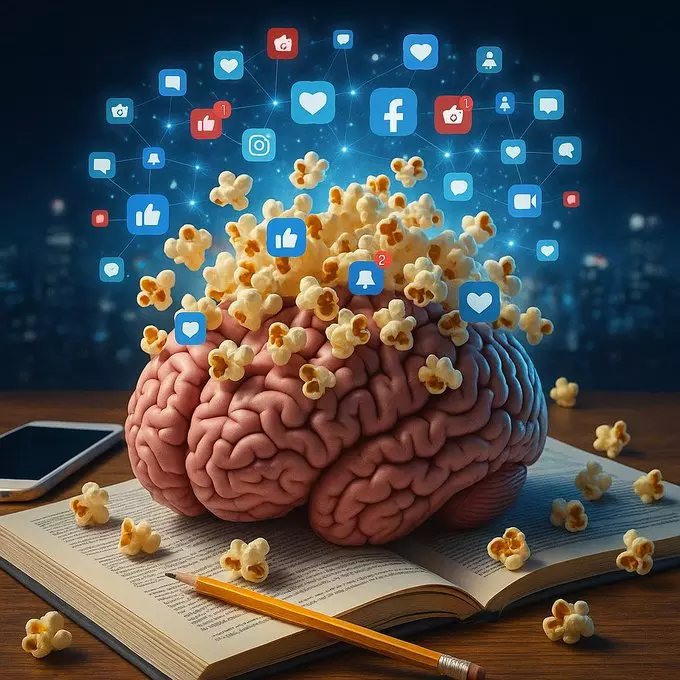
There was a time when sitting with a single thought, a book, or even a moment of stillness felt natural. Today, that calm feels almost impossible. Within seconds, our attention drifts to a notification, a headline, or the urge to check something that ultimately doesn’t matter. We are living in what many describe as a global “crisis of attention”—a quiet, pervasive struggle shaping our daily lives.
Look around: we scroll through reels while watching TV, check our phones mid-conversation, and rarely complete a task without mentally drifting elsewhere. It’s not unwillingness to focus; it’s the world around us relentlessly competing for our attention. And more often than not, we’re losing that battle.
Our brains were never designed for this. Thousands of years of evolution prepared us to respond to nature, people, movement, or danger—not to hundreds of digital signals bombarding us day and night. Every ping, buzz, and flash hijacks our reward system. We’re not addicted to the content itself, but to the possibility of something new, something exciting, something we might miss.
Over time, attention becomes a battlefield.
This crisis also feels deeply personal. It’s not just distraction—it’s overwhelm. We sit down to work, but our thoughts scatter across unfinished tasks, worries, reminders. Even leisure no longer feels restful. We feel guilty for taking breaks, anxious about falling behind, and oddly uneasy when we’re not multitasking. There’s a persistent heaviness in feeling “behind,” even when we’re doing our best.
But here’s the vulnerable truth behind this crisis: we’re not failing. We’re exhausted. Exhausted by speed, noise, pressure, and the need to stay constantly connected. Our minds crave depth—deep focus, deep connection, deep meaning—but everything around us pushes us toward shallow consumption.
The good news is that attention is a skill—and it can be rebuilt. It begins with small, gentle choices: putting the phone in another room while working, taking ten quiet minutes each day, finishing one task before starting another, walking without headphones, or giving someone our full attention during a conversation. These tiny acts retrain our minds to remember what focus feels like.
Clint Jarvis, Founder of gottaGolf, describes “popcorn mind” as the new digital epidemic—marked by an inability to finish a book, a tendency to jump to conclusions, and constant mental exhaustion.
Ultimately, the crisis of attention isn’t just about distraction. It’s about rediscovering what it means to live fully. When we reclaim our focus, even in small ways, we reclaim our lives. We start noticing again—the softness of mornings, the warmth in voices, the simple joy of doing one thing wholeheartedly. And perhaps that’s how we find ourselves in a world that constantly tries to pull us apart.
This article has been authored by Siftpreet Kaur, Intern at Deccan Chronicle
