In a City of Trends, Sorrento Chooses Timeless Italian

17 March 2026 4:50 PM IST17 March 2026 4:50 PM IST
Ten years on, the Sorrento’s commitment to authentic flavours continues to set it apart.
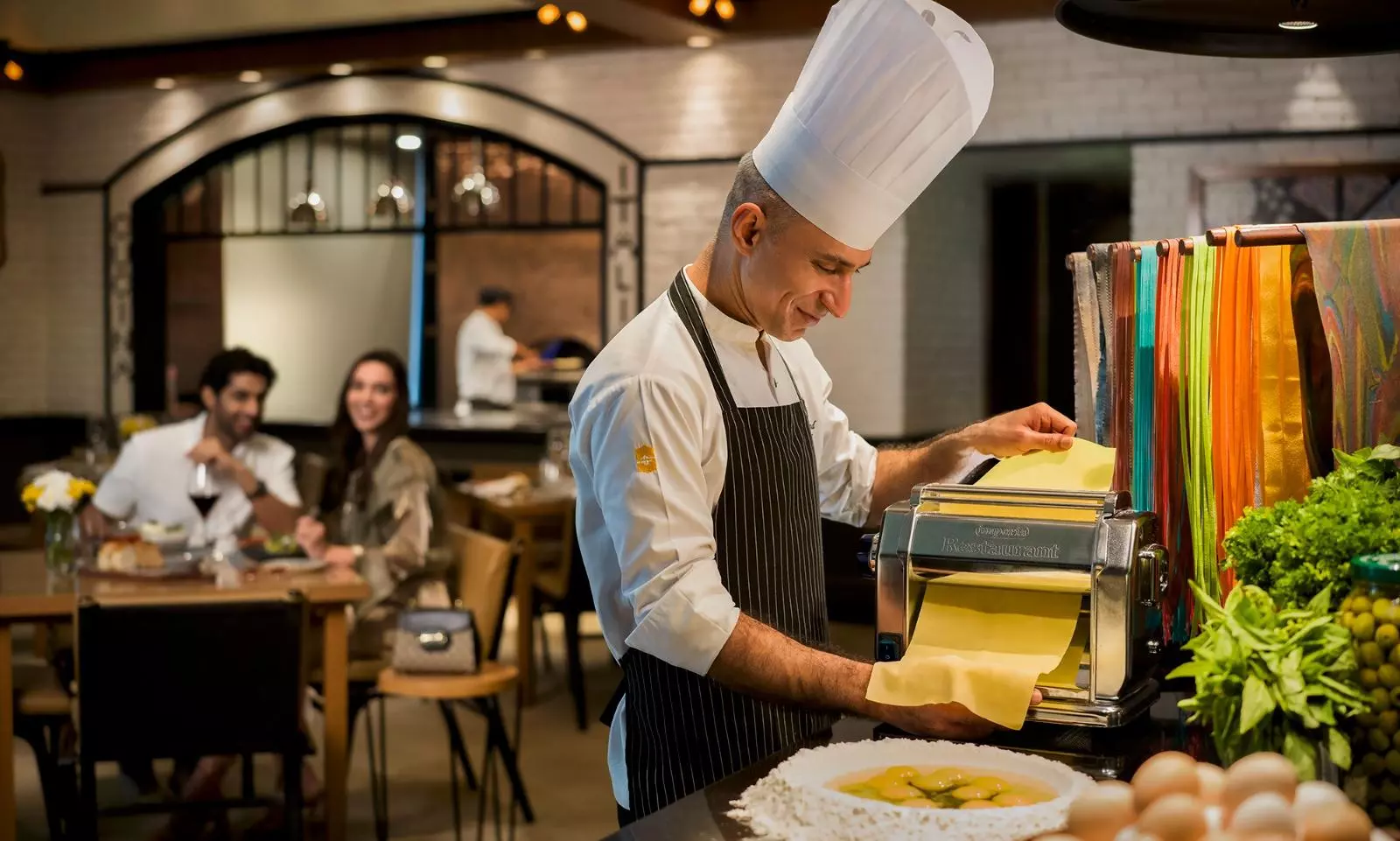
Chef Aasib Mohammad, Chef De Cuisine, Sorrento, Shangri-La Eros, New Delhi. (Photo by arrangement)
Ten years is a long time in Delhi’s ever-changing restaurant landscape. New openings appear almost every month, trends come and go, and diners quickly move to the next big thing. Yet some restaurants quietly build a reputation that lasts. At Shangri-La Eros New Delhi, Sorrento has done exactly that, establishing itself over the past decade as one of the city’s most dependable addresses for Italian food.
For Executive Chef Gagandeep Singh Sawhney, the philosophy behind the restaurant has remained clear from the beginning: keep the cuisine authentic.
“We always had it in mind that Sorrento should be more authentic Italian cuisine. Not to play around too much with modern interpretations. The plating can be modern, but the dishes, the pasta, the sauces, the ingredients, should stay true,” he says.
Chef Gagandeep joined the hotel at a time, when the team was rebuilding the culinary identity of the property. Sorrento opened its doors soon after, designed around the idea of serving traditional Italian cooking in a setting inspired by rustic trattorias.
The decor reflects that approach. Brick textures, warm lighting and earthy tones give the space an informal Italian charm. In Italy, a trattoria is less about formality and more about comfort, family-style meals and long conversations around the table. That spirit, the chef says, is exactly what they wanted to recreate.
“In Italy, sharing food with family is very common. So we have dishes designed for sharing as well, whole chicken, whole fish or large cuts that can be carved at the table. It is meant to be enjoyed together,” he says.
What has allowed Sorrento to maintain its reputation over the years is not just the concept but the consistency behind it. In luxury hotel kitchens, chefs often move frequently between properties and countries. Yet at Shangri-La Eros, a surprisingly large number of the team has remained for years.
“Consistency is the key. People move in and out, but our restaurants do not run on names. They run on recipes and the Shangri-La brand,” says Parinita Samanta, Director of Marketing & Communications at Shangri-La Eros, New Delhi.
In fact, she points out that a significant number of employees have been part of the journey since the beginning.
“About fifteen percent of our workforce has been here since pre-opening,” she says, adding, “That makes a big difference because the food stays consistent.”
Take the case of Chef Aasib Mohammad, Chef De Cuisine at Sorrento, who has worked in several places and understands exactly how authenticity should be maintained. “He has worked extensively to know what authentic Italian should look and taste like,” says Chef Gagandeep.
The menu itself leans heavily on homemade pasta, one of the restaurant’s strongest draws. Mushroom tortelli has become something of a house favourite, while spinach and ricotta remains another dish guests repeatedly return for. “Guests love the homemade pasta,” says the chef.
Dessert, too, has become an area where the kitchen enjoys a bit of creative freedom. Instead of offering a single version of tiramisu, Sorrento has expanded the classic Italian dessert into a small menu of its own.
“We try to do a whole page of tiramisu. Six or seven varieties. The pistachio tiramisu is the most popular,” says the chef.
The popularity of pistachio desserts seems to have grown dramatically in recent years, driven in part by social media trends and global dining influences.
Another ingredient that has taken Indian diners by storm is burrata. Once considered a specialty cheese found only in a handful of fine dining restaurants, it is now widely loved.
“Every second guest orders our burrata salad, which is a bestseller,” says the chef.
Gagandeep Singh Sawhney, Executive Chef
The reason, he believes, lies in the Indian palate’s preference for rich textures.
“Indians are fond of creamy cheese. Mozzarella can be firm, but burrata is very soft and creamy. With tomatoes and rocket leaves it becomes very palatable.”
At the same time, Italian dining in India continues to revolve around familiar comfort foods. While European guests might explore the menu more deeply, Indian diners still gravitate toward pizzas and pastas.
Seasonal changes often influence ordering patterns. In winter, when international travellers fill the hotel, dishes like lamb or pork begin to move more quickly. During the hotter months, diners tend to favour lighter options.
“In summer, it is more pizza, pasta and beer,” he says. Pepperoni pizza, unsurprisingly, remains one of the most frequently ordered dishes.
Yet even within pizza-making, trends are evolving. Around the world, chefs have begun revisiting traditional fermentation techniques such as sourdough and biga, which produce lighter and more flavourful crusts.
“We are seeing a lot of interest in biga dough. It is a traditional method where the dough ferments for longer, so the crust becomes very airy and light,” the chef explains.
To keep the kitchen rooted in traditional techniques, Sorrento regularly hosts visiting Italian chefs who spend short stints training the team and introducing regional dishes.
“Every quarter we bring one or two Italian chefs. They stay for about ten days, train our team and help us refine the menu.”
For Chef Gagandeep, the exercise is less about novelty and more about learning.
“It is very important for the team to understand the real techniques,” he says.
A decade after opening, Sorrento continues to operate with the same guiding principle it started with, letting the cuisine speak for itself. Trends may shift and dining preferences may evolve, but the essence of Italian cooking, simple ingredients treated with respect, remains unchanged.
( Source : Deccan Chronicle )

Next Story