Tracing India’s Modern Awakening Through Sculptural Art

This exhibition is both a celebration and a tribute to India’s long and evolving tradition of sculpture, as well as to the visionary artists who have shaped the modern and contemporary vocabulary of this timeless art form.
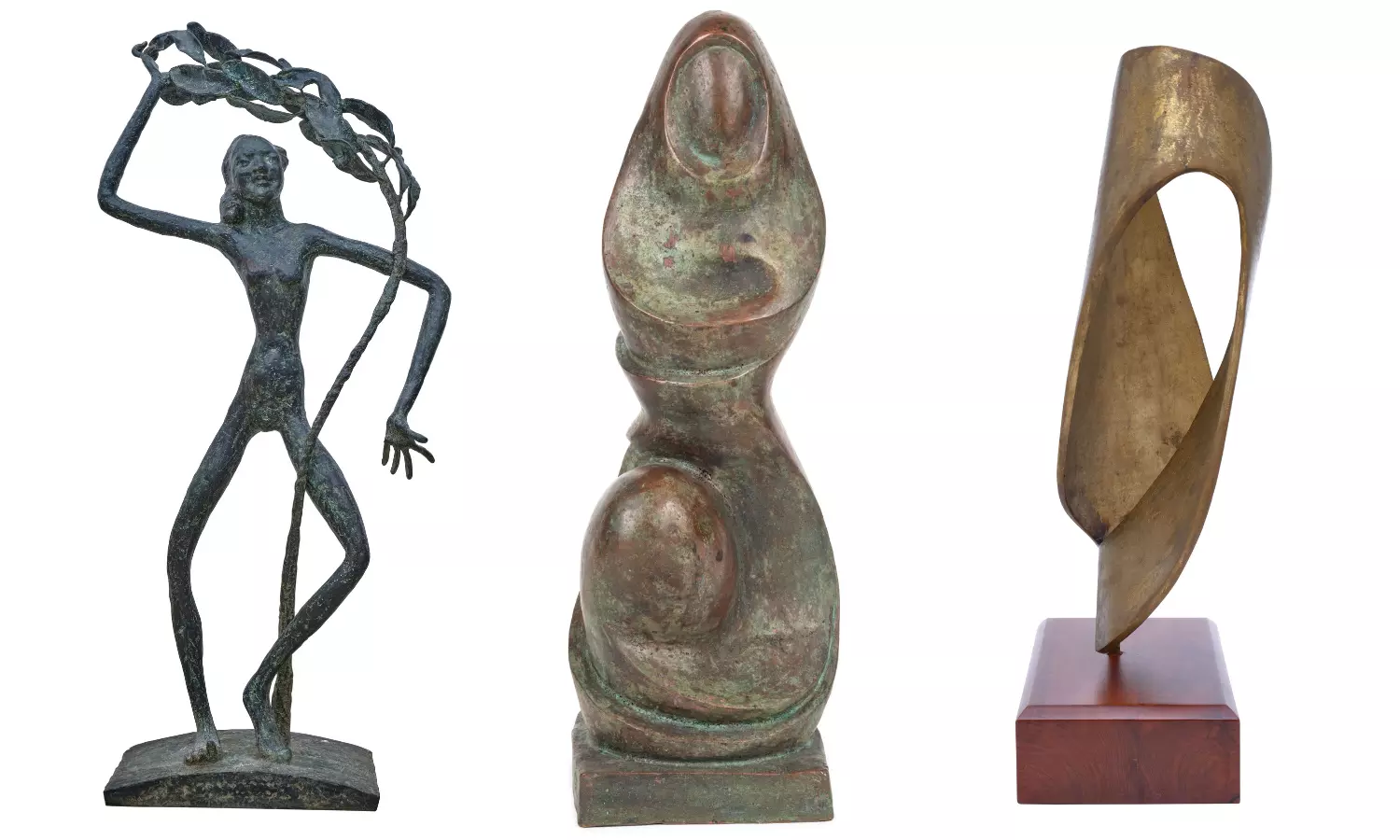
New Delhi: Does sculpture come to mind when one thinks of ‘modern art’? For a country known for its ancient stone deities and rock-cut masterpieces in caves, sculpture’s sharp departure from sacred to experimental, bold modern forms is quite intriguing. From Ramkinkar Baij (1906-1980) to Krishen Khanna, Gulammohammed Sheikh and K. Laxma Goud — artists living and creating even today — their timeless sculptural creations hold the essence of a milestone century for India. Now, a historic exhibition curated by one of India’s foremost art critics and curators, Yashodhara Dalmia, offers a compelling survey of modern Indian sculpture, tracing its evolution from the early 20th century modern awakening through the post-Independence era and into contemporary times.
Titled “Sculpting the Century”, the landmark exhibition showcases the works of 23 sculptors — including MF Husain, Akbar Padamsee, Amarnath Sehgal, Himmat Shah, Satish Gujral, B. Vithal, Somnath Hore, Meera Mukherjee, and SH Raza — at Triveni Kala Sangam, Delhi, from October 5th - 13th, 2025. It is organized by The Raza Foundation and Progressive Art Gallery.
“From the earliest terracotta figurines of the Indus Valley to the spiritual calm embodied in Buddhist stupas, the intricacies of medieval temple architecture, and the luminous elegance of the Chola bronzes, India has always been a land where sculpture has flourished as a central expression of culture. At the turn of the 20th century, as India underwent the upheavals of colonialism, independence, and a modernist awakening, sculptors began to rethink their relationship to tradition and material,” said Harsh Vardhan Singh, Director, Progressive Art Gallery.
The pioneering works of Ramkinkar Baij at Santiniketan, who breathed new life into form through monumental compositions of concrete and laterite, opened the path for future generations. Sculptors like Sankho Chaudhuri, Chintamani Kar, Dhanraj Bhagat, S. Dhanpal, Amarnath Sehgal, Himmat Shah, Pradosh Das Gupta, Meera Mukherjee, Somnath Hore, S.K. Bakre, and later K. S. Radhakrishnan and Mrinalini Mukherjee each carried this legacy forward. They engaged with wood, metal, stone, bronze, fibre, and terracotta, creating works that were bold, experimental, and deeply rooted in human experience.
This exhibition honours that legacy and presents works that reflect the diversity, depth, and vitality of Indian sculpture.
