Returning to Ancient Wellness: From Kerala's Ayurveda to Israel’s Dead Sea

Across beauty and wellbeing, there's a growing pull back to the rooted and the time-tested, to the things our grandmothers did without ever needing a label to explain them.
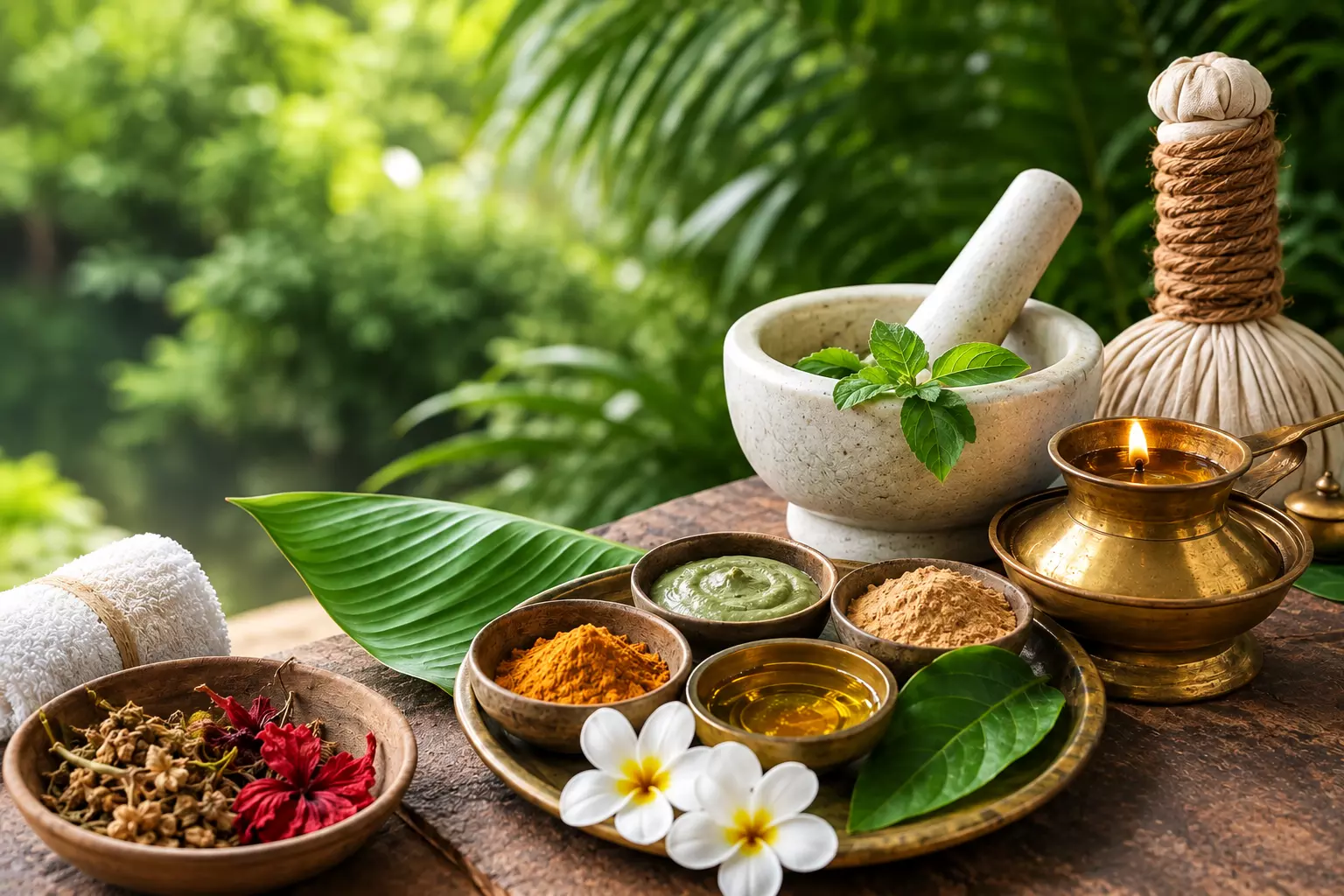
As our new generation rediscovers ancient wellness, two of the world's oldest traditions stand out: India's Ayurveda and Israel's Dead Sea. What's remarkable is how much they share, and how much of it modern science now backs up.
There's a quiet turn happening in how we think about looking and feeling good.
For years, wellness meant more, more steps, more actives, more bottles with names you couldn't pronounce. The promise was always novelty: the newer the formula, the better. And somewhere in the endless scroll of miracle ingredients, a lot of us got tired.
Now the pendulum is swinging toward something much older. Across beauty and wellbeing, there's a growing pull back to the rooted and the time-tested, to the things our grandmothers did without ever needing a label to explain them.
Take ubtan, for instance, that simple paste of turmeric and gram flour, mixed by hand the way it always has been. Or the warm oil massage before a bath, unhurried and deliberate. Or a clay mask of Multani Mitti, left to draw the heat from tired skin. None of it is new, and yet all of it, somehow, feels new again. A generation raised on screens and synthetic everything is quietly turning back to the very wisdom it once dismissed as old-fashioned.
Now that so many of us are paying attention to ancient wellness again, I want to point to two traditions in particular: India's Ayurveda and Israel's Dead Sea. These two hold my attention for how much they quietly share, and for how much of their old wisdom modern science is finally catching up to.
Separate Roots, Shared Instinct
At first glance they seem to have nothing in common. One is a three-thousand-year-old system of herbs, oils and daily ritual, born on the humid coast of southern India. The other is a place, the lowest point on Earth, where for millennia people have soaked in mineral-rich water and coated their skin in dark, healing mud.
And yet the overlap is uncanny: mud drawn from the earth for the skin, oils and minerals worked into the body, nature turned into ritual.
Both traditions begin from the belief that the place is part of the cure. Kerala is called the Land of Ayurveda, and its practitioners hold that the humid monsoon season is the ideal time to heal, because the moisture opens the skin and helps herbal oils sink in.
The Dead Sea is that same principle written into geography: sitting more than four hundred metres below sea level, its thick atmosphere filters the harshest sun, and its water holds minerals at concentrations found almost nowhere else. In both, you go to the source.
Both, too, turn nature into ritual rather than mere treatment. In India, ubtan—turmeric, sandalwood, gram flour—is smoothed onto the skin. The warm-oil massage, abhyanga, is a daily act of care, and never one-size-fits-all: the oil is chosen for the person.
At the Dead Sea, the slow float and the coating of mineral mud carry their own centuries of ritual. Two cultures, never in contact, both deciding that the right earth and the right oil, applied with care, are good for us.
Where the Science Agrees
For a long time, modern beauty treated all this as folklore. What's changed is that science has begun to look properly, and much of the old wisdom is holding up.
Take the muds and minerals, for instance. In one controlled study, bathing in a magnesium-rich Dead Sea salt solution improved skin hydration, strengthened the skin barrier, and reduced roughness and redness. Magnesium helps the skin hold water, exactly what people who've soaked there have claimed for millennia.
The Ayurvedic ingredients tell a similar story. Turmeric contains curcumin, with real antioxidant and anti-inflammatory properties, and the tradition looks almost prescient: curcumin absorbs poorly on its own, a problem the old recipes solved centuries ago by pairing it with black pepper, now known to boost its absorption.
Sandalwood soothes; neem carries genuine antibacterial qualities. Even the oil massage earns its keep, with small studies linking self-massage to lower stress and better sleep.
None of which makes either a miracle, and this is where honesty matters most. Dead Sea mud does not detox you; that word belongs to marketing, but it genuinely cleanses and softens. An oil massage won't transform your life, but it may help you rest.
The truthful version is quieter than the sales pitch, and far more durable, which is exactly what a sceptical generation is looking for.
As a dermatologist, I often remind my patients that ancient wellness practices should complement—not replace—evidence-based medical care. The best skincare isn’t about choosing between tradition and science; it’s about thoughtfully combining time-tested practices with treatments supported by robust clinical evidence.
When used appropriately, this integrative approach often delivers the safest and most sustainable results.
Keeping It Alive
If these traditions are to be more than a passing aesthetic, they must be lived, not merely bought; the ritual and regularity kept around the ingredient, the overblown claims resisted.
And part of it is openness. Going back to your roots no longer has to mean turning inward.
There's something quietly powerful in an Indian teenager rediscovering ubtan and, in the same breath, being curious about a Dead Sea soak, seeing the two not as rivals but as cousins.
That exchange is already moving beyond the bathroom shelf: researchers in India and Israel have begun studying one another's traditions, holding what grandmothers always knew up to modern science to see what stands.
Two of the oldest traditions on Earth, meeting as equals.
From the oils of Kerala to the minerals of the Dead Sea, the newest thing in wellness turns out to be the oldest. And the most modern move of all may simply be to take it seriously again.
Dr Deepali Bhardwaj, Senior Dermatologist, Skin Allergy Specialist, Internationally Trained Laser Surgeon, and Founder of Elska Clinics.