Chefs Eliyaz and Harmeet on Preserving Punjab’s Soul Through Food

At the reimagined Indian Durbar, food is more than taste—it’s memory, culture, and storytelling. Executive Chef Mohammed Eliyaz and Chef Harmeet Singh share how they are carrying forward Punjab’s culinary traditions with honesty while presenting them in a way that resonates with today’s diners.
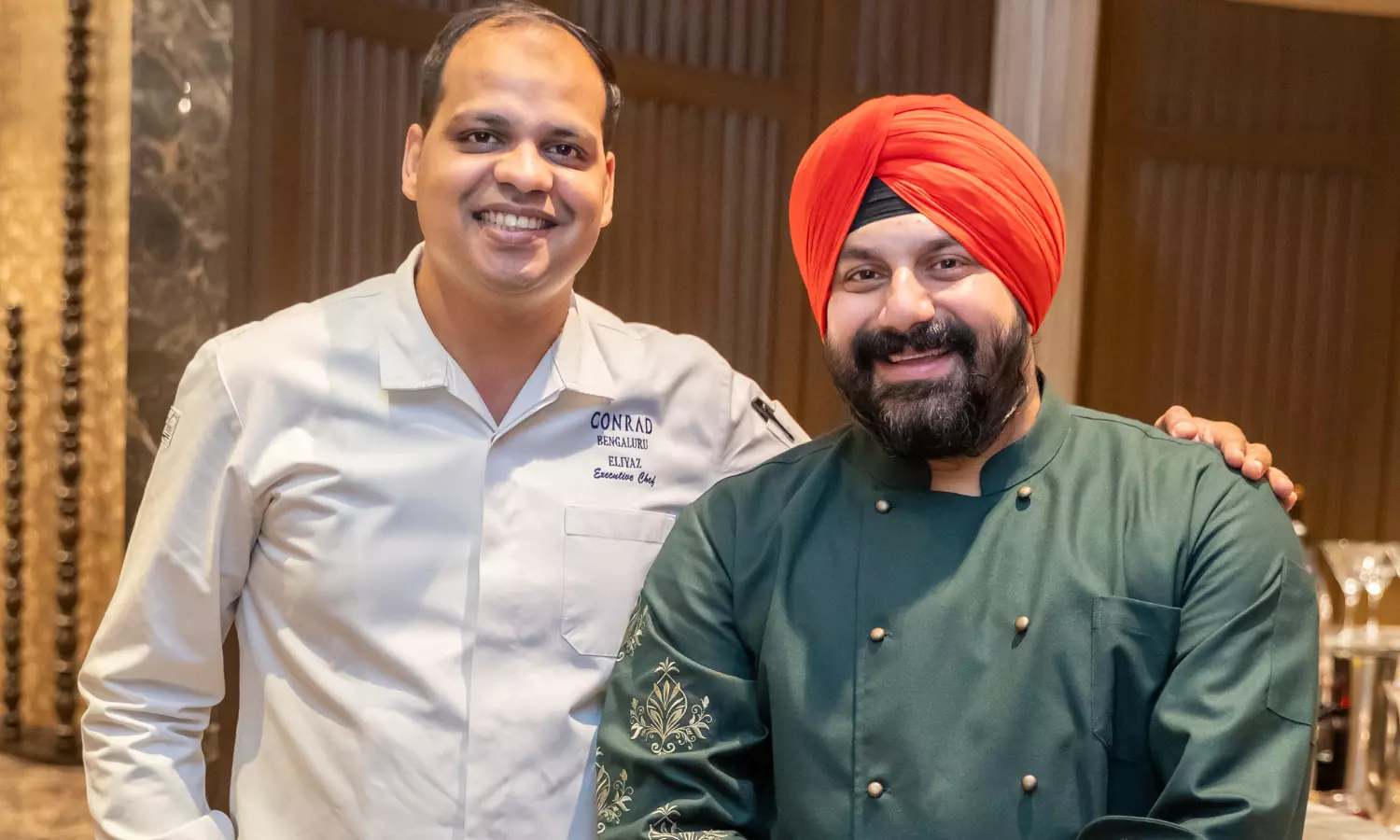
Indian Durbar, the signature Punjabi restaurant at Conrad Bengaluru, has reopened with a refreshed identity that marries nostalgia with modern elegance. At its helm are Executive Chef Mohammed Eliyaz and Chef de Cuisine Harmeet Singh, who together bring authenticity, storytelling, and emotion to the plate. From family recipes passed down generations to Amritsar-sourced ingredients and refined presentations, the relaunch celebrates Punjab’s culinary soul in a contemporary setting.
Indian Durbar has been reimagined for today’s diners — how did you strike a balance between preserving the authenticity of Punjabi cuisine and presenting it in a way that feels fresh and contemporary?
For me, Punjabi food is not just cuisine, its emotion, memory, and warmth. I felt a deep responsibility to preserve that authenticity. The recipes, the slow cooking, the spices remain exactly as a Punjabi household would prepare them. The whole game is on using fresh ingredients and originating Amritsar legendary stores from more than 100 years. Modernity comes in gentle touches such as the way we plate with elegance, the finesse of textures, the refinement of accompaniments. For example, a dal still tastes like home but arrives with artisanal breads, a curry carries the same soul yet is presented with lightness and balance.
Every dish at Indian Durbar is a bridge between the comfort of a grandmother’s kitchen and the sophistication of luxury dining. For me, that’s true joy and carrying forward traditions with honesty, while letting them shine in a way that speaks to today’s guests.
Chef Harmeet, many of your dishes are inspired by family recipes — how do you translate such deeply personal memories into food that resonates with guests who may be tasting them for the first time?
For me, every dish at Indian Durbar carries a memory. Creating the menu was an emotional journey, I dwelled into my childhood, remembering my mother’s first meals for me, or my father bringing fresh green leaves, what we call saag in Punjabi dialect. Each recipe, like Jeet Singh Cholai Saag or Bebey Wali Bhindi, reflects not just flavors, but love, care, and the effort that went into making them at home. Growing up in a close-knit Punjabi joint family, we lived by one saying,“live to eat.” I remember the beautiful moments when my parents would visit, and I would cook for them, just the thought of presenting these dishes would make me so emotional that I think I would cry. Sharing these foods with guests now allows me to bring that same warmth and nostalgia on every plate.Every service at Indian Durbar becomes a dream, I get to present the foods and memories that shaped me and see them resonate with people tasting them for the first time. That connection between my past and the guest’s experience is what makes every day here so fulfilling.I am desperately waiting for the day when my whole family will come to dine at Indian Durbar, I know that moment will be overflowing with emotions, and I might even find myself in tears, seeing them experience the dishes and memories that shaped my childhood.
Every region of Punjab has its own nuances — was there a conscious decision to represent certain sub-regional flavors or cooking traditions in the menu?
Absolutely. Punjab is not one flavorit’s a tapestry of traditions. When we curated the menu, I wanted to capture those nuances, the robust earthiness of Amritsari food, the rustic comfort of Malwa, the hearty flavors of Doaba, and the richfestive spirit of Majha.For example, our Amritsari Macchi brings alive the crisp, bold flavors of the Majha heartland, while the Cholai Saag with Missi reflects the soulful simplicity that Punjab is loved for. Some dishes are bold and celebratory, others simple and nostalgic but together they tell a complete story of Punjab. For me, it is important that when a guest dines at Indian Durbar, they don’t just taste food but experience the many hearts & tastes of Punjab on one table.
Storytelling seems central to Indian Durbar’s relaunch. Can you share an example of a dish where technique, presentation, and memory all come together to tell a story on the plate?
Storytelling at Indian Durbar is deeply personal for me. One dish that truly brings technique, presentation, and memory together is our Ghee Churi, which we lovingly call “Biji’s Last Bite”. In Punjabi households, Biji refers to the grandmother, and this dish is a tribute to her warmth and love. The ghee churi is carefully molded into a dome shape, paired with a delicate jaggery gel, and rests on a buttery, sugary sable base. Every element, the texture, the flavors, and the presentation is designed to evoke memories of family kitchens and the comforting sweetness of home. When a guest takes that first bite, they are not just tasting dessert they are experiencing a story, a memory, a moment from our own heritage, presented with elegance and love. It’s deeply emotional for me to share a piece of my own family through this dish.
If you had to pick one Punjabi comfort dish that instantly takes you back home, what would it be and why?
If I had to pick one Punjabi comfort dish that instantly takes me back home, it would be Chole Bhature. For me, it’s deeply tied to memories of Sunday mornings, when my parents would cook together and fill the house with warmth and aroma.Every bite takes me back to that feeling of family, love, and simple joy. Over the years, it has become more than just food, it’s an emotional connection to home, to tradition, and to the roots of the cuisine I now serve at Indian Durbar. Sharing it with guests allows me to pass on that same comfort and nostalgia, plate by plate.
When you are not cooking in a professional kitchen, what’s a simple meal you love to make for yourself or your family?
When I’m not in a professional kitchen, the meal I most love to make is a simple tempered Dal with steaming hot rice, finished with a generous dash of ghee. It’s humble, comforting, and reminds me of home, the flavors are simple, yet nourishing, and every bite carries a sense of warmth and care.For me, cooking this at home is not about technique or presentation, but about love and connection. It’s a moment to slow down, share, and enjoy the true essence of Punjabi comfort food with my family.
Looking ahead, what do you hope Indian Durbar will come to symbolize for Bengaluru’s diners — a place of nostalgia, a celebration of Punjabi culture, or a new benchmark in storytelling through food?
Looking ahead, I hope Indian Durbar becomes a place where Bengaluru’s diners can truly feel the heart of Punjab. Sharing our building with one of the most sacred Gurudwaras in the city adds a sense of reverence, it reminds us that this is more than food, its culture, tradition, and emotion on a plate.
For Punjabis and North Indians living here, I believe this will be a game-changer, a place that brings the true flavors and memories of home. What makes it unique is the depth of care we put into every detail sourcing ingredients directly from Punjab, making our own dairy products in-house, and dedicating months to R&D to ensure authenticity. No other restaurant in the city goes to this extent. This isn’t just about food, it’s about setting a new benchmark in storytelling, ingredient sourcing, and culinary experience. I want every guest to leave feeling they’ve tasted the soul of Punjab, and that Indian Durbar has created a space where nostalgia, culture, and craftsmanship meet, something truly extraordinary for Bengaluru’s F&B scene.
