Microplastics Everywhere: Scientists Turn to Moringa for Relief

26 April 2026 6:50 PM IST26 April 2026 6:50 PM IST
Meanwhile, researchers are concerned about the impact of ingesting microplastics in humans, as it has already been linked to digestive issues and lower fertility.
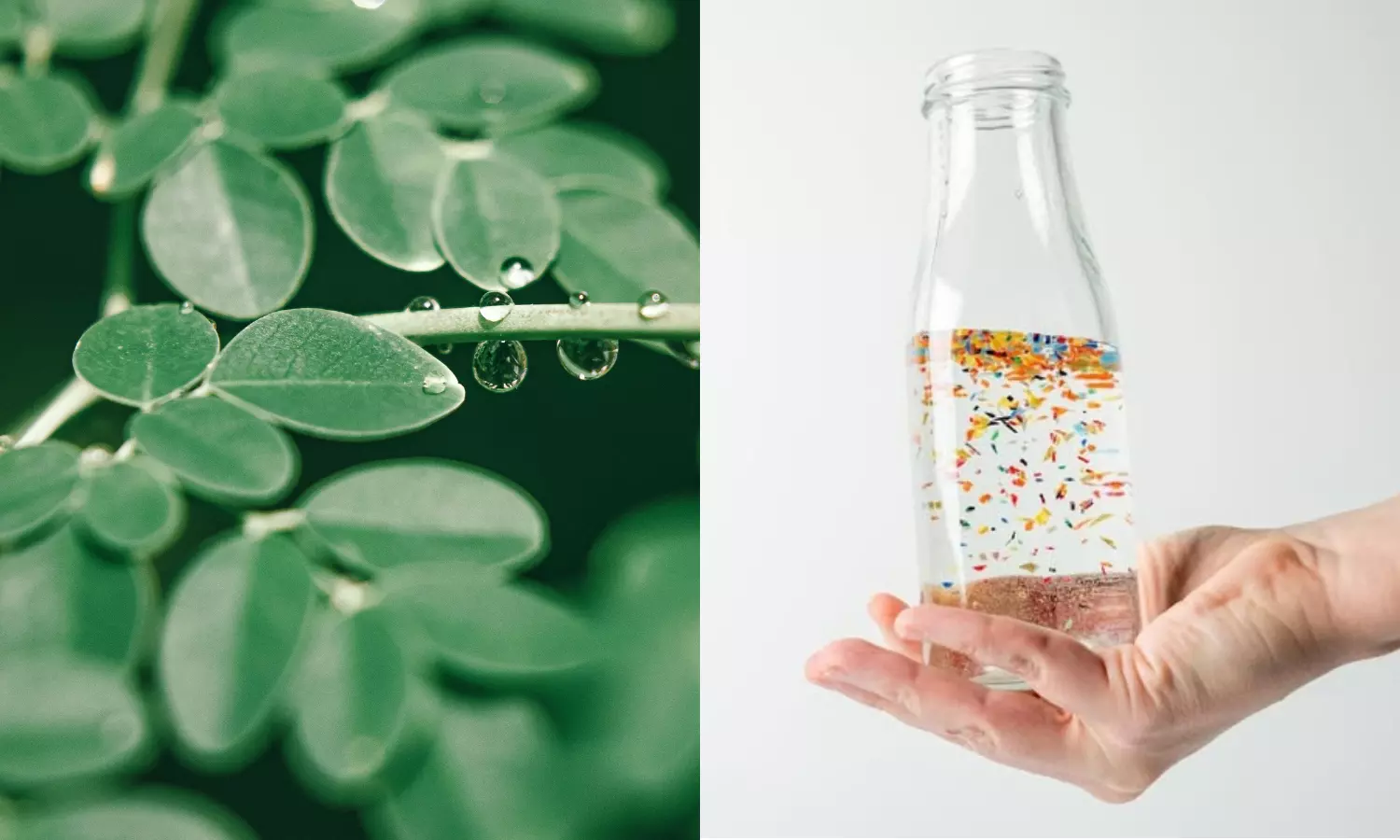
Representational Image/Pexeles&Facebook
Have you heard of microplastics entering your body through the food and water?
According to the World Health Organization (WHO), microplastics have been detected in human blood, lungs, and other organs, showing how widespread exposure has become.
Nevertheless, in water, many people use high-tech water filters to get rid of them. However, the chances of microplastics still remaining there.
In a recent study, it was shown that microplastics could be removed from water by using "Moringa oleifera," an ancient herbal tree, also known as the tree of life.
At the Institute of Science and Technology of São Paulo State University, researchers found that moringa seeds, which come from India and other tropical regions, can remove toxins from water and work just as well as chemical treatments.
Gabriella Batista, the author of the study, said, "The saline extract from the seeds performs similarly to aluminum sulfate, which is used in treatment plants to coagulate water containing microplastics."
"In more alkaline waters, it performed even better than the chemical product." In tests, the extract removed more than 98 per cent of the impurities, which is about the same as widely used chemical treatments.
Moringa has long been known for its wide range of medical benefits. The research mentions that it has been used to reduce inflammation, treat wounds, liver and lung diseases, and even cancer.
Due to the high mineral content in the plant, it has become a popular ingredient for skincare and moisturizers as well.
As people are becoming aware of the harmful effects of chemicals on us and our environment; and are opting for a chemical-free lifestyle. The data shows that many are choosing organic products instead of artificial ones. This change is noticeable when it comes to drinking water as well.
Adriano Gonçalves dos Reis, the lead researcher, cautioned, "There’s increasing regulatory scrutiny and health concerns regarding the use of aluminum- and iron-based coagulants, as they aren’t biodegradable, leave residual toxicity, and pose a risk of disease."
"For that reason, the search for sustainable alternatives has intensified."
Plastic pollution is now widely seen as a serious global problem for both nature and human health. According to 2026 data from the Ocean Blue Project, around 8 to 11 million tons of plastic enter the ocean every year. Because of this, tiny plastic particles called microplastics are now found almost everywhere, whether it is water, food, or any daily-use items.
They have even been found in 90 per cent of seabirds, as well as in human blood and lungs. Experts also estimate that people may unknowingly consume tens of thousands of microplastic particles each year.
Meanwhile, researchers are concerned about the impact of ingesting microplastics in humans, as it has already been linked to digestive issues and lower fertility.
As of April 2026, the U.S. Environmental Protection Agency (EPA) has also listed microplastics as a "priority contaminant group" in its draft Sixth Contaminant Candidate List, along with other important pollutants, such as medicines and drugs that can sometimes be found in drinking water.
Recent studies have also pointed out that natural coagulants derived from plants such as moringa are eco-friendly alternatives to artificial treatments.
Among them, "moringa" in particular has been widely studied. The new findings have also demonstrated that it can remove more than 90 per cent of microplastics when used under the right conditions.
The findings have also suggested that the use of moringa for water filtration could save money and energy. It may even reduce the need to buy chemicals and lower the costs of building and maintaining treatment systems.
However, researchers have also warned that gaps still remain, especially when it comes to using this method on a large scale.
Although early results look promising, bigger real-world tests are needed to find out whether moringa-based filtration would work effectively in large city water systems and more complex treatment setups.
( Source : Deccan Chronicle )

Next Story