LIFESTYLE | Phuket Expands From Tourist Hotspot To Art Destination

Thailand art biennale to continue until April 30
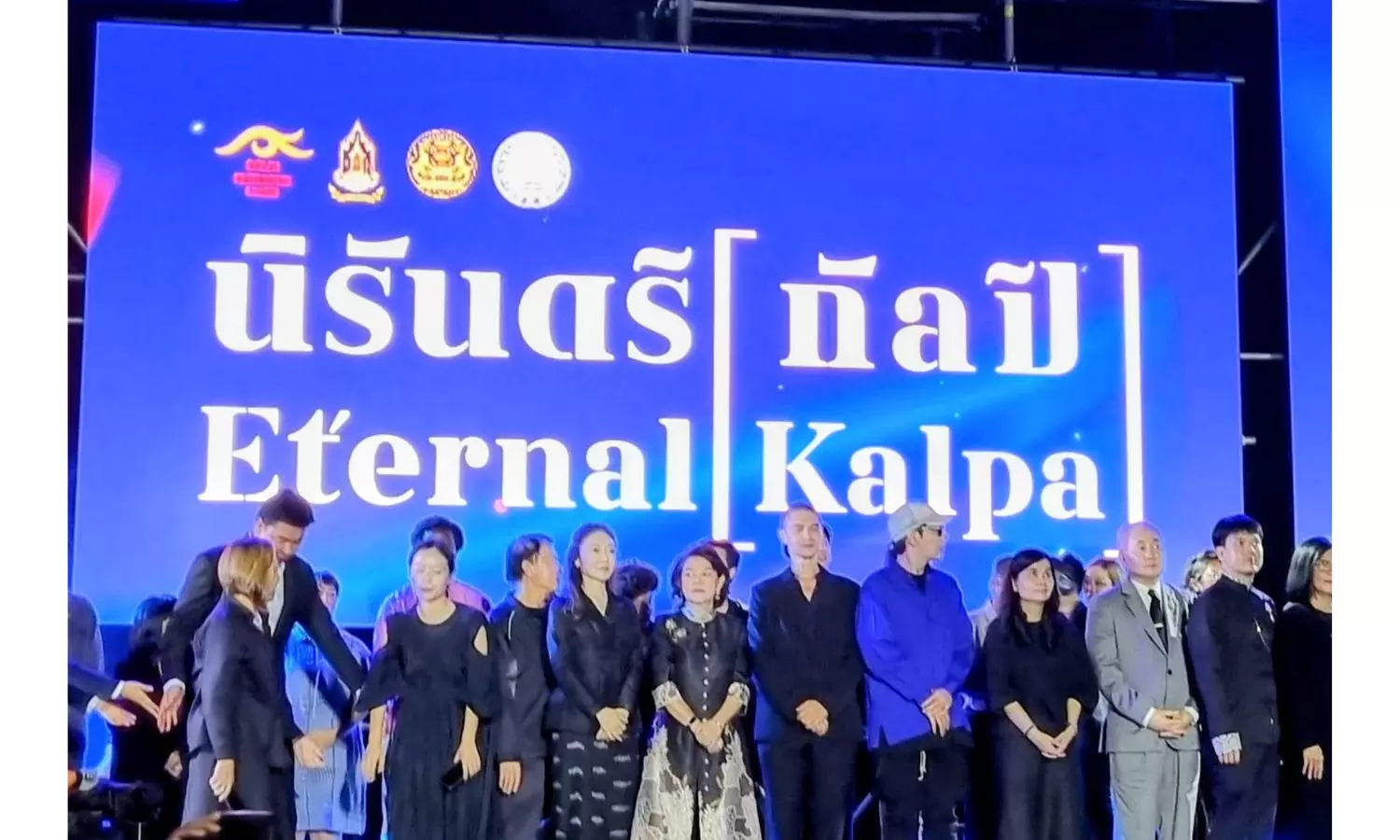
Phuket’s famed image as a beach destination has expanded into that of an art destination, thanks to the ongoing Thailand Art Biennale. This art extravaganza matches the scale and diversity of the on-going Kochi-Muziris Biennale in India.
With direct flights from New Delhi to Phuket, art-loving tourists from India can easily partake in the Biennale, spread across 14 venues throughout the beach town, all connected by shuttle services.
The Thailand Art Biennale (TAB) differs from the Bangkok Art Biennale (BAB), which is Bangkok-centric and managed by Thai Beverage Co. Ltd. TAB, on the other hand, is organised by Thailand’s Office of Contemporary Art and Culture under the ministry of culture and is held in a different province of the country every two years. Phuket is its latest venue, following Krabi, Nakhon Ratchasima, and Chiang Rai. Rayong is the next one, in 2027.
The grand opening of TAB on Phuket’s beachfront, was attended by ministers, bureaucrats, and diplomats. Since then, there has been a steady influx of visitors, including international tourists. The Thailand Art Biennale features 60 artists from 25 countries.
What makes the Phuket Biennale particularly compelling is its focus on the island’s historical past, long before the tourism boom. These include its coal and tin mining industries, coral and oyster fishing traditions, and colonial influences.
Participating international artists conducted extensive research on these aspects, engaging with locals and scholars before creating site-specific works for the three-month event.
Many venues are historic locations, including a municipal market, an old distillery, a tin-mining mansion, a mangrove walkway, as well as old shophouses and ancient shrines.
Artistic director Arin Rungjang, along with curators David Teh, Hera Chan, and Marisa Phandharakrajadej, admitted that renovating these spaces was challenging, but ultimately added to the Biennale’s distinctive character. He informed that one of their consultant curators was Vidya Shivadas, director of the Foundation for Indian Contemporary Art in New Delhi.
The theme ‘Eternal Kalpa’ explores the cyclical nature of time, from the past to the present to the future, mirroring Phuket’s history as well as the ever-changing rhythms of nature and the environment.
It is no coincidence that the tsunami emerges as a recurring theme in several works, including those by the late, renowned Malaysian artist Nirmala Dutt and Japanese musician Ryuichi Sakamoto. Their works drew considerable attention at a vast municipal gymnasium that once served as a gateway for traders and travellers.
An old municipal market, once a slaughterhouse, featured two sound installations, ‘The Sound of Birds, The Sound of Coral Reefs’ by renowned Thai artist Pratchaya Phinthong. These works recalled Phuket’s past and present environments, while also calling for ecological regeneration.
An old liquor distillery, complete with a banyan tree believed to attract spirits, hosted Indonesian filmmaker Riar Rizaldi’s riveting film on underworld spirits, alongside Brazilian artist Luana Vitra’s striking installation titled ‘The Beads of My Rosary Are Artillery Bullets’.
The Chao Fah power station, originally a tin ore processing site, showcased the video installation works of Thai artist and filmmaker Chantana Tiprachart and Australian indigenous artist Taloi Havini.
Among the outdoor installations, Ghanaian artist Ibrahim Mahama presented a large jute installation at the Kho Rang Viewpoint, evoking the jute sacks once used to transport coal and food during Phuket’s colonial era.
Megan Cope’s tall oyster poles at Saphan Hin Park, part of her aboriginal Kinyingarra Poles series in Australia, connected two distinct coastal ecologies.
Eiji Sumi’s ‘Whisper of the Forest’ at the Saphan Hin mangrove walkway, blended light and sound in a way that marvellously amalgamated the spiritual and the ecological.
Promthep Cape, Phuket’s most famous sunset point, featured imagery of the globe as symbols of decolonisation, by South African artist Nolan Oswald Dennis.
The Pearl Theatre, the first venue to screen foreign films in Phuket which later became a nightlife hotspot, hosted a dynamic range of artists. These included Indonesian performance artist Melati Suryodarmo, and Thai artists Taiki Sakpisit and Oat Montien. The latter’s works explored identity and gender norms, through art, poetry and film. His biennale pieces addressed the themes of transgender identity, Patpong’s adult entertainment and even gender-affirming surgery. Montien informed that he was recently in New Delhi for an LGBTQ literary meet.
At an old municipal meeting hall, now converted to an art gallery, one encountered the architectural drawings of Sri Lankan artist Minnette de Silva, who studied at the JJ School of Art in Mumbai, worked there for several years and later returned to Sri Lanka, where she designed a pioneering housing complex in Kandy. Japanese architect Ryue Nishizawa, a recipient of the Golden Lion at the Venice Architecture Biennale, designed a library for children in Phuket and his drawings are also on display here.
The Phuket Biennale also featured a film on migrants by acclaimed Taiwanese filmmaker Tsai Ming-liang, hand-crafted batik textiles made of rubber by Italian artist Rossella Biscotti, and a unique food tuk-tuk by Anuwat Apimukmongkon.
Other venues included well-known Chinese shrines like the Katu Shrine and Jui Tui Shrine, the shop houses of Phuket Town (with many renowned artists including the famed Araya Rasdjarmrearnsook from Thailand) and charming boutique spaces like the Mellow Pillow Hotel, once frequented by fishing boat owners.
It was here that one encountered the only participating artist from India, Mochu, who shifts between Delhi and Berlin and previously exhibited at the Kochi-Muziris Biennale in 2018. His collaborative work with Turkish artist Merve Ertufan combined the philosophical texts of the Ion Drift with Phuket’s tourism hype, resulting in unique ‘Philosophical Magnets’. He was delighted that the popular beach destination of Phuket had been raised to an art destination, with this well-researched Biennale.
“We want visitors coming to Phuket to realise that it is more than just sea and sand. It has numerous stories, and we have resurrected them at the Biennale” said artistic director Arin Rungjang.
Don’t miss this rare opportunity to understand and enjoy the multidimensional history of Thailand’s best-known beach destination, through this phenomenal range of art-works.
There are various events including lectures, seminars, workshops, cultural shows, during the biennale.
The Thailand Biennale is on till April 30.
For more information, visit www.thailandbiennale.org.
