What if Your Next Airport Layover Was Time to Recover?

From airport layovers to longevity, Ahmedabad’s new wellness destination is rethinking how we spend time between flights, bringing high-tech recovery, relaxation and personalised wellness into the travel experience.
For most travellers, a few hours at an airport usually mean coffee, shopping, scrolling through the phone or finding a comfortable seat and waiting for the boarding call. But what if that waiting time could instead be used to sleep, unwind, recover from a long journey or simply switch off for a while?
That is the thinking behind Bastian Hospitality, the wellness arm of Maison Twenty-Seven, the 52,000 sq ft destination adjoining the arrivals area of Terminal 2 at Ahmedabad’s Sardar Vallabhbhai Patel International Airport. Developed by Adani Airports in partnership with Bastian Hospitality, the destination brings together dining, wellness, fitness, recovery, entertainment and lifestyle experiences under one roof.
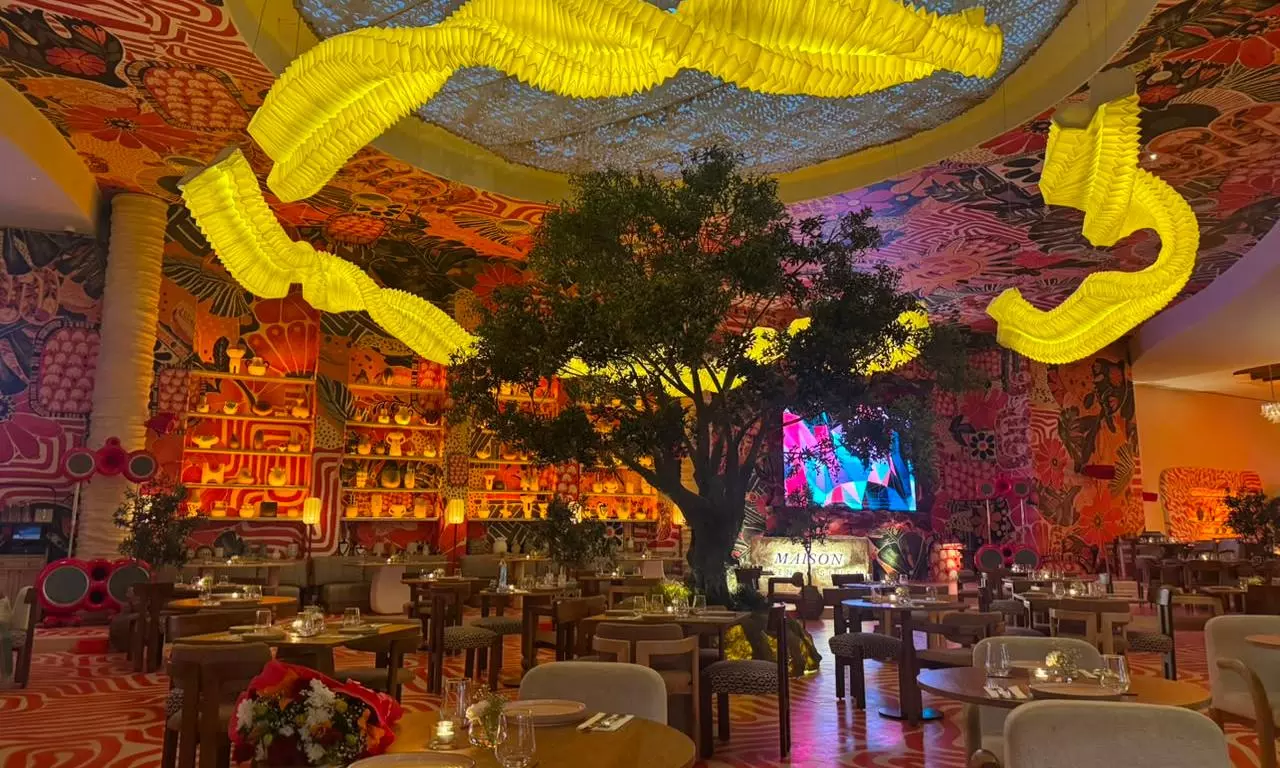
Bastian, which made waves in Mumbai as a posh dining address rolls out a red carpet to the guests arriving at this humongous Maison Twenty Seven property in Ahmedabad. The interiors are plush, the decor and lights very tastefully done. The place is very instagram worthy. The menu has everything...from South Indian breakfast and salad bowls to Asian, Italian and Korean. Maison Twenty - Seven by Bastian lives up to the reputation of its earlier outlets. Same with the beverages too. Even though there is no alcohol right now, there are a plethora of interesting zero-proof drinks to choose from.
For Bastian Hospitality, whose founders include Ranjit Bindra and actor-entrepreneur Shilpa Shetty, Maison Twenty-Seven marks its entry into Ahmedabad. For Adani Airports, it is part of a larger attempt to make airports more than transit points and build spaces that can also attract local residents, business travellers and families.
Inside all that bustle is a considerably quieter proposition.
The idea was born from a simple observation. The people behind the concept had travelled internationally and seen how wellness was evolving elsewhere, with facilities offering cold and hot plunges, biohacking, recovery therapies and technology-led approaches to wellbeing. They also noticed that people from Ahmedabad were travelling to Mumbai, Delhi and even overseas to access some of these experiences.
The question, then, was why Ahmedabad should not have something of its own.
“Longevity is something where people now have started seeing themselves not only living longer, but the main focus is living healthier,” says a spokesperson at the centre.
That distinction is at the heart of the place. It is not being positioned as another conventional spa, where the objective is primarily relaxation. Nor is it intended to operate purely as a clinical wellness facility. Instead, Maison Twenty-Seven brings together recovery, fitness, relaxation and technology, with doctors involved in determining which therapies are appropriate for an individual.
The equipment reflects that difference.
There are temperature-controlled hot and cold plunge pools, traditional sauna, red-light sauna, steam and individual therapy rooms. There are Western and Ayurvedic treatments, along with hot stone therapies. The facility also has dry flotation, photobiomodulation and cryotherapy.
The Mind Sync therapy is perhaps the most intriguing for someone simply looking to disconnect.
The reclining system moves almost 90 degrees backward, changing the body’s centre of gravity and creating an unusual sensation of weightlessness. The experience combines sound-based vibration with 12 programmed modules, each designed for a particular purpose. Once the session begins, the idea is to close your eyes, settle into the music and let the mind disengage from the day’s distractions.
“The moment you relax, you don’t need to open your eyes. You have to be in a very calm zone and just go with the sleep itself,” explains a doctor.
The intention is less about being entertained and more about allowing the mind to stop processing everything around it. Work, deadlines and other immediate stresses are temporarily pushed out of the picture.
Dry flotation works along similar lines. The body rests on an aqua bed that creates a sensation comparable to floating in the Dead Sea, accompanied by sound designed to encourage relaxation.
Then there is photobiomodulation, essentially a red-light therapy bed. A 30-minute session uses red light as part of a wellness protocol, with the centre’s team describing its applications in areas including skin and recovery. Here too, the treatment is not meant to be randomly picked off a menu. The in-house doctors assess the guest and determine what forms part of the individual’s circuit.
The most dramatic piece of equipment is perhaps the cryotherapy chamber, which can reach minus 85 degrees Celsius. A session lasts around three minutes and exposes the body to an intense burst of cold. But despite the theatricality of stepping into a chamber at such temperatures, the treatment, I am told, is approached as part of a supervised programme rather than a dare for the adventurous.
The same applies to the plunges, sauna and other therapies. The idea is to understand what a person needs before putting together a combination of treatments. That is particularly relevant when the target audience extends beyond the traditional wellness customer.
The founders see younger professionals and Gen Z as an important part of the conversation because stress and burnout have become increasingly normalised in working life. The premise is that wellness cannot simply mean an occasional massage after an exhausting week. Sleep, recovery and understanding how the body responds to stress have become part of the larger discussion around health.
The bigger point, however, is that people are increasingly sleep deprived and are looking for ways to recover without necessarily disappearing for a week-long retreat. “We want people to now slow themselves down. And this is the place which will allow them to meet themselves,” adds the doctor.
That philosophy fits rather neatly with the location. Maison Twenty-seven has shorter treatments of around 30 minutes for travellers who may simply want to unwind, deal with fatigue or recover from jet lag before continuing their journey. For those living in Ahmedabad, the expectation is different. The centre is designed for people to spend around three hours rather than rush in for one treatment and rush out.
The idea is to combine a therapy with time in the pool, gym or other wellness areas, allowing the visit to become less of a treatment appointment and more of a few hours deliberately taken out of a busy day. That makes the airport an unusual but logical setting.
Ahmedabad’s city centre does not have an abundance of large sites that can accommodate such a combination of facilities. The airport also gives this centre access to an audience that is already accustomed to spending time waiting, whether between flights or before a journey.
And Maison Twenty-Seven itself is designed around that idea of staying rather than simply passing through. Alongside the famous Bastian Hospitality’s dining offering are spaces for entertainment, co-working, gaming and family use, with the wider destination intended to work for both travellers and Ahmedabad residents.
It is this blurring of categories that makes the project interesting. The same address can be a place to have a meal, meet someone for work, spend time with family or quite literally, lie down and do nothing.
For the promoters, however, the ambition extends beyond the airport. The founders see longevity becoming a much larger global wellness conversation, particularly as technology, diagnostics and personalised health become more accessible. The centre is also looking towards more advanced diagnostic capabilities that can assess aspects of posture, muscular alignment and physical imbalance in considerably greater detail.
The larger vision is to move from a person simply choosing a treatment to understanding why a particular treatment may be useful to them.
That is also why the centre’s proposition sits somewhere between the traditional spa and clinical wellness. A spa may offer relaxation. A clinical centre may focus on specific health interventions. Maison Twenty-Seven wants to bring relaxation, recovery, fitness, technology and medical guidance into the same lifestyle conversation.
And perhaps that is where the idea of an airport wellness centre starts to make sense.
We have become accustomed to filling every spare minute. A layover becomes another opportunity to shop, eat, answer emails or scroll endlessly. And Bastian Hospitality’s proposition is almost the opposite.
Use the spare hour to sleep.
Use the two-hour gap to recover.
Or, if you have three hours to spare, stop rushing altogether.
In a place designed around movement, Maison Twenty-seven is selling something increasingly difficult to find: permission to slow down.
