From Ghats to Looms: How Urmila Srivastava Weaves Banaras Into Every Saree

24 Sept 2025 8:53 AM IST24 Sept 2025 8:53 AM IST
For Urmila Srivastava, Banaras is more than a city—it is a living symphony where weaving, music, and memory intertwine.
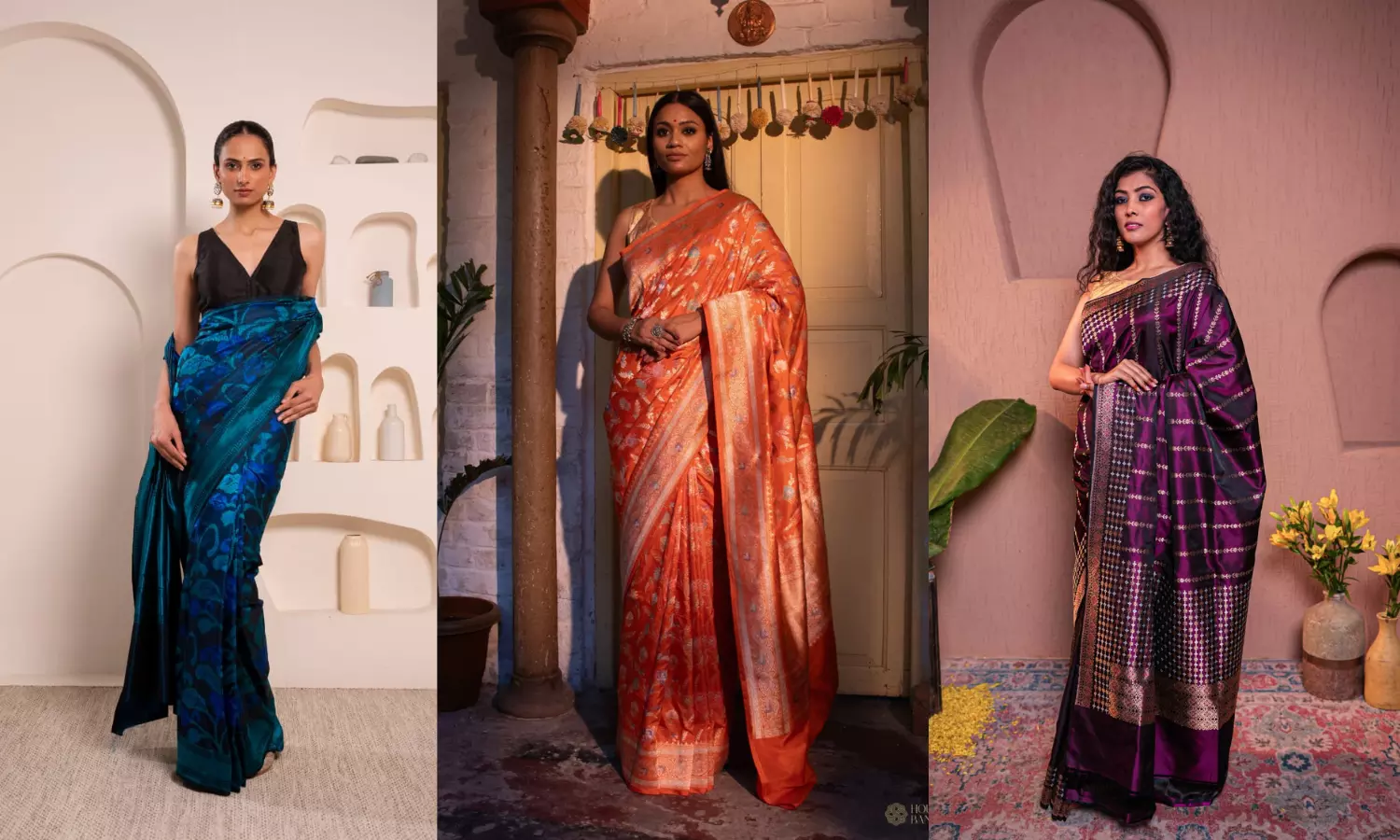
From forgotten tales of women weavers to the philosophy embedded in morning walks by the Ganga, Urmila reveals how Banarasi sarees transcend fabric to become vessels of heritage and hope. (Photo by arrangement)
In conversation with Urmila Srivastava, Founder & Creative Director of House of Banaras, we explore how poetry, music, temple architecture, and even fleeting moments of everyday life inspire her weaves. From forgotten tales of women weavers to the philosophy embedded in morning walks by the Ganga, Urmila reveals how Banarasi sarees transcend fabric to become vessels of heritage and hope.
If Banaras were not known for weaving but for another art form, what do you think your personal connection to the city would have been?
Banaras would have drawn me through its music—the eternal ragas that echo from every ghat. The city’s soul lies in its ability to transform the mundane into the sacred. Whether through silk threads or musical notes, Banaras teaches you to find divinity in craft. I believe I would have been equally mesmerized by the tabla rhythms or shehnai melodies, as they share the same mathematical precision and emotional depth that define our weaving.
You often draw from poetry, music, and temple architecture—if you had to describe a Banarasi saree as a raga, which one would it be and why?
Raga Yaman—it’s both classical and accessible, profound yet welcoming. Like our sarees, Yaman can be rendered simply or with infinite complexity. It begins with restraint, builds gradually, and culminates in breathtaking beauty. The way Yaman’s notes interweave mirrors how our weavers create magic with silk and zari—each thread finding its place in a larger, timeless composition.
What’s one forgotten or overlooked story from Banaras’ history that you wish more people knew?
The story of women weavers who worked alongside their husbands in medieval karkhanas. History remembers the master weavers, but countless women contributed to the intricate details—the delicate borders, the subtle color gradations. They were the unsung artists whose hands shaped the very identity of Banarasi silk. Their legacy lives in every saree we create today.
Do you remember a particular moment in the weaving alleys of Banaras that completely shifted how you saw the craft or its people?
I watched a 70-year-old weaver teaching his granddaughter, her tiny fingers following his weathered hands across the loom. In that moment, I realized we weren't just preserving techniques—we were safeguarding an entire philosophy of patience, precision, and devotion. The craft wasn't dying; it was evolving through generations, each adding their own understanding to centuries of wisdom.
If you could time-travel to a royal karkhana of centuries past, what would you want to observe first—the designs, the weavers, or the way they imagined their patrons?
The conversations between weaver and patron. I am fascinated by how desires were translated into designs—how a Mughal emperor’s vision became geometric patterns, or how a queen’s personality influenced color choices. These dialogues between creator and commissioner birthed the very essence of Banarasi weaving: the art of making dreams tangible through silk.
Outside of weaving and textiles, what’s a creative ritual or practice you cherish that keeps you grounded and inspired?
Morning walks along the Ganga. The river teaches you about continuity and change—how something can remain eternal while constantly flowing. This paradox is central to our work: honoring tradition while embracing innovation. The water’s movement often inspires new patterns, and the early morning light reveals color combinations I later translate into our weaves.
Urmila Srivastava
What’s the most unusual place or moment where inspiration for a weave struck you?
In a Delhi metro station, watching light filter through the geometric ceiling panels. The interplay of shadows and illumination reminded me of how zari catches light on silk. That evening, I sketched what became “Rangmahal - The Sunset Palace”—where architectural grandeur meets the golden hour's magic. It taught me that inspiration can strike anywhere when you carry the spirit of Banaras within you.
What makes a House of Banaras saree feel like an heirloom rather than just attire?
The stories woven into every thread. Each piece carries the weaver’s intention, the designer’s vision, and the wearer’s dreams. We document the inspiration behind every design, the hands that created it, and the techniques employed. When you wear our saree, you're not just dressed—you're connected to centuries of artistry and the promise that this beauty will endure for generations.
How do you balance tradition with what today’s women are looking for?
By listening deeply to both our heritage and our customers. Traditional motifs find new expressions in contemporary palettes. Ancient techniques create modern silhouettes. We honor the past not by freezing it, but by allowing it to breathe and grow. Today's women want authenticity with relevance—they seek the soul of tradition wrapped in the language of today.
( Source : Deccan Chronicle )

Next Story