Understanding Andropause and the Mid-Life Health Upgrade

28 Nov 2025 3:35 PM IST28 Nov 2025 3:35 PM IST
A closer look at Andropause—the silent hormonal shift men face from their mid-30s, and why awareness may be the first step to better ageing.
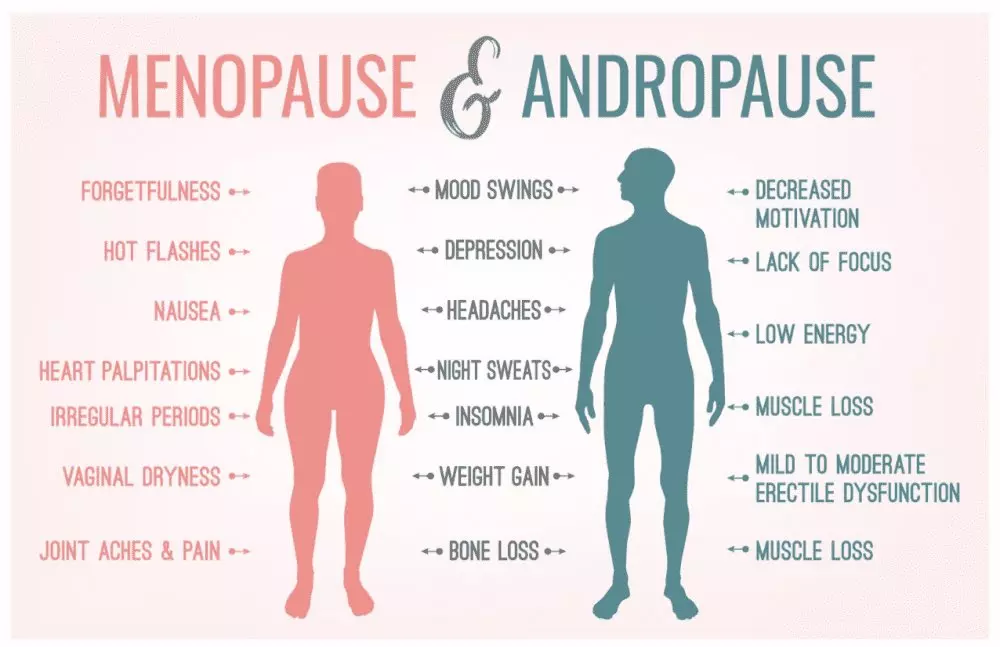
Menopause and Andropause
The concept of hormonal transition has, for decades, been primarily associated with women and menopause. However, a growing body of health discussion brings into the light a phenomenon many men experience but few talk about: Andropause, often termed "male menopause." Contrary to the popular belief that a significant hormonal shift happens late in life, the data indicate that the process actually begins much earlier than most people realise, starting from the age of 35 onwards.
Andropause is not an abrupt cessation of hormone production, but rather a gradual and steady decline in testosterone levels occurring over the years. This subtle reduction, almost imperceptible in the early years, forms the basis for an astonishing array of physical and mental changes that affect a man's quality of life.
Comprehensive in its impact, its manifestations are rooted in key areas of daily well-being: decreased energy levels, stubborn increases in abdominal body fat, changes in mood, sleep disturbances, loss of libido, and noticeable decreases in muscle strength. These symptoms are often justified as mere stress or as an unavoidable consequence of ageing, with men frequently forgetting about the real hormonal trigger.
Understanding the timeline of Andropause is crucial for proactive health management. The process can be mapped across three distinct phases:
Early Decline (Pre-Andropause) ranges from 35 to 45 years. It is during this time that the first subtle drops in testosterone take place, which often bring unexplained fatigue or slight difficulty with losing weight. The following decade, from 45 to 55 years, marks the Active Transition, or Andropause itself. Typically, at this point, symptoms become more well-pronounced, and the shifts in hormones can be felt as a sharp change in energy and mood. Lastly, the phase of Stabilisation or Post-Andropause, from 55 years onward, shows hormone levels settling into a lower baseline.
The key message derived from this realisation is one of empowerment, not resignation. The decline is natural; the suffering is optional. Experts stress that the appropriate methodology, which includes detailed lifestyle modification, nutrient-dense nutrition, proper herbal supplementation, and focused health objectives, dramatically shifts how a man feels, functions, and ages. One aimed to minimise the effects of the hormonal downturn, keeping both the body and the mind resilient.
Dr Alka Phutela, a nutritionist, frequently speaks about andropause, which is menopause in men. She showcases on her social media platforms that 'just like in women, men too undergo hormonal changes with increasing age'. She explains what andropause is and how natural and common this phase is.
After all, having a hormone imbalance is not a weakness but a critical biological warning signal. It is an urgent call to action-a warning to re-evaluate current habits and proactively upgrade one's health strategy. In acknowledging Andropause, men can move beyond passive acceptance of decline and into a phase of informed, vibrant middle age.
The article has been authored by Siftpreet Kaur, an Intern at Deccan Chronicle.
( Source : Deccan Chronicle )

Next Story