Revolutionising cancer care: Imaging, theranostics, diet

PET scans use fluorodeoxyglucose (FDG), a radioactive form of glucose, to show how aggressively tumours consume glucose
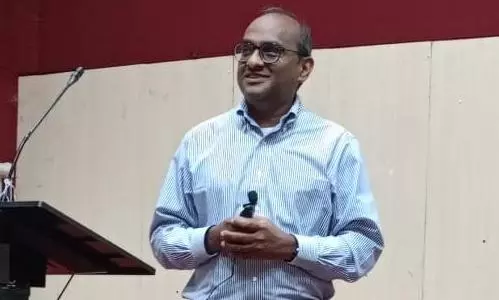
Hyderabad: Advancements in imaging technology, theranostics and personalised medicine are reshaping cancer treatment and drug development, said Dr Sridhar Nimmagadda, a professor at Johns Hopkins School of Medicine. He explained how modern imaging techniques were helping researchers detect cancer earlier, improve treatment precision and reduce costs.
A major focus of his lecture at the JNTUH’s biotechnology department on Thursday, was Positron Emission Tomography (PET) imaging, which allows real-time tracking of cancer cells. PET scans use fluorodeoxyglucose (FDG), a radioactive form of glucose, to show how aggressively tumours consume glucose. This is crucial in identifying cancer recurrence and dormant cancer cells—two major challenges in treatment.
Dr Nimmagadda spoke about theranostics, a field that combines diagnosis and therapy. Scientists are experimenting with Actinium-225, a radionuclide that selectively targets and destroys cancer cells without harming healthy tissues. This approach could significantly improve treatment effectiveness while reducing side effects.
The discussion also covered the growing evidence on the role of diet and gut microbiome in cancer therapy. Studies indicate that a high-fibre plant-based diet strengthens immune response and enhances the effectiveness of immune checkpoint inhibitors, a common cancer treatment. In contrast, processed meat-heavy diets may disrupt gut microbiome balance, potentially lowering treatment success rates.
The lecture was attended by the university registrar Dr K. Venkateswara Rao, college principal Dr G.V. Narasimha Reddy, department head Dr Archanagiri and faculty members including Dr Saida Naik, Prof. A. Rajani, and Prof. N.V. Ramana.
