Experts Highlight Renal Denervation for Resistant Hypertension

AIG Hospitals specialists emphasize the growing prevalence of hypertension in India and the promising role of renal denervation in controlling resistant cases
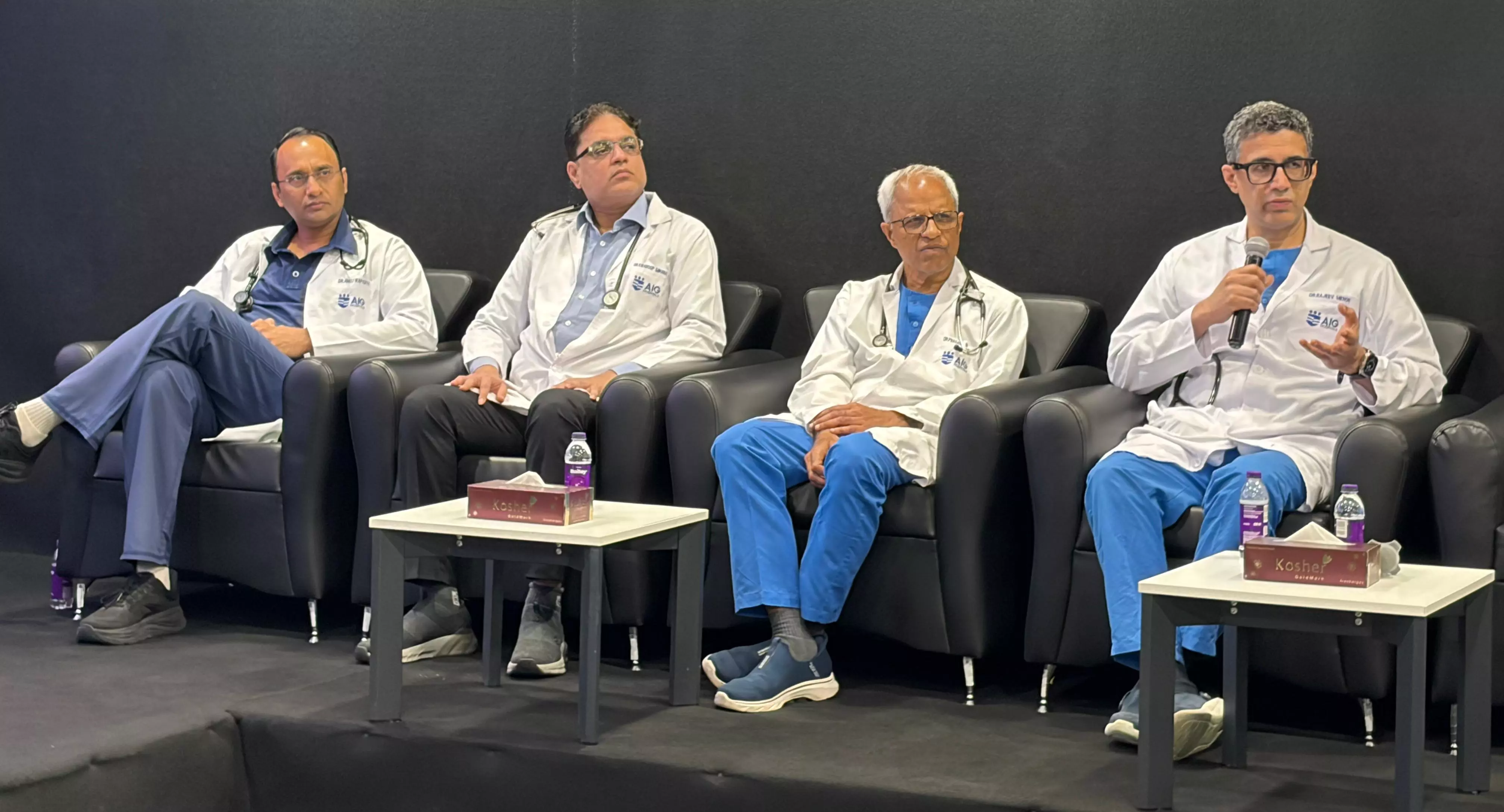
Hyderabad: Hypertension remains one of India’s most pressing public health challenges, with an estimated 20 crore adults affected, according to the India Hypertension Control Initiative. Alarmingly, only around 2 crore individuals have their blood pressure under control, underscoring the urgency of addressing this condition.
Medical experts from AIG Hospitals, including Dr. Rajeev Menon, Dr. Anuj Kapadiya, Dr. Swaroop G Bharadi, and Dr. Prasada Reddy, highlighted the growing prevalence of hypertension and resistant hypertension, discussing innovative therapies such as renal denervation (RDN) that have shown promising results in controlling blood pressure.
Data from the National Family Health Survey indicates that hypertension prevalence ranges from 16% to over 25% in certain states, with urban areas recording higher rates of uncontrolled blood pressure despite treatment. Resistant hypertension—defined as blood pressure above the therapeutic goal despite using at least three antihypertensive agents, including a diuretic at maximum doses—remains an under-recognized challenge. Hyderabad’s prevalence is estimated at 22.6%, according to NFHS-5.
Resistant hypertension often progresses gradually, manifesting as headaches, dizziness, breathlessness, or occasional chest discomfort. Persistently elevated blood pressure exerts sustained strain on the cardiovascular system and other organs. Clinical studies show that lowering systolic blood pressure by just 10 mmHg can reduce the risk of heart disease by 20% and stroke by 27%.
Dr. Swaroop G Bharadi, Co-Director Cathlab and Consultant Interventional Cardiologist at AIG Hospitals, explained, “While antihypertensive medicines are effective for many, control remains difficult for a significant number of patients. Renal denervation is a minimally invasive, catheter-based procedure that targets overactive nerve signals between the brain and kidneys, helping to lower and stabilize blood pressure over time.”
Dr. Anuj Kapadiya shared a recent patient case: a 41-year-old with severe headaches and uncontrolled hypertension underwent RDN, resulting in a drop from 170/100 mmHg to 130/88 mmHg at discharge, along with symptom relief. Clinical studies indicate that patients can see up to a 50 mmHg reduction in systolic BP post-procedure, with sustained improvements at 1- and 6-month follow-ups.
RDN has demonstrated reductions in the number of antihypertensive medications, improving adherence and reducing side effects. Experts emphasized that better blood pressure control can lower risks of heart attack, stroke, kidney disease, and long-term healthcare costs, enabling patients to lead healthier and more active lives.
Hypertension control, especially in resistant cases, remains critical for both individual wellbeing and broader public health outcomes, with therapies like renal denervation offering renewed hope.
