Anaganaga, Where the Telugu Food You Know is Seen a Little Differently

After years of travel, research and food trials, Anaganaga brings the diverse culinary traditions of Telangana, Rayalaseema and Andhra to a premium dining table
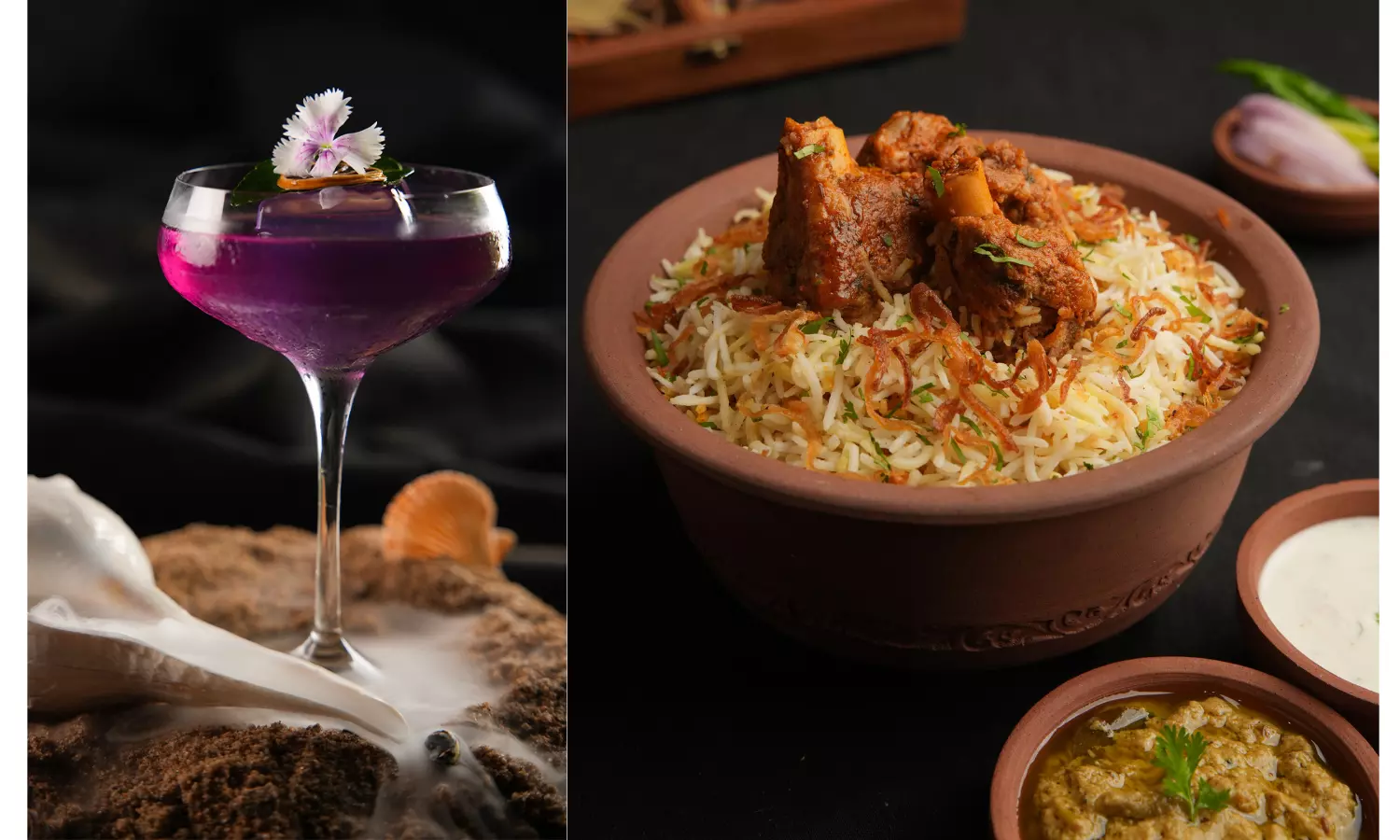
There is something instantly recognisable about a meal that reminds you of home. It could be the sharpness of gongura, the comfort of pappu chaaru annam, the earthy flavour of a vegetable cooked with raw turmeric, or the simple pleasure of a chutney that you remember eating long before you knew to call it a regional speciality. At the newly launched Anaganaga, Telugu Culinary Tales in Jubilee Hills, Hyderabad, that familiarity is at the heart of the experience, even when the food arrives in forms you may not immediately recognise.
The 200-cover restaurant, spread across two floors on Road No. 45, has been shaped by more than three years of research and over 25,000 kilometres of travel across Telangana, Rayalaseema and Andhra regions. The journey was about tracing recipes, ingredients, cooking methods and food memories that have travelled through family kitchens and communities.
The interiors, designed by architects Aamir Sharma and Hameeda, carry the same idea of Telugu identity without turning the restaurant into a literal cultural set. Red and yellow, inspired by pasupu and kumkuma, run through the space, from the walls and staircase to the table details, while black pillars, including a central one inspired by the temple dwajasthambam, break the brightness. Digital artwork on the ceiling, along with hand-painted elements, brick and other natural materials, brings in references to Telugu life in a more fresh and nuanced visual language.
Co-founder Rohith Vasireddy says the research brought dishes into the menu that may be familiar in their places of origin but rarely find their way into restaurant kitchens in Hyderabad. Bhojwari Chicken, for instance, reflects the food traditions of people who moved to Telangana from Maharashtra and settled here generations ago. Eedula devarabanda kodi Kaddilu takes its name and masala from a place near Kurnool, while Pachi pasupu kommula koora uses raw turmeric in a preparation discovered during their travels.
“We got to know about that masala through our journey and hence got that on the menu. You don’t see this in any other regular restaurant,” says Rohith.
That idea of discovery runs through the menu. Mokkajonna Chaaru gives the familiar corn soup a Telugu twist, while Mulakkada Chaaru, a drumstick broth with moong dal and subtle spices, sets up the meal gently. For non-vegetarians, there is Miryala Kodi Chaaru and Ghosh Ki Marag.
Then come the dishes that play with memory and form. Dosa Waffles take one of the most familiar Telugu breakfasts and turn it into a crisp starter served with avocado dip. Siri Dhanyala Salad combines assorted crispy millets with avakaya oil-infused yoghurt and sweet tamarind. Pumpkin Leaf Cracker takes the place of a masala papad, topped with onion chutney, while Mulakkaya Cones use edible cones to reflect the restaurant’s zero-waste inspiration.
Anaganaga Churros arrive with house-blended green and ginger chutneys, while Pandu Mirapakayi Chutney brings the kind of heat that can easily become the most memorable part of a meal. A bottle gourd salad, cut into strands reminiscent of zoodles, comes with raw mango, coriander emulsion and puffed rice. Muntha Masala, inspired by the food of Vizag beaches, is served in an edible potato-starch cone.
There is also the comfort of Gongura Kichdi and Pappu Chaaru Annam, Sarvapindi with Pandu Mirapakayi Chutney, and Bagara Rice. These are dishes designed to invite recognition rather than make the diners wonder.
That balance was deliberate. Corporate Chef DVS Pavan Kumar, who has worked with ITC Hotels, has spent about two and a half years working with the team. More than 600 to 700 dishes were tried during food trials before the current menu of around 120 dishes took shape.
“The food our ancestors produced and ate reflected an understanding of seasonality, ingredients, nourishment and the way food supported the body. At Anaganaga, we are studying that knowledge and exploring how it can translate in a restaurant,” Pavan says.
The result is a menu that does not seem interested in replacing the old with the new. Traditional preparations sit alongside dishes that borrow their starting point from familiar foods. Dosa becomes a waffle. A leaf becomes a snack. Chutneys become dips. The reference point remains recognisable even when the presentation changes.
The same thinking extends to dessert. Tender Coconut Panna Cotta, Palakova and Rose Milk, and Popcorn Pebbles bring familiar flavours into a different setting, creating the kind of perfect ending that can trigger recognition without becoming a recreation of something from childhood.
Rohith is clear about what the restaurant is trying to achieve. “It is all Telugu food but in different forms. That is why we called it imaginative. And if you come to the mains, it is all the regular traditional food, kind of food that we usually make at home.”
Even the bar follows this vocabulary. The team has worked Telugu household flavours into cocktails and mocktails, including rasam with tequila, house-fermented preparations and drinks inspired by ingredients and traditions associated with the region. The intention is to make the Telugu connection extend beyond the plate.
Gopichand Cherukuri, who co-founded Anaganaga with Rohith, describes the idea as one that had been developing for nearly a decade, shaped in its latest form through research, travel and conversations around Telugu culinary traditions.
Perhaps that is what makes the meal linger in memory, without the need to make grand claims for it. You recognise something, then recognise it again in another form. A familiar chutney becomes the star of a new dish. A childhood flavour appears in a dessert. A food associated with a particular place turns up on a city table.
Anaganaga’s culinary story is therefore not simply about bringing regional food into premium dining. It is about how food survives by changing hands, travelling between communities, moving from kitchens to restaurants and finding new ways to remain familiar.
