From Cacao Pods to Compost: Inside Bon Fiction’s Sustainable Chocolate Journey

In the Godavari region of Andhra Pradesh, cacao is becoming part of a larger story about sustainable farming, local livelihoods and value addition. Bon Fiction works with more than 40 farmers across 500 acres, bringing their harvest together for controlled fermentation and drying. From encouraging better harvesting practices to turning discarded cacao pods into mulch and manure, the company is building a tree-to-bar model that connects the farm to the finished chocolate. Founder Akhil Grandhi talks about the region’s potential, the people behind the process and the challenges of growing cacao in an unpredictable climate.
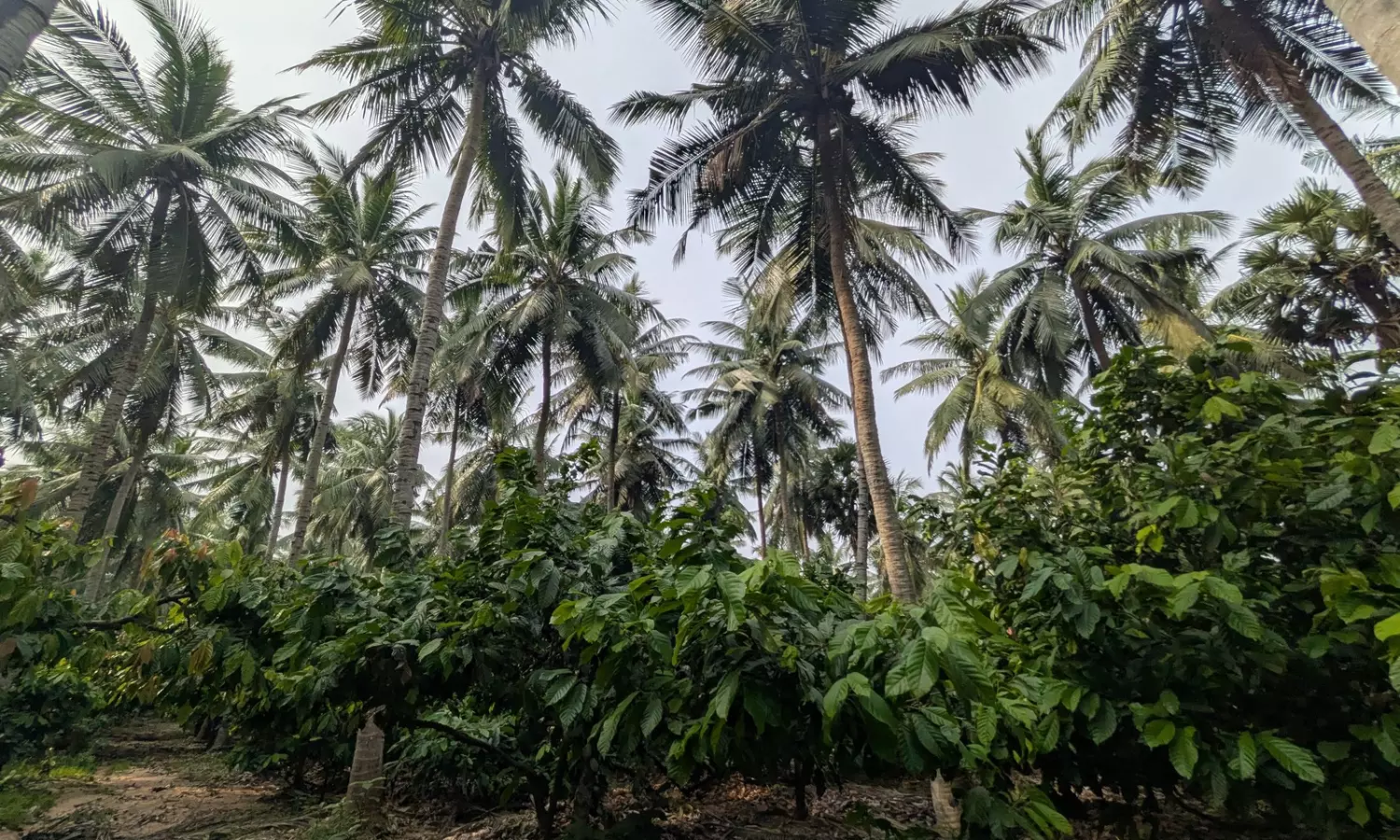
A chocolate bar may seem a long way removed from a farm in the Godavari region of Andhra Pradesh. But at Bon Fiction’s farm near Rajahmundry, the connection is visible at every stage. The cacao pods grow under the shade of coconut palms, are harvested from the trees, opened and taken through fermentation and drying before the beans make their way to the factory. What eventually reaches the consumer as a bar of chocolate begins with a crop that takes years to mature and demands close attention to weather, soil and how it is handled.
For Akhil Grandhi, founder of Bon Fiction, the journey is not just about the chocolate but also about the region and its farmers. The company works with neighbouring growers, bringing their harvest into a centralised system for fermentation and drying. As of November 2026, its network includes more than 40 farmers across over 500 acres, including its own and neighbouring farms. The aim is to build a more controlled process around a crop that is already familiar to parts of Andhra Pradesh, while creating a market for cacao that can be transformed into fine chocolate.
Akhil Grandhi
The Godavari region has several natural advantages. Cacao grows in tropical conditions, and the existing coconut and oil palm plantations provide a suitable environment for it. The trees benefit from the canopy, while the region’s warmth also helps with the fermentation and drying processes that follow the harvest. Akhil points out that Andhra Pradesh is the largest cocoa-producing state in South India, with Kerala also contributing significantly, while Karnataka and Tamil Nadu have smaller production volumes. He estimates Andhra Pradesh’s output at around 15,000 tonnes, though these are figures he shared during the conversation.
The crop, however, is not one that can be rushed. Cacao flowers take around four-and-a-half to five months to develop into pods. The timing of the rains matters because flowering can fall if the weather is unsuitable. Akhil explains that the ideal monsoon period is from around the end of June to early September. Flowers that appear after the rains can develop into pods that begin ripening from January onwards. Older plantations may yield earlier, but a new cacao tree takes around three-and-a-half years to produce its first crop.
Even then, Bon Fiction does not encourage harvesting from a young tree immediately. The team waits until the fourth year, removing flowers in the third year so that the plant does not expend its nutrition too early. The fifth and sixth years are when the tree can begin to deliver a stronger yield, depending on the nutrition and manure it receives.
The patience required to grow cacao is only one part of the process. How the pods are harvested can influence the tree’s ability to flower again. When Akhil walks through the plantation, he explains why the team has been encouraging farmers to change a familiar practice. Traditionally, some growers use a stick or hook to strike and twist the pods off the branches. The method can tear the fibres where the fruit joins the tree, damaging the area from which new flowers emerge.
“We avoid that. We are telling people not to do that,” he says, demonstrating how a pod should instead be sliced off. A clean cut, he explains, can heal over time, allowing the tree to flower again. This is one of the practices Bon Fiction says it has introduced among growers in the region since it began working with farmers in 2019. The company also trains workers and farmers to identify pods at the right stage of maturity rather than harvesting them too early or too late.
The distinction matters because cacao is not simply a matter of picking fruit and extracting beans. On average, around 30 pods yield a kilogram of beans, according to Akhil. The beans, still surrounded by their pulp when the pods are opened, then need to undergo fermentation and drying before they can be used for chocolate-making.
Beans
Bon Fiction buys ripe pods directly from neighbouring farmers at a per-pod price that varies with the season. The company’s fact sheet places its sourcing radius at around 25 kilometres from the factory. Rather than asking individual growers to ferment and dry their own harvest, the company brings the pods to its farm, where the process is carried out centrally. This allows it to monitor the quality of the beans and develop a consistent flavour profile.
Akhil says growers have gradually understood the quality requirements because the price they receive is better than what they would earn by selling beans directly, without having to bear the additional labour involved in processing.
The fermentation itself is closely monitored. Depending on the flavour and acidity the team wants to develop, the beans may ferment for anywhere between four and ten days. The pulp begins to drain as the beans are placed in fermentation boxes. Naturally occurring enzymes and bacteria act on the pulp, generating compounds that influence the eventual flavour of the chocolate. The team turns the beans every day or two, monitoring temperatures and adjusting the process according to the genetics of the cacao and the ambient conditions.
“It took a couple of years for us to understand what is working, what doesn’t work, how the temperature is affecting things,” Akhil says. “Our job here is to guide the process.”
The work does not stop when fermentation is complete. The beans are moved into tunnel dryers, where the team controls moisture and temperature. Drying is an expensive part of the operation, but Akhil believes the investment is necessary to preserve the quality of the beans. They are turned during the drying process to ensure an even result and are later packed in hermetically sealed bags until they are required at the factory.
Beans Dried
The system also allows the company to buy cacao during the off-season. The beans harvested then tend to be smaller, making them more difficult to roast without overdoing them. But Akhil says there is a reason to continue buying them. If the company does not purchase the off-season crop, farmers may have little choice about where to sell it. Providing a market during that period helps growers find a buyer even when the harvest is not at its best.
Climate, however, remains a major uncertainty. During the conversation at the farm, Akhil points to the flowers that have fallen after recent cyclones and unusual weather. The company had expected the season to begin earlier, but rainfall and heat affected the crop. He says the off-season harvest was also hit by unusually high temperatures and irregular rainfall. With flowering and pod development dependent on the right conditions over several months, sudden changes can have consequences well beyond a single week of bad weather.
The farm’s approach to the soil and its by-products is another part of the operation. The trees grow beneath a canopy that helps reduce evaporation from the ground. Drip irrigation is used, while fallen leaves are left to decompose rather than being cleared away. Over time, the leaf litter forms a soft layer of organic matter that returns nutrients to the soil.
The cacao pods are also put to use after they are opened. The shells are dried and broken down, with some of the material used as mulch and the crushed pods sent to other farms as manure. At the Bon Fiction farm, years of accumulated pod waste have gradually broken down into flakes and soil. Akhil says the company processed more than 15 lakh pods during the previous season. What remains after the beans are extracted is not simply discarded; it becomes part of the farm’s nutrient cycle.
There is a significant workforce behind these operations. During the season, around 25 to 30 people work in the farm and drying areas, in addition to five or six permanent employees there. The chocolate factory has a workforce of around 34, including a majority of women.
The region’s cacao ecosystem is also beginning to attract attention beyond the local market. Bon Fiction and grower Abburi Subbarao were included among the global Best 50 in the 2025 Cacao of Excellence programme. Their Godavari cacao received a Bronze recognition for Asia and the Pacific, presented at the Chocoa Trade Fair in Amsterdam in February 2026. The programme assessed 191 samples from 45 producing origins over 18 months, with the entries evaluated through blind tasting. The recognition is significant because it focuses on the flavour potential of the cacao itself, rather than the finished chocolate bar.
For Akhil, the opportunity lies in building on what the region already grows. The Godavari districts have the tropical conditions, existing plantations and agricultural knowledge to support cacao. What is needed is a system that connects growers to careful harvesting, fermentation and drying, and eventually to buyers who value the quality of the beans.
There are still challenges: the crop’s dependence on weather, the time it takes for trees to mature, the cost of controlled processing and the need to maintain quality across multiple farms. But the model is beginning to show what can happen when cacao is treated not merely as an agricultural commodity, but as the starting point of a value-added product.
At the end of the process, the consumer may see only a chocolate bar. In the Godavari region, however, that bar carries the work of growers, seasonal workers, fermentation teams and factory employees, along with the conditions of the land and the weather. It is a reminder that the story of fine chocolate does not begin in a shop or even in a factory. It begins much earlier, beneath the shade of a tree.
