Beyond The Vineyard: The community Spirit That Keeps Paso Robles going

From its cowboy-town roots to a growing wine destination, Paso Robles has transformed through its wine industry while holding on to the agricultural traditions, local partnerships and community spirit that define life in the region
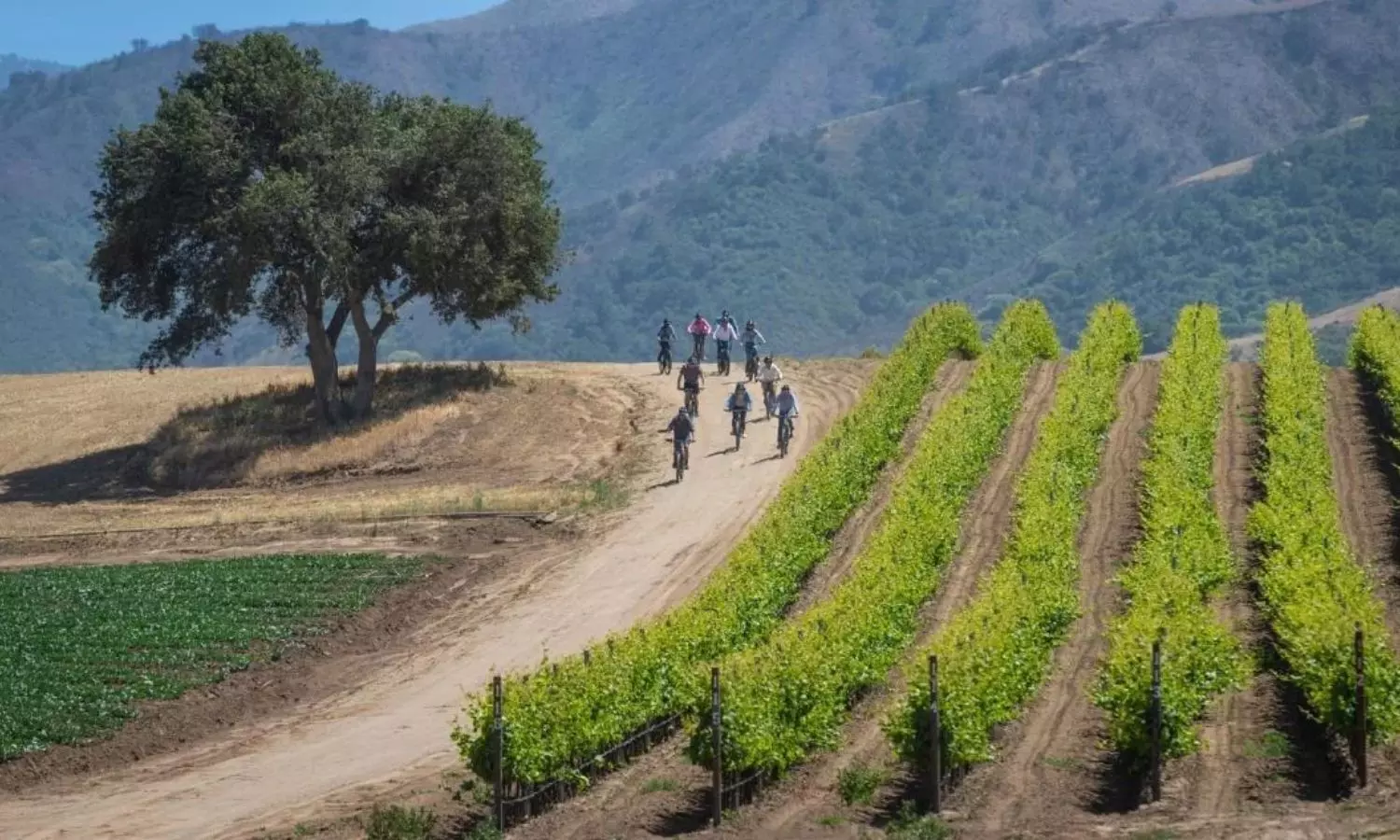
Paso Robles in California has seen its transformation from a farming community with grazing cattle and almond trees to a wine destination, but its agricultural roots and close-knit community continue to shape the town. The growth of the wine industry has brought jobs, hospitality and new experiences to the region, while local stories of neighbours helping one another reflect a community that has grown without losing its ties.
A look back at Paso Robles in the mid-1970s would reveal a very different place from the town visitors see today. The landscape had cattle grazing and almond trees, while some of the first wine grapes were being planted. The wine industry that has since become central to the region began to take shape in the late 1980s and early 1990s, according to those who spoke about the town’s evolution during a tasting hosted by Travel Paso at Hope on Park.
Downtown, too, has changed over the years. The introduction of a movie theatre in the mid-to-late 1990s led to a reorganisation of the streets around the town square. A major earthquake in December 2003 brought further changes, with a building collapsing and several parts of downtown subsequently being retrofitted.
The physical transformation has been accompanied by changes in the local economy. One spokesperson recalled moving to Paso Robles in 1990 and initially thinking of it as a cowboy town. The wine industry gradually brought greater attention to food, wine and hospitality, creating opportunities for people to build careers without leaving the area.
“When you take a small community that has doubled as fast as you have, we are going through growing pains as well,” observed Stacie Jacob, Chief Strategist, acknowledging that the town’s expansion has brought both benefits and challenges.
The team at Hope in conversation
Yet, community remains central to the way residents describe Paso Robles. One example came from nearby Templeton, where a historic feed business, operated by the same family for several generations, was destroyed by a fire. The family initially said it did not have the funds to rebuild. Within five days, according to the account shared during the discussion, the community organised five fundraising events and raised $1 million to help the business return.
The importance of the business extended beyond its owners. Local families depended on it to buy feed for livestock, including animals raised by children participating in agricultural shows. Its loss would have affected a much wider network of residents.
“That’s what we are about,” she says, describing the response as an example of the community’s character.
The same connections are visible at the farmers’ markets held in Paso Robles on Tuesdays and Saturdays. Residents shop for fresh produce, while chefs meet farmers to discuss what they need for their menus and, sometimes, what should be planted for future use. Stacie described the markets as an integral partnership between agriculture and the food businesses that serve the region.
The wine industry has also created opportunities for businesses to experiment and build relationships with local producers. At Hope on Park, the team spoke about sourcing peppers from a regular farmer for food pairings, turning an ordinary ingredient into a continuing local connection.
The Hope family’s own history reflects this approach. The family moved to Paso Robles in 1978 and began by planting apples and grapes, eventually shifting its attention towards grapes. Austin Hope entered winemaking at around 22, following the sudden death of his uncle Paul, after being encouraged to take on the responsibility.
