Telangana’s Micro-Cuisines Deserve a Place on the Global Table

Chef Michael Swamy’s Kakatiya à la Française is not about reinventing Telangana cuisine but rediscovering its forgotten ingredients, stories and techniques for a new generation.
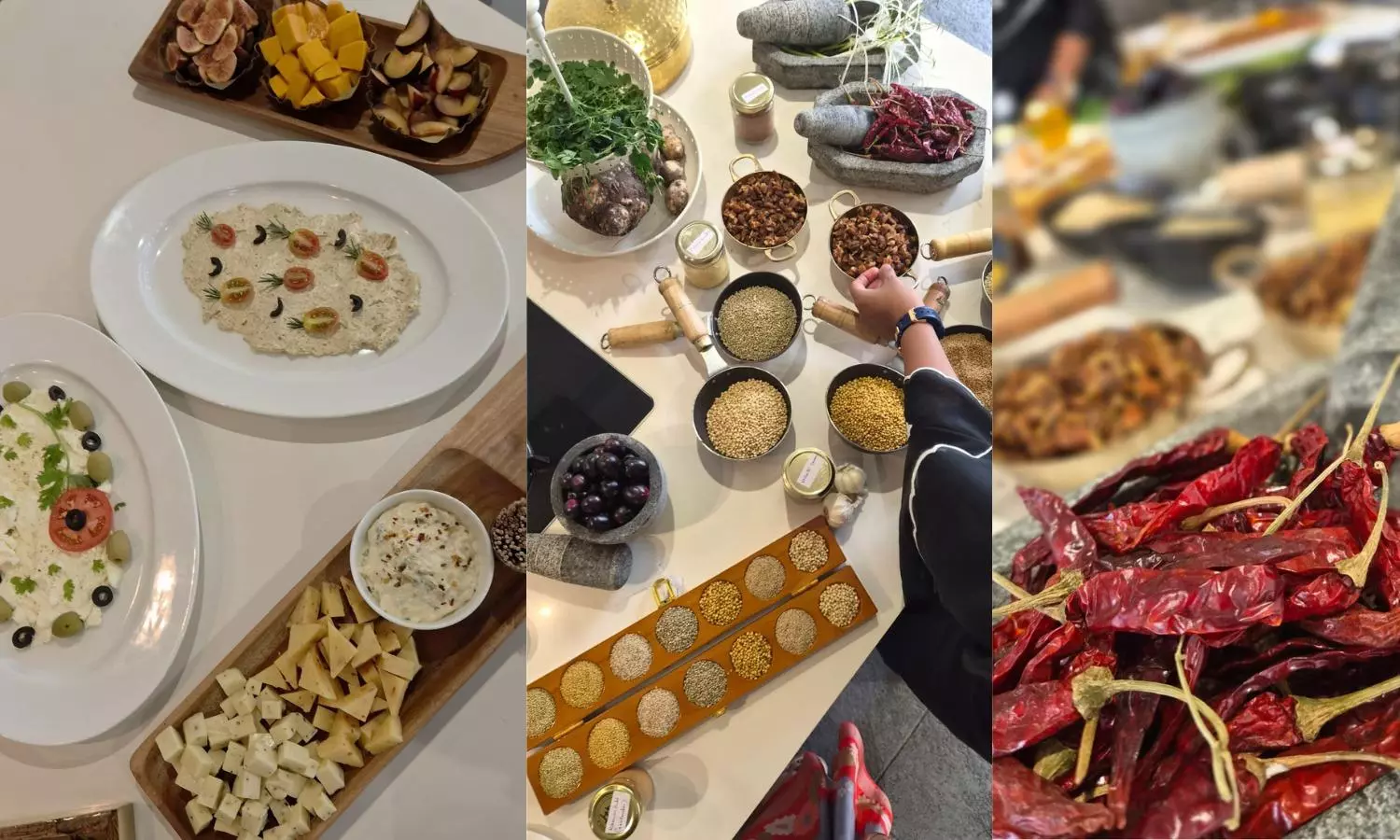
For Chef Michael Swamy, the future of Indian cuisine may well lie in its past. As he dived deep into the food traditions of the Kakatiya era for Kakatiya à la Française, what emerged was not simply a collection of recipes but an entire culinary landscape that has faded from public memory. While Hyderabad’s biryani continues to dominate conversations around Telangana food, the chef found himself drawn to lesser-known ingredients, tribal traditions and regional cooking practices that once defined the region's table.
“The Kakatiya story is about some of the micro-cuisines of Telangana,” he says, adding, “The cuisine has evolved over centuries, but it is still lesser known. Everybody knows biryani, but very few know about the regional dishes and ingredients that shaped the food culture of this region.”
Among those discoveries were ingredients such as mahua and wild forest honey, both deeply embedded in local communities and seasonal food practices. Swamy speaks with fascination about tribal honey gatherers who descend steep cliffs on ropes to collect honey from forest hives. The ingredient finds its way into dishes, glazes and preserves, carrying with it stories of landscape, survival and tradition.
“There is a lovely story behind every ingredient,” he says, adding, “People know mahua as an alcoholic beverage, but it can be used in many other ways. I make a mahua jam, a mahua glaze that I use for smoking chicken and even work with mahua oil.”
Chef Michael Swamy
What interested him even more was how food functioned as a seasonal guide for communities. Long before nutrition became a scientific discipline, people instinctively ate according to climate and need. Certain foods appeared in summer, others in winter, allowing the body to adapt naturally.
“In modern life we have forgotten seasonal eating,” he says, adding, “But seasonal foods are important because the body absorbs nutrients differently at different times of the year.”
The project also prompted him to examine older cooking methods that have gradually disappeared from kitchens. Stone-ground spices, earthen pots, wood-fired cooking and traditional smoking techniques once played a crucial role in shaping flavour. Today, convenience has largely replaced those practices.
“We are so used to mixers and grinders that we have forgotten how ingredients actually tasted when they were ground on stone,” he says. “The equipment itself contributed flavour to the food.”
Part of the festival’s philosophy is to bring some of those methods back, not as nostalgia but as a way of rediscovering authenticity.
That pursuit naturally led him to French cuisine, not as an external influence but as a complementary discipline. Swamy believes there are surprising parallels between classical French techniques and many traditional Indian cooking methods.
“What we are doing is not changing the original dish,” he explains. “We are refining the technique.”
He points to slow-cooked stocks, long-simmered stews and layered cooking processes as examples of practices that exist in both culinary traditions. The French contribution, he argues, lies in discipline, consistency and a deeper understanding of technique.
“If you look at a good stock, it takes time, patience and precision,” he says. “Many of these principles existed in Indian cooking too, but over time we have moved away from them.”
For chef Swamy, one of the greatest challenges facing Indian food today is standardisation. Traditional recipes have largely survived through oral transmission, passed from one generation to another rather than being documented systematically.
“Nothing has been truly recorded. Everyone tells you a different recipe,” he notes. That richness creates both opportunity and difficulty. While diversity keeps traditions alive, presenting regional cuisine to a wider audience requires careful research and documentation. This is where his collaboration with The Culinary Lounge becomes crucial.
“They are spending time doing the research and documenting these recipes. That allows us to create a standard format while still respecting the original dish,” he says.
The partnership is built on a shared ambition that extends far beyond a food festival. Swamy and the team envision documentaries, books, research projects and culinary storytelling initiatives that can introduce India’s lesser-known regional cuisines to global audiences.
“There is so much more to Indian food than what the world currently sees,” he says.
He is particularly passionate about moving conversations beyond a handful of familiar dishes. “I don’t want people to come looking only for butter chicken or dal makhani,” he says. “I want them to ask for the original breads of Telangana, the millet-based foods that belong to this region.”
The larger vision is not to compete with established Indian cuisines but to expand the world’s understanding of what Indian food truly is. For Chef Swamy, that means celebrating local ingredients, preserving culinary stories and giving regional traditions the international stage they deserve.
After all, recipes can now be found almost anywhere. Stories cannot. “Today you can get a recipe from anywhere. But the stories are being forgotten. We want to bring back those stories and help people understand the love behind the food.”
At its heart, Kakatiya à la Française is less about French cuisine and more about memory. It is an attempt to reconnect diners with ingredients, techniques and narratives that once shaped everyday life across Telangana. Through careful research, disciplined technique and a respect for heritage, Swamy hopes to prove that the most exciting culinary discoveries are often the ones waiting quietly in our own backyard.
