He Inherited a Farm, but Chose to Rethink It

Apuroop Arja grew up in a farming family that had built its success through conventional agriculture. But after leaving home, discovering permaculture and returning with a very different idea of what a farm could be, he had to convince his own family to give it a chance. What began as a four-acre experiment eventually grew into Ervana Wildfarms.
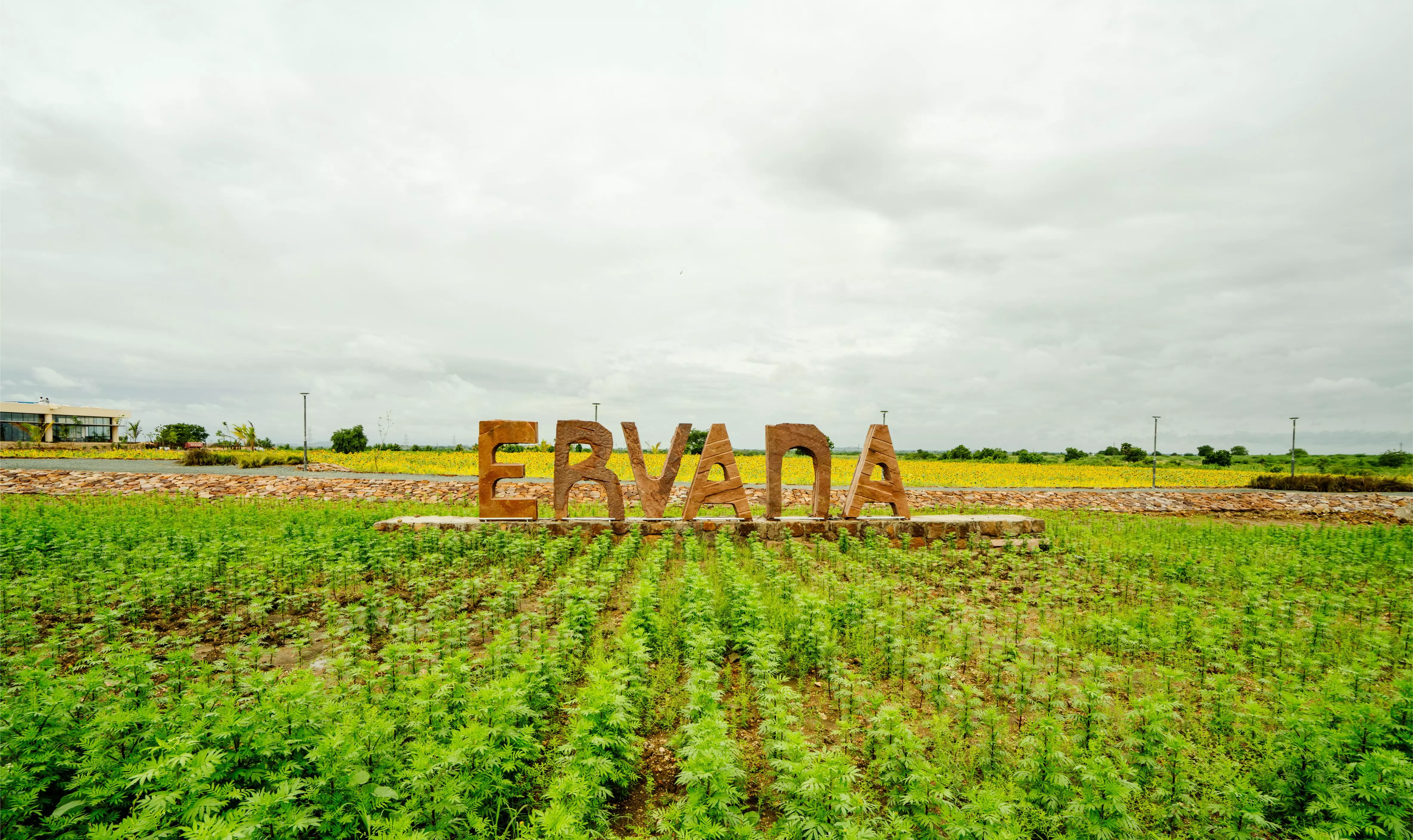
For Apuroop Arja, farming was never something he had to discover. It was simply part of his childhood.
His family had been farming for generations. He grew up going to the farm with his father, watching crops being grown and seeing first-hand what it meant to make a living from the land. His family’s approach was conventional, and it worked. His parents had even received a presidential award for producing an exceptional crop of mosambi.
“I grew up on the farm, so for me farming was very natural,” Apuroop says.
But natural did not necessarily mean inevitable.
When he was younger, Apuroop wanted to work in polymers and eventually had a company in Bengaluru. Farming remained part of his background, but it was not where he saw his future.
Then a friend returned from a two-day workshop on permaculture and suggested that he explore the idea.
It was the beginning of a shift that would eventually change not only how Apuroop looked at farming, but also how his family understood their own land.
He began researching. He travelled, read and spent time understanding permaculture, eventually meeting people who could help him translate the idea into practice.
The difficult part was taking that idea home.
His parents had spent decades working within a farming system they knew and trusted. The suggestion that organic and regenerative methods could work was met with understandable scepticism.
“They were like, what kind of work are you doing? Organic doesn’t work,” he recalls.
His mother was more willing to take the risk. “She said, let’s do this. Let’s take up this challenge.” His father took longer to come around. Eventually, however, the family agreed that if Apuroop believed in the idea, he should try it properly.
That experiment began with four acres of land outside Kurnool, where Apuroop worked with his mother. The idea was simple: grow organically and try to sell the produce directly.
Every Sunday, they would open a small shop at six in the morning. Initially, the response was underwhelming. “People didn’t come,” Apuroop says. “By nine o’clock, there used to be a lot of produce left.”
Instead of allowing the vegetables to go to waste, they began giving the produce to ashrams and temples. Then people passing the farm began to notice what was happening. The little shop slowly developed a following. Within months, the same place that had struggled to attract customers was drawing people from the surrounding area, including government officials who would arrive early to buy the produce. Apuroop says, “The produce would be finished by 6.30.”
For Apuroop, it was proof that the idea could work. But the four-acre experiment also taught him something else: changing the way you farm means understanding the land itself.
When the surrounding area began changing, construction and real estate development affected the farm’s water systems. The economics changed too. What had been agricultural land was increasingly surrounded by commercial activity, making the earlier model difficult to sustain. The experiment eventually came to an end.
By then, however, Apuroop had already made a more important decision. He wanted to take what he had learnt and apply it to his family’s larger landholding. That would become Ervana Wildfarms.
The transformation did not happen quickly. It took years of experimentation, observation and learning. Water was one of the first things they had to understand.
The family created a series of percolation tanks to harvest rainwater and allow it to move back into the land rather than simply run off. “We did eight percolation tanks for water harvesting,” Apuroop says. “Slowly, we understood how water controls everything.” That understanding became central to the farm.
Instead of treating the land as a collection of separate crops, the idea was to create a functioning ecosystem where water, soil, trees, plants and animals supported one another. That is where permaculture became more than an agricultural technique. For Apuroop, it offered a different way of thinking about the farm altogether.The objective was not simply to replace chemical inputs with organic ones. It was to understand what the land needed to remain productive over the long term.
That also meant looking beyond the farm boundary. The people living around the property became part of the process, particularly as Ervana began developing its hospitality component.
Many of the local employees had never worked in a commercial kitchen. Training them became a gradual process of learning on both sides. “They were never trained, so we are slowly training them. It’s more like an apprenticeship,” he says.
Some of the knowledge, however, was already there. Local cooks brought their own understanding of ingredients, techniques and flavours. Recipes that had been collected from the region were refined through these conversations, sometimes changing significantly once they entered the kitchen.
One of those people is Shantamma, who began at Ervana as part of the cleaning staff and gradually found her way into the kitchen. Her story is important because it reflects the larger idea behind the farm. Ervana was not conceived simply as a piece of land where crops could be grown differently. It was gradually becoming a place where local knowledge mattered.
The same thinking shaped the food served at Sila, the farmside restaurant. The founders deliberately chose regional cuisine because, for them, permaculture was inseparable from locality. The farm therefore became the starting point for a much larger ecosystem, connecting agriculture with food, hospitality, employment and the surrounding community.
But perhaps the most interesting part of Apuroop's journey is that none of this began with a grand plan. He did not set out to build a destination farm. He started by returning to four acres, trying something different and discovering that people were willing to respond to it.
Then he took those lessons back to the land his family had farmed for generations. The irony is that Apuroop had to leave farming to question it. He grew up knowing the land, moved away from it, discovered another way of working with it and eventually returned with a different understanding of what it could become.
Ervana is the result of that return. Not a rejection of the family's farming history, but an attempt to carry it forward differently.
