Where Couture Is Designed To Reflect The Self

Aksstagga, the brand built on reflection, memory, and a deep respect for craft
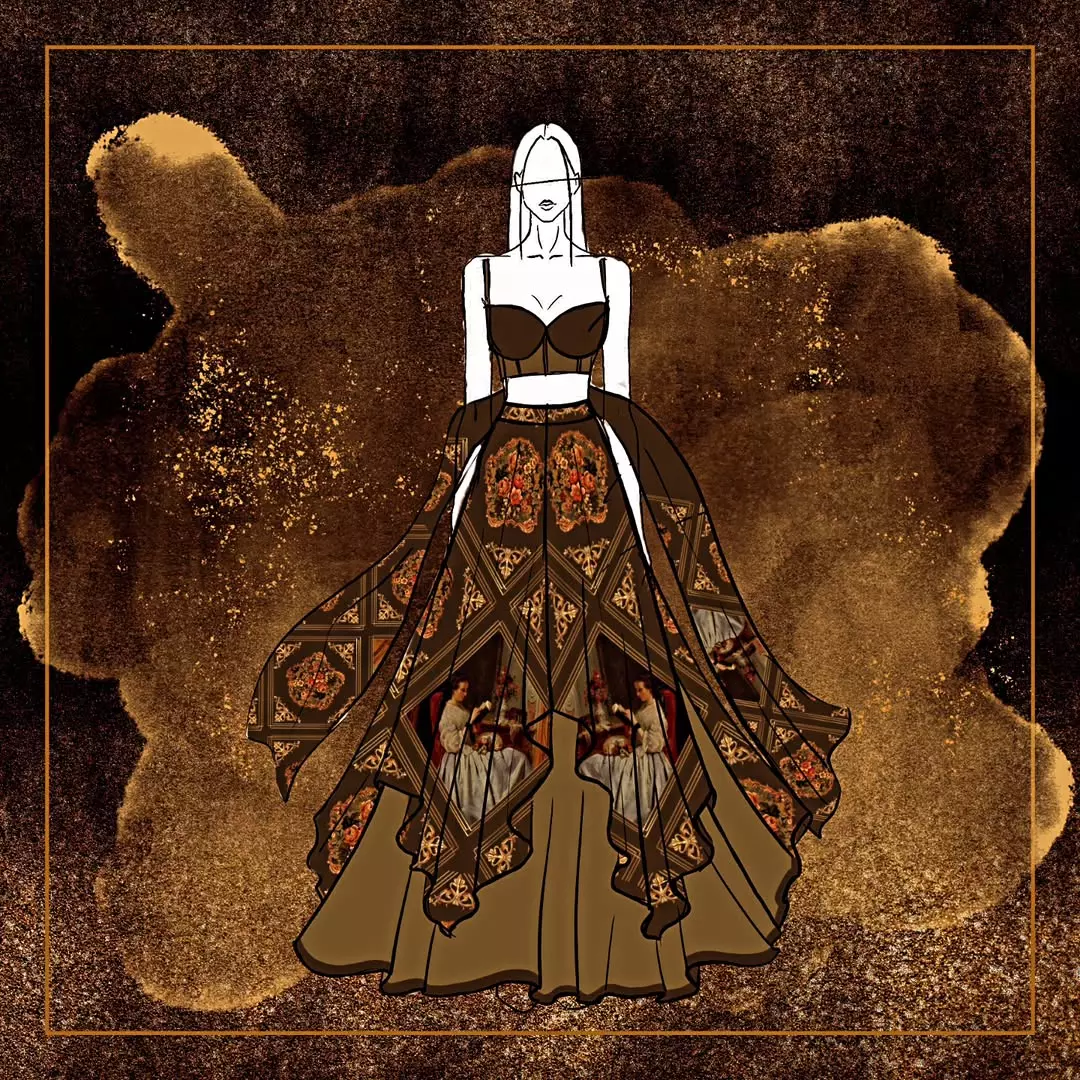
There are fashion brands that announce themselves loudly, and then there are those that arrive quietly, stay under the radar, slowly growing their influence, until one day, when they outshine everyone else in the market. Aksstagga belongs firmly to the latter. Built on reflection, memory, and a deep respect for craft, the brand has emerged as a couture house that treats fashion as an expression of not just the creator’s vision, but also the wearer’s personality.
The brand took shape in 2020, but its story began long before that. Aksstagga by Anjali Singh Goel was born from a shared dream between its founder and creative director, Anjali Singh, and her late husband, Somil Singh, both of whom had a dream of making fashion more than a trend or transaction. They believed fashion could instead hold emotion and honour memory; it could become a mirror of one’s own self.
The name itself reflects this philosophy: Aks, meaning reflection, and Tagga, a thread that binds. Together, they form the soul of the brand and its guiding spirit: You dream. We reflect.
Anjali’s relationship with fashion spans over two decades, beginning in 1999, when she entered the industry professionally after completing her MBA. Since then, she has worked extensively with unstitched garments, sarees, suit lengths, and fine textiles, developing command over Chikankari, Banarasi weaves, Mukesh work, sequins, and regional fusions. Her work found its way into established retail chains and private wardrobes alike, including those of bureaucrats, business families, and prominent circles, even in Bollywood. Much of what she created then was sold even before it was completed.
“I’ve always designed by thinking about the person first,” she says. “Not just how something will look on a hanger, but how it will feel when someone actually wears it.”
When Aksstagga finally came into being, it carried all of this lived experience within it. The brand was never meant to operate on the traditional fashion calendar. Instead, it introduced theme-based couture collections, each telling a different story. Prints are original, created specifically for the story being told. Silhouettes remain fluid, allowing garments to evolve with the individual who wears them.
“For me, couture isn’t about repeating something exactly as it is,” Anjali explains. “Even if someone loves a print, the silhouette should still change according to who they are. The clothes have to adapt to the person, not the other way around.”
This philosophy shapes everything about the way Aksstagga functions. The brand operates on a made-to-order, couture-led model. Clients engage through private consultations, often directly with Anjali, where conversations extend beyond measurements to lifestyle, comfort, and personal taste. A lehenga can become a western ensemble. A corset blouse can be softened, reshaped, or replaced entirely. What remains constant is the story; what changes is the form it takes.
The brand’s post-relaunch debut collection, Somanjali – An Odyssey to Our Love Story, made this approach unmistakably clear. Created after a period of deep personal loss, the collection was not an exercise in grief, but an act of grace. Drawing inspiration from devotion: Radha and Krishna, Shiva and Parvati, and from Anjali’s own life; it explored love as continuity rather than absence. The garments carried illustrations, motifs, and layered meanings that spoke of connection beyond the physical.
“I’m not interested in doing things just to scale faster,” Anjali says. “Luxury, for me, is in thoughtfulness; it’s in knowing that something was made with care, to fit a specific person, and not mass produced to be consumed by everybody.”
This care extends to the brand’s relationship with artisans as well, particularly women practicing Chikankari in and around Lucknow. Having once managed large networks of home-based artisans herself, Anjali understands the social and economic constraints many of these women face: restricted mobility, low wages, and invisible labour. In fact, many of them are widows or primary earners, sustaining entire households through their work.
Aksstagga’s production model is shaped in direct response to these realities. Craft is organised within artisans’ own communities, schedules remain flexible, and fair compensation is treated as non-negotiable. The brand is also engaging with initiatives such as ODOP to develop training centres that offer young women a safer, more dignified space to learn traditional crafts, combining skill development with security and a route to self-reliance.
“If these crafts are to survive, they need new hands, but they also need better systems.” Anjali says, “That’s something I want Aksstagga to contribute to.”
Today, Aksstagga is still in a phase of careful expansion. Its client base is growing organically across North India, with global outreach planned for the future. In an industry that often feels impersonal and transient, Aksstagga offers something enduring. It shows that couture can be commercially viable while remaining deeply human; that a brand can succeed without sacrificing its soul. Built on reflection, guided by memory, and sustained by craft, Aksstagga is not just creating garments, it is quietly shaping a future for luxury fashion that is more thoughtful, meaningful, and responsible.
