Wildlife tourism needs to look beyond the tiger, Says Gajendra Singh Rathore

India’s wildlife tourism is seeing growing interest, but Gajendra Singh Rathore believes the next phase must focus on spreading visitors more thoughtfully, understanding forests beyond tiger sightings and involving local communities more deeply.
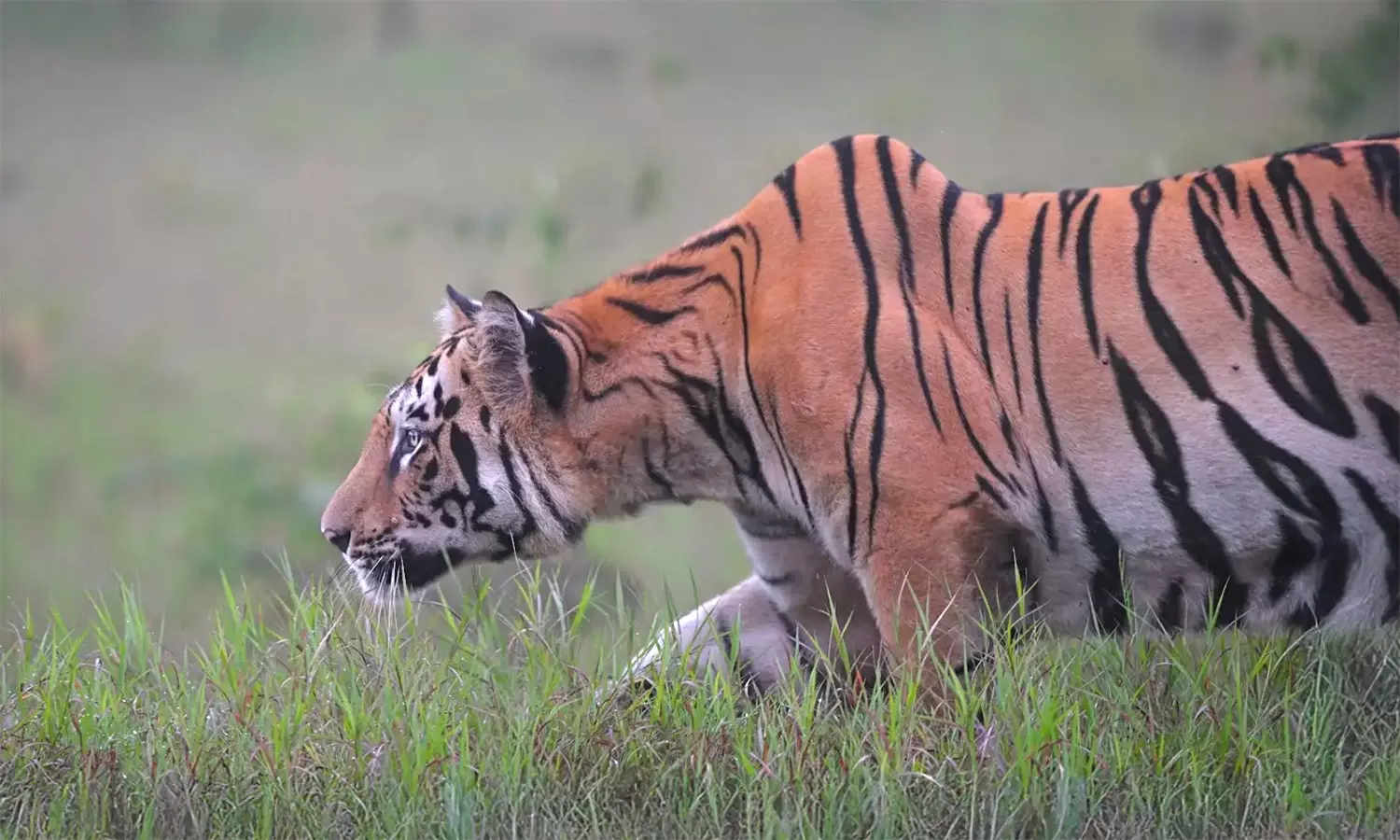
Tiger sightings may still be one of the biggest draws for wildlife tourism in India, but the safari experience is slowly becoming about more than ticking an animal off a list. Gajendra Singh Rathore, MD, Jungle Camps India, believes the industry now needs to look at how visitors are distributed, how forests are experienced and how local communities are brought into the tourism story.
Gajendra Singh Rathore, MD, Jungle Camps India.
Rathore says jungle tourism has not necessarily become too popular, but too concentrated. A small number of famous national parks continue to attract a large share of visitors, while several other forests remain relatively unexplored.
“I would say it has become too concentrated. Demand crowds a handful of famous national parks, while many extraordinary forests remain unexplored,” he says.
According to Rathore, the answer does not lie in simply restricting travellers. Instead, tourism needs to be distributed more thoughtfully across parks, gates and seasons, while travellers are made more aware of the different landscapes India has to offer.
Tigers continue to be an important part of that equation. Rathore says there is nothing wrong with guests arriving at a forest hoping to see one. The challenge is to ensure that the entire safari does not revolve around that one sighting.
“I feel tigers bring people to the forest, but it is the forest that should keep them curious,” he says.
At Jungle Camps India, he says, the effort is to help guests look beyond the tiger and understand the wider forest. A sambar’s alarm call, a fresh pugmark or different bird calls can all become part of the safari experience.
“Once you understand a sambar’s alarm call, recognise a fresh pugmark or notice different bird calls, every drive becomes rewarding, whether you see a tiger or not,” Rathore says. “For me, that shift from spotting to understanding makes a safari truly meaningful.”
That approach also becomes important as popular destinations deal with increasing visitor numbers. Rathore believes a safari destination reaches its tipping point when the experience starts being shaped more by crowds than by the forest.
“It reaches that point when we start managing queues rather than experiences, when a sighting involves twenty vehicles and the guest remembers the crowd more than the animal,” he says.
Carrying capacity, according to Rathore, needs to remain central to how destinations are managed. Safari operators also need to spread drives across different zones and seasons rather than sending visitors towards the same waterhole or popular sighting.
He also sees scope in expanding the areas of forests that can be accessed through regulated safaris. “Expanding the safari area is another consideration, as currently less than 20 percent of the park is accessible for safari,” he says.
The other part of the equation is the relationship between wildlife tourism and the communities living around forests. Rathore believes the industry has sometimes viewed local communities primarily through the lens of employment rather than recognising the knowledge they bring to wildlife tourism.
“We sometimes treat local communities as a hiring obligation rather than recognising them as an invaluable knowledge base,” he says. “Some of the deepest forest intelligence is local.”
A still from the Pench jungle camp.
He points to Jungle Camps India’s Kanha naturalist Bhupesh Taram as an example. Born in the buffer area where he now works, Taram has documented 250 individual tigers. For Rathore, such knowledge demonstrates why communities need to be considered an integral part of wildlife tourism.
“Communities are not simply beneficiaries of wildlife tourism; they are its foundation,” he says.
Over the past two decades, Rathore has also seen a change in both forests and travellers. He points to Pench, where the tiger population has risen from 33 in 2006 to more than 120 today.
But he believes the more significant change may be in the questions travellers ask.
“The forest has changed for the better. Pench’s tigers recovered from 33 in 2006 to over 120 today. But the traveller has changed even more,” he says.
“In 2002, guests asked, ‘Will we see a tiger?’ Today, they ask which zone, which month and why. That curiosity is perhaps the most hopeful development in Indian wildlife tourism.”
For Rathore, however, the industry still has an uncomfortable truth to address. Too much emphasis has traditionally been placed on sightings, sometimes creating an expectation that seeing a tiger is almost guaranteed.
“We have often focused on sightings rather than understanding,” he says. Presenting a tiger sighting as a guarantee, he adds, can create disappointment among guests while putting unnecessary pressure on the forest.
“The more honest product is the forest itself, explained well,” Rathore says.
That could also be the direction in which wildlife tourism needs to move, from promising a particular animal to offering travellers a better understanding of an entire ecosystem. For Rathore, the real value of a safari lies in learning to read the landscape, its wildlife and the people whose lives remain connected to it.
