Vizag Data Centre Draws Scrutiny Over Environmental Concerns

“Can you imagine anybody even conceptualizing any project, let alone a data centre 120 meters from a drinking water reservoir?” – V.S Krishna, HRF
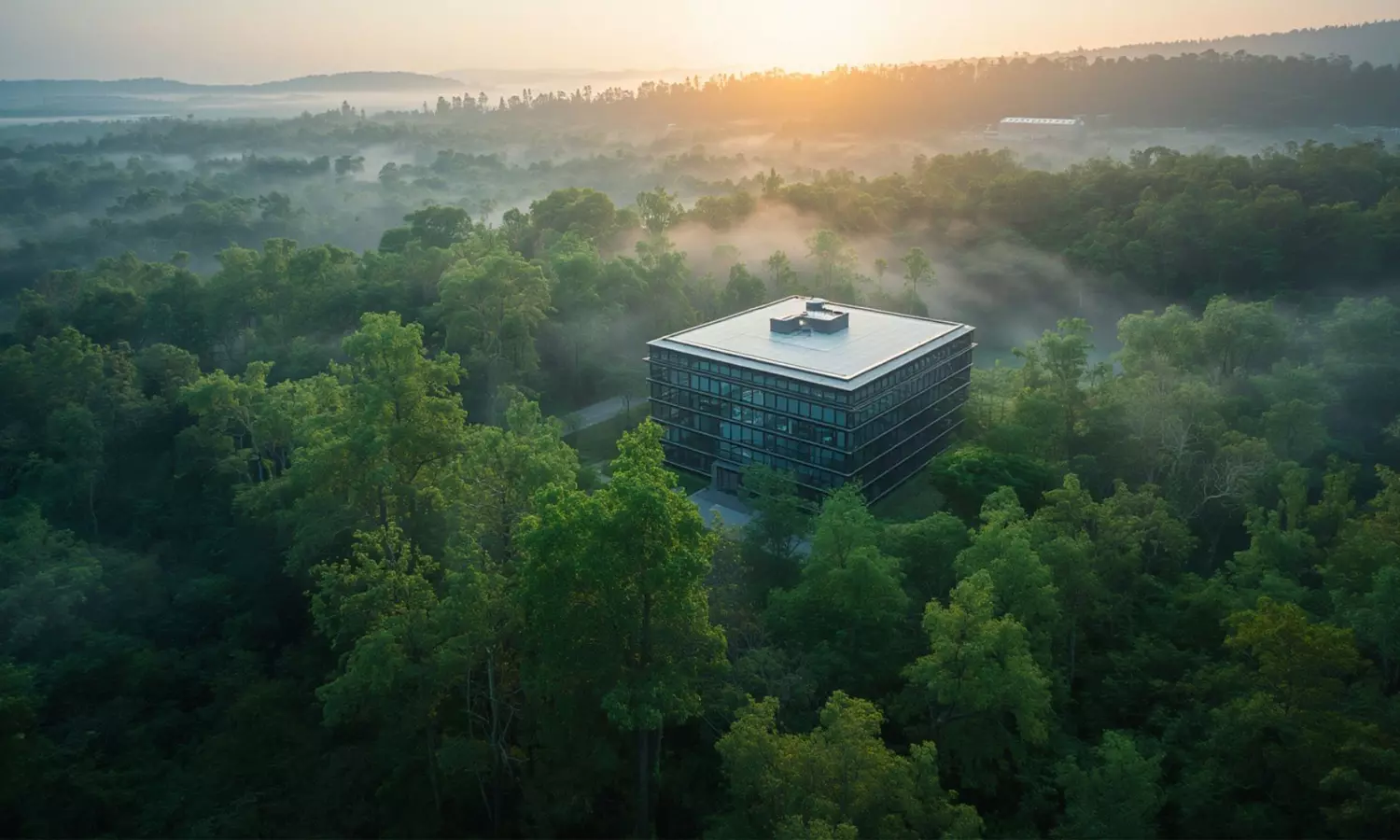
At a time when the global resistance against data centres is becoming deafeningly loud over their intense demand for water, electricity, and land, the Andhra Pradesh government has just committed Rs.22,000 crore in incentives to the Google-Adani project in Visakhapatnam. The three proposed data centres are to be located in Rambilli, Tarluvada, and Adavivaram. While the capacity is expected to be around 2.5GW with Google investing $15 billion, global protests against data centres are mounting for draining water, power, and land, with critics calling it digital colonialism.
The Human Rights Forum (HRF)alleges violations of environmental law, lack of public hearings, and a rushed 9-day clearance, setting the stage for Vizag’s biggest resource and rights battle yet.
US Data Centres to Drive Half of Electricity Demand Growth by 2030: Report
U.S. representative for New York's 14th congressional district, Alexandria Ocasio Cortez while highlighting the impact of data centres on the water situation stated, “This is the current drinking water in Morgan County, Georgia, right after a data centre was constructedThe only difference between the clean water and this was that data centre,” she said in a video that went viral on social media in May, where she held two jars of brown discolored and sediment-clogged water.
In the paper Environmental Burden of United States Data Centres in the Artificial Intelligence Era, the report showed 2,132 data centres functioning across the US that were examined between September 2023 and August 2024 and found to account for over 4 percent of total US electricity consumption, with more than half of that electricity sourced from fossil fuels.
“In the United States, data centres are expected to drive nearly half of the country’s electricity demand growth between now and 2030. By the end of the decade, the USA will consume more electricity for data centres than for the production of aluminium, steel, cement, chemicals, and all other energy-intensive goods combined,” a report said.
AI-Driven Data Centres to Consume 945 TWh by 2030, Intensifying Water Stress: IEA Report
In a report by "Energy and AI," a special report published by the International Energy Agency (IEA), it is mentioned that, “In 2022, data centres consumed an estimated 240 to 340 terawatt-hours (TWh) of electricity, accounting for approximately 1 to 1.3 percent of global electricity demand. Electricity demand from AI-optimised data centres is projected to more than quadruple by 2030, reaching about 945 TWh, which would exceed Japan’s current electricity consumption.”
Global investments in data centres have nearly doubled since 2022, reaching half a trillion dollars in 2024. So has the water usage with Google’s global data centres said to be consuming approximately 4.3 billion gallons of water altogether, placing immense stress on fresh water resources.
The 2GW Google-Adani data centre will be India’s largest hyper-scale facility for which they have been granted 480 acres in an ecologically vulnerable zone that experts warn is already facing severe environmental challenges, one of which (Adavivaram) is on the catchment of the Mudasarlova Reservoir.
V.S. Krishna, a member of the Human Rights Forum who has been on the frontlines of this fight, speaking with the Deccan Chronicle, says, “Can you imagine anybody even conceptualizing any project, let alone a data centre 120 meters from a drinking water reservoir? The reservoir is alive; it provides most, if not all, of the water to Arilova. These are all very congested colonies, and they rely exclusively on water from the reservoir. And what’s worse is that the site is bang on top of the catchment of the river, just across the road from Hanumantvaka to Simachalam.”
The construction would threaten inflows into the reservoir, groundwater recharge, the city’s water security and its overall ecological balance.
Impact of the Tarluvada Data Centre
Illegalities include the positioning of the Tarluvada data centre, which is 1.5 km from the Kambalakonda Wildlife Sanctuary a vital lung space for Vizag. The site reportedly sits about 450 metres from the notified Eco-Sensitive Zone of the sanctuary. The Health City Hub and thickly populated areas like Arilova and Chinna Gadhili are in proximity. The HRF has called this a ‘project steeped in violations’, a brazen act of environmental injustice and a betrayal of present and future generations. The lack of transparency in the approval process and denial of active public participation in decision-making that will affect the same public for decades has raised serious concerns.
HRF questions, “Vizag is being asked to absorb an enormous amount of infrastructure cost and an environmental risk without a proportionate informed public debate about the cost, benefit and consequences. Forgetting one’s stand on data centres, there ought to be a public informed debate about this.”
Noise pollution because of data centres is not widely spoken about, while communities living near data centres have reported health concerns that include sleep disturbance, headache, hearing loss, elevated stress hormone levels, hypertension, anxiety, and even cardiovascular risks due to unceasing background noise. A report suggests that persistent land-based noise pollution also affects other species. Noise from data centres disrupts animal communication, alters natural behavior, and forces wildlife to change migration patterns; all that would greatly affect the Wildlife Sanctuary just 1.5 km away and the thickly populated areas in proximity to the data centre.
HRF has amplified online that the law cannot be bent for corporate interests and how the Google-Adani Hyperscale Site activity in Vizag violates the EIA Notification of 2006, the Water (Prevention and Control of Pollution) Act of 1974, the Air (Prevention and Control of Pollution) Act of 1981, and the AP Water, Land and Trees Act, 2002.
Hyperscale data centres are no ordinary projects but guzzle massive energy and water, carry a huge resource footprint, and undermine global climate goals. The irony was not lost on Krishna when he mentioned how obtaining a death certificate takes an entire month in this country, but the Environmental Clearance (EC) for the Google-Adani Hyperscale data centre only took 9 days in April, with 1000 MW each at Rambilli and Tarluvada by the Andhra Pradesh State Environment Impact Assessment Authority (APSEIAA).
The project is also said to have been approved and conveniently labeled under Category B and not A to avoid the Environmental Impact Assessment (EIA) and public hearing in order to slip past regulations that in the past have forced Google in other countries to redesign data centres to be more sustainable.
Critics and political commentators have called out the hypocrisy of politicians asking citizens to save water while approving data centre projects that are reported to consume approximately 560 billion litres of water per year, potentially rising to 1.2 trillion litres by 2030 (An International Energy Agency (IEA) report in 2025 ); another peer-reviewed study reported that in 2025, AI-driven data centers consumed more water than the global consumption of bottled water, estimated at 446 billion litres per year, globally. All this while, India still cannot meet the basic drinking water and power needs of its citizens even in the national capital.
The same hypocrisy also entails large concessions on the Google-Adani project with unjustified subsidies on power (15 years) and water (10 years) and an enormous discount on the land price of 25%.
“Data centres will be a massive job creator for our youth” is the PM’s justification for the massive 20-year tax holiday granted to data centres in this year’s budget, along with other concessions. Experts have called this misleading as it is widely known that data centres offer lakhs of construction jobs but only limited permanent employment. Once commissioned, employment is only for the technically trained urban citizen, while the displaced rurals (who received this land during the time of Indira Gandhi’s government through welfare schemes) are left stranded, which is why this has been called digital colonialism and a fight not just for the environment but for democracy.
Speaking to Deccan Chronicle, Krishna from HRF mentioned how they expected the government to take a step back to relocate the Google-Adani data centre after the recent “Save Vizag” protests, where young people took to the streets and started making videos, but the EC was issued on June 10th. He called this bulldozing as the HRF holds visual proof of a video where it can be seen that site clearance has been happening since (as dated) February, on their website.
Before even calling it a development project, there are serious questions that need to be asked regarding the absence of public participation and the silencing of dissent on social media. HRF reports that while X had sent notices, Instagram has been pulling down posts at a rapid pace. Many content creators have been censored or had their profiles suspended after speaking out against this.
“This is admittedly a $15 billion investment for the good of our people and state, so where is the information? Why are they being so secretive? Why are they not giving us a copy of the MOU? All the RTIs filed have been stonewalled,” said Krishna.
Regarding the recent press conference, he said, “Why do they have to rely on a press conference by the minister concerned and a local MP when the MOU would lay all that out in black and white? Give it to the public. Why is it being held as a secret? There is no concrete information on where the water will be sourced from or how much power will be used. Don’t deliver arguments and tell us where you’re going to get it from. Let’s have an informed debate.”
In the recent press note released by HRF, they have expressed deep concern over G.O. Ms. No. 32, Energy Department, dated 22 April 2026, through which the Andhra Pradesh government has enabled the grant of ‘Deemed Distribution Licenses’ (DDLs) to strategic data centres, which gives them the authority to procure and distribute power independently. HRF has called this legally unsustainable and clarified that a distribution license already exists to supply electricity to consumers. Electricity used exclusively for self-consumption does not constitute distribution as it necessarily involves a licensee and consumers who are distinct from the licensee.
HRF also mentions how both the Electricity Act and APERC Regulations define a distribution licensee as an entity authorised to operate and maintain a distribution system for supplying electricity to consumers. G.O, 32, however, seeks DDL status for data centres primarily to enable dedicated power procurement and management for their own consumption. The Supreme Court in Sesa Sterlite Ltd. v. Orissa Electricity Regulatory Commission has held that infrastructure developed solely for self-consumption cannot claim the benefits available to a deemed distribution licensee.
G.O. Ms. No. 32 is incompatible with the Electricity Act, inconsistent with APERC regulations and contrary to Supreme Court jurisprudence, as under the Electricity Act, the licensing authority rests with the APERC, an independent statutory regulator. While the government may formulate policy, it cannot create a new category of deemed licensee, unsupported by law or contrary to binding judicial precedent.
The HRF has called this a representation of a backdoor attempt to privatise an important component of electricity distribution as in the USA and several other countries, energy-intensive data centers are often charged higher electricity tariffs to reflect the costs they impose on the grid and the wider power system, while in Visakhapatnam, Google’s data centers will receive concessional treatment and an unwarranted benefit, as one of the principal beneficiaries of this policy.
By enabling such data centers to secure electricity through a DDL arrangement, it said that the G.O. deprived the State power utility, Andhra Pradesh Eastern Power Distribution Company Ltd (APEPDCL), of the opportunity to supply electricity to large industrial consumers at the tariff ordinarily applicable to them. The consequent loss of revenue weakens the public utility’s ability to cross-subsidise low-income households and consumers in rural and remote areas. The HRF believes that the G.O. Ms. No. 32 fails the test where executive policy operates within the limits prescribed by statute and judicial authority, and has called upon the state government to withdraw the order.
This article was written by Hannah Judith Johnson, a student of Tezpur University, during her internship with Deccan Chronicle (DC). The views expressed are the author's own and do not reflect the official policy or position of DC.