Kerala’s Vembanad Lake Fighting for its Survival

8 Jun 2025 4:32 PM IST8 Jun 2025 4:32 PM IST
Massive initiative undertaken under Vembanad Lake Rejuvenation Project, aims to revive country’s most sought-after backwater destination
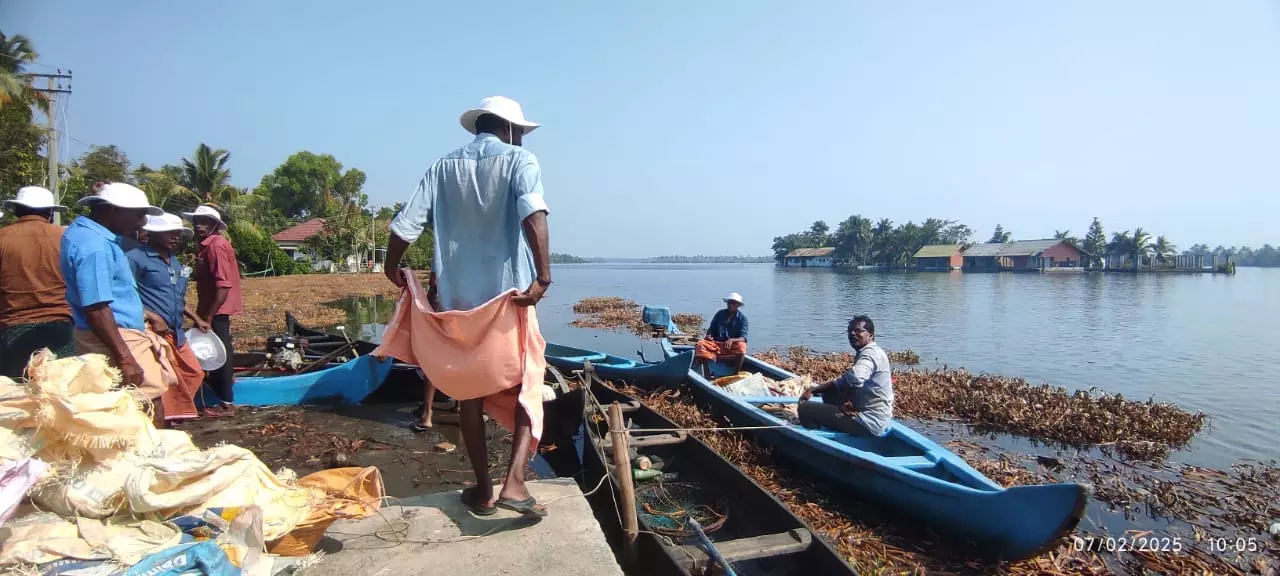
Pollution, waste dumping, land encroachment and invasive weeds threaten the very existence of India's largest lake (Photo by arrangement)
THIRUVANANTHAPURAM: Kerala's stunning Vembanad Lake is a haven for tourists and locals alike, with its serene waters, breathtaking beauty and rich biodiversity. Yet behind the tranquillity lies a grim reality - this majestic lake is fighting for its survival.
Pollution, waste dumping, land encroachment and invasive weeds threaten the very existence of India's largest lake, which is also the most sought-after backwater destination. The livelihoods of local people, including fisherfolk and the tourism industry, hang in the balance.
Realising that in the absence of immediate action, Vembanad Lake's future will become precarious, the authorities, with the help of various sections of the populace, have undertaken a massive campaign to preserve this second largest wetland of the country, which spans across Alappuzha, Ernakulam and Kottayam districts, for generations to come.
The lake covers an area of 200 sq km and stretches approximately 96.5 km in length. It is part of the Vembanad Kol Wetland and is protected under the Ramsar Agreement , which aims to safeguard wetlands and promote sustainable development. Water from Achenkovil, Manimala, Meenachil, Muvattupuzha, Pampa and Periyar rivers flow into the lake.
District Collector Alex Varghese, who is leading the Vembanad Lake rejuvenation Project, states that the initiative aims to revive this crucial ecosystem. The project includes restoring the lake's health and ecological balance, as well as addressing pollution through modern techniques, removing plastic waste and combating oxygen depletion.
"This is a comprehensive five-year plan, and many short-term initiatives have already been completed; long-term projects are on track," the collector said.
A significant effort is underway, involving eight committees formed during a conclave last October, which includes representatives from various departments. Constant vigilance is maintained to prevent waste dumping from the houseboats, households along the banks and commercial establishments. Local bodies have been engaged to establish monitoring committees in their respective areas.
Sources indicate that the project has a budget of Rs 188.25 crore, aimed at rejuvenating this vital ecosystem. However, there are substantial challenges, including a collection of tonnes of plastic waste from the lake's bottom, piled up to a height of one and a half meters. This situation poses a significant risk to the longest lake in the country, which is also the largest in Kerala.
A study conducted by the Kerala University of Fisheries and Ocean Studies (KUFOS) noted alarming levels of plastic and other waste sludge accumulation in the lake.
Experts believe that removing tonnes of waste could dramatically increase the lake's water carrying capacity by up to 34,500 cubic meters. As part of this initiative, the Alappuzha district administration has already removed significant quantities of plastic waste with the help of various agencies and organisations.
Historically, Vembanad Lake covered an area of 290.85 sq km in 1917 ; however, its area has drastically reduced due to the uncontrolled proliferation of aquatic plants. This has also led to a significant decrease in the water's oxygen levels, further exacerbated by pollution from agriculture, homes and tourism.
To address these issues, the committees have proposed several short term solutions for the lake's revival, including the removal of plastic waste, implementing bio defense measures through MGNREGA to project agricultural lands, releasing 1 million fish seedlings, eradicating invasive weeds and constructing 31 organic bunds , each one km long , as part of MGNREGA.
For long term solutions, important initiatives include dredging to enhance the lake's water carrying capacity, promoting organic farming to reduce pesticide and chemical pollution, conserving local flora and fauna, increasing the income of fishermen , enhancing tourism opportunities, expanding habitats, improving environmental conditions, establishing waste treatment plants and developing value-added products.
Approximately 1400 houseboats operate on Vembanad Lake as part of the tourism industry, contributing to plastic waste pollution. To combat this, the administration has introduced an initiative to replace plastic plates and cups with reusable glassware on the houseboats," says the Collector.
Physical cleaning activities will be paused during the monsoon season. However, this period will be utilised to review the work completed thus far and to chart a roadmap for the future. The district administration is optimistic about meeting the targets set by the committees for the lake's restoration and rejuvenation by 2030.
Pollution, waste dumping, land encroachment and invasive weeds threaten the very existence of India's largest lake, which is also the most sought-after backwater destination. The livelihoods of local people, including fisherfolk and the tourism industry, hang in the balance.
Realising that in the absence of immediate action, Vembanad Lake's future will become precarious, the authorities, with the help of various sections of the populace, have undertaken a massive campaign to preserve this second largest wetland of the country, which spans across Alappuzha, Ernakulam and Kottayam districts, for generations to come.
The lake covers an area of 200 sq km and stretches approximately 96.5 km in length. It is part of the Vembanad Kol Wetland and is protected under the Ramsar Agreement , which aims to safeguard wetlands and promote sustainable development. Water from Achenkovil, Manimala, Meenachil, Muvattupuzha, Pampa and Periyar rivers flow into the lake.
District Collector Alex Varghese, who is leading the Vembanad Lake rejuvenation Project, states that the initiative aims to revive this crucial ecosystem. The project includes restoring the lake's health and ecological balance, as well as addressing pollution through modern techniques, removing plastic waste and combating oxygen depletion.
"This is a comprehensive five-year plan, and many short-term initiatives have already been completed; long-term projects are on track," the collector said.
A significant effort is underway, involving eight committees formed during a conclave last October, which includes representatives from various departments. Constant vigilance is maintained to prevent waste dumping from the houseboats, households along the banks and commercial establishments. Local bodies have been engaged to establish monitoring committees in their respective areas.
Sources indicate that the project has a budget of Rs 188.25 crore, aimed at rejuvenating this vital ecosystem. However, there are substantial challenges, including a collection of tonnes of plastic waste from the lake's bottom, piled up to a height of one and a half meters. This situation poses a significant risk to the longest lake in the country, which is also the largest in Kerala.
A study conducted by the Kerala University of Fisheries and Ocean Studies (KUFOS) noted alarming levels of plastic and other waste sludge accumulation in the lake.
Experts believe that removing tonnes of waste could dramatically increase the lake's water carrying capacity by up to 34,500 cubic meters. As part of this initiative, the Alappuzha district administration has already removed significant quantities of plastic waste with the help of various agencies and organisations.
Historically, Vembanad Lake covered an area of 290.85 sq km in 1917 ; however, its area has drastically reduced due to the uncontrolled proliferation of aquatic plants. This has also led to a significant decrease in the water's oxygen levels, further exacerbated by pollution from agriculture, homes and tourism.
To address these issues, the committees have proposed several short term solutions for the lake's revival, including the removal of plastic waste, implementing bio defense measures through MGNREGA to project agricultural lands, releasing 1 million fish seedlings, eradicating invasive weeds and constructing 31 organic bunds , each one km long , as part of MGNREGA.
For long term solutions, important initiatives include dredging to enhance the lake's water carrying capacity, promoting organic farming to reduce pesticide and chemical pollution, conserving local flora and fauna, increasing the income of fishermen , enhancing tourism opportunities, expanding habitats, improving environmental conditions, establishing waste treatment plants and developing value-added products.
Approximately 1400 houseboats operate on Vembanad Lake as part of the tourism industry, contributing to plastic waste pollution. To combat this, the administration has introduced an initiative to replace plastic plates and cups with reusable glassware on the houseboats," says the Collector.
Physical cleaning activities will be paused during the monsoon season. However, this period will be utilised to review the work completed thus far and to chart a roadmap for the future. The district administration is optimistic about meeting the targets set by the committees for the lake's restoration and rejuvenation by 2030.
Info-graph
188.25 crore project.
28.72 tonnes of plastic waste, tonnes of water hyacinths removed from the lake.
Land encroachment major problem
Reclaiming the illegally occupied areas along the lake is a major task.
Lake's length 96.5 km
Fish species - 150
Annual fish production 4,387 tonnes.
Lake was spread across 365 sq km in 1800.
It shrank to 290.85 sq km in 1917.
Decreased further to 213 sq m by 1990.
In 2025 the area was estimated to be less than 200 sq km.
188.25 crore project.
28.72 tonnes of plastic waste, tonnes of water hyacinths removed from the lake.
Land encroachment major problem
Reclaiming the illegally occupied areas along the lake is a major task.
Lake's length 96.5 km
Fish species - 150
Annual fish production 4,387 tonnes.
Lake was spread across 365 sq km in 1800.
It shrank to 290.85 sq km in 1917.
Decreased further to 213 sq m by 1990.
In 2025 the area was estimated to be less than 200 sq km.
( Source : Deccan Chronicle )

Next Story