What If Your Garbage Could Buy You Groceries?

Hyderabad-based startup Goodeebag is trying to fix one of India’s biggest environmental blind spots by creating a technology-backed reverse logistics network that collects dry waste from homes, rewards citizens and keeps recyclables out of landfills.
Every day, we see thousands of delivery riders plying across Hyderabad carrying groceries, medicines and meals to people’s doorsteps. For Abhishek Agarwal, the founder of Hyderabad-based recycling startup Goodeebag, that journey tells only half the story.
“We have perfected forward logistics,” he says, adding, “You can order almost anything online and get it delivered home. But where is the system that takes the empty bottle, the cardboard box or the plastic wrapper back?” The missing link in India’s waste story is not recycling. It’s getting the waste back
That question led Agarwal to build what he calls a reverse logistics network for waste, a technology-driven system that collects dry waste directly from households, sorts it and sends it to recyclers instead of letting it end up in landfills.
The idea was born in 2022, long before recycling became a mainstream conversation.
“It wasn’t a business prospect,” he recalls, before going on too that, it was a passion about waste management. “I came from logistics, and I realised we had built systems to move products to consumers but none to bring the waste back.”
For him, the biggest challenge was never convincing people that recycling mattered. “People know about dry and wet waste. They simply don’t want to do it,” he says.
Instead of asking citizens to change out of goodwill, he chose to give them a reason to pitch in. “If I tell you your waste can buy you a coffee, you will look at it differently. We collect the waste from your house and reward you with points that you can redeem,” he says.
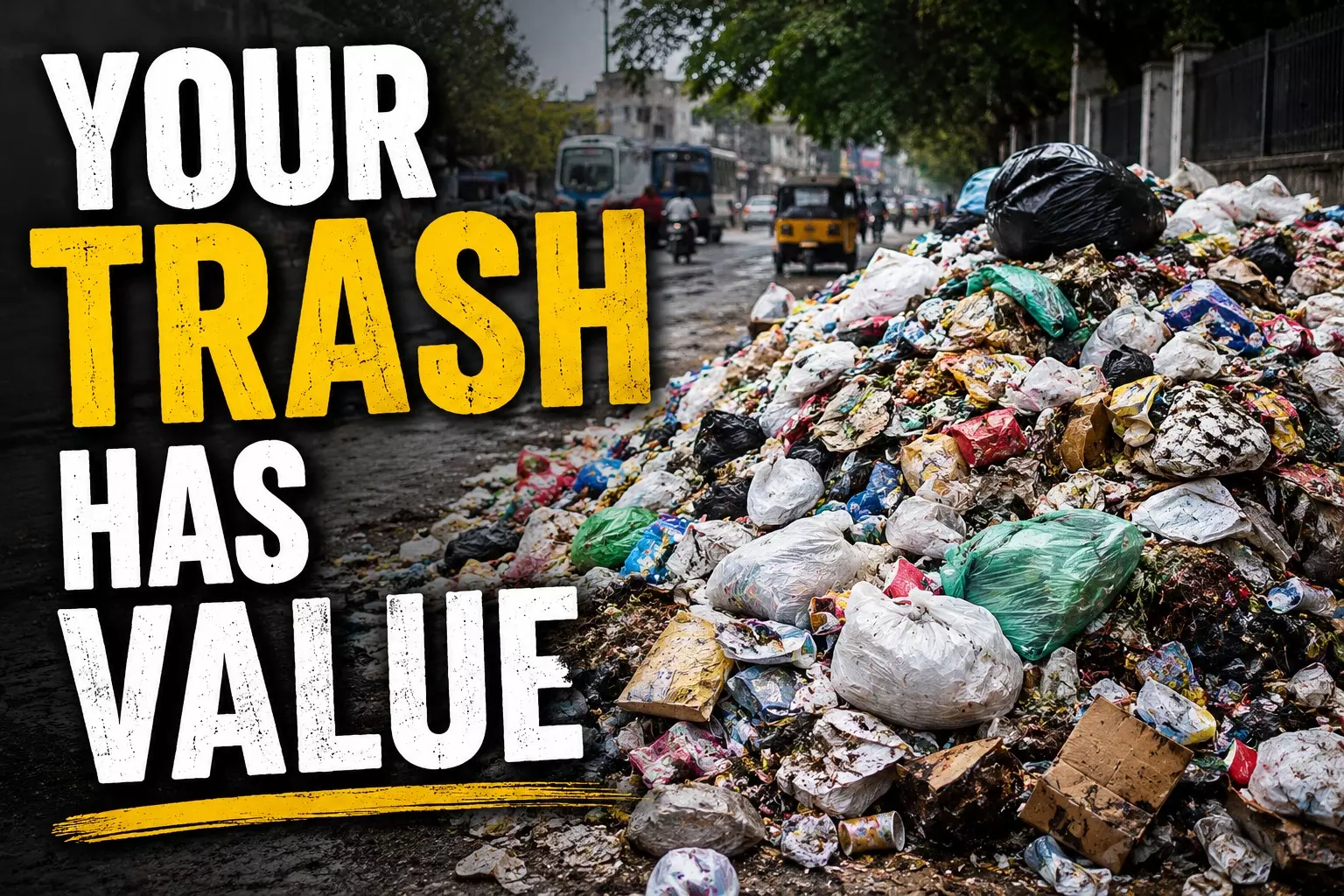
Today, residents can schedule pickups through the Goodeebag app, hand over everything from newspapers and cardboard to milk packets, e-waste, pens, shampoo bottles and even chocolate wrappers in a single bag. The startup collects around 4,000 kilograms of recyclable waste every day from nearly 200 to 250 households across twelve locations of the city.
Agarwal believes the recycling conversation has focused too much on replacing plastic and too little on what happens after it is used. “People keep saying don’t use plastic. But nobody talks about disposal. Every product has a journey until it reaches your home. We wanted to create the journey after that,” he says.
Abhishek Agarwal, the founder of Hyderabad-based recycling startup Goodeebag
He dismisses the idea that awareness campaigns alone can solve India’s waste problem. “We always talk about civic sense and education. But people don’t need another lecture. They need value. When waste has value, behaviour changes automatically.”
Once collected, the waste is sorted into multiple categories before being sent to specialised recyclers across the country. Multi-layered plastic packaging that once headed to cement kilns is now finding new life as furniture boards and other products, reducing the need for virgin raw materials.
For Agarwal, recycling is not just about managing waste but about preventing new resources from being extracted. “When you recycle, you stop fresh natural material from entering the system. The biggest benefit is that you are keeping waste out of landfills while reducing the demand for new raw materials.”
His ambitions stretch far beyond Hyderabad. Agarwal envisions a network of neighbourhood collection hubs operating much like quick-commerce dark stores, making waste collection as routine as grocery deliveries.
“Every pin code should have its own reverse logistics hub. Hyderabad alone generates thousands of tonnes of waste every day. This isn’t a small opportunity. It’s the future,” he says.
Online deliveries have become second nature in cities today and Goodeebag is betting that one day, sending waste back will be just as effortless.
