How Heat Storms Threaten Pregnant Women Around The World

As heat waves intensify, a medical researcher realizes “no one is going to be safe” – including herself.
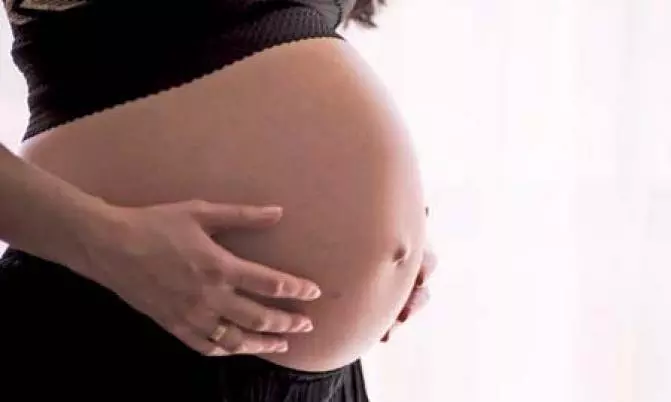
To the surprise even of many doctors, recent studies from different parts of the world show that heat waves menace pregnant women and the babies they carry, escalating the odds of everything from congenital defects to miscarriages to preterm births. Health professionals are just beginning to understand this danger – and when they do consider it, they often focus on extreme heat.
But the science shows that’s not the full story. At risk are not only women living in the world’s hottest deserts, but also the more than a billion women like Lakhoo who live in temperate or even cool climates, research shows. That’s because the risks rise as temperatures climb above the norm, even if the absolute temperature isn’t scorchingly hot.
It’s impossible to say for certain how big a role heat played in Lakhoo’s difficult pregnancy. But the threat is particularly acute for women with pre-existing risks, research shows. And, as Lakhoo would discover, her own pregnancy was complicated from the outset by a condition that would make it challenging even in ideal circumstances.
Now, for her and most women around the world, the danger from heat is growing. Over the last six and a half decades, Reuters has revealed, heat waves have morphed from intermittent, relatively small events to massive phenomena that we call “heat storms.”
In the definition Reuters developed in consultation with climate scientists, a heat wave is five consecutive days of heat in the top 10% of the historical range for an area. We call the largest heat waves – those that at their peak cover at least 1% of the globe, about half the size of Canada – heat storms.
These heat events pose a particular threat to expectant mothers and fetuses. In Mexico, for example, an original Reuters analysis of millions of birth records shows that as heat storms and ordinary heat waves hit in the final month of pregnancy, the rate of preterm birth spikes by as much as 18%.
Heat storms are mushrooming in size and number. The 1960s saw just 50 heat storms, and the largest reached about 6% of the planet, affecting a sliver of the world’s population. This decade, there have already been more than 665. The biggest one drifted over nearly 85% of the planet in its year-long lifespan, affecting virtually every person in the world, including Lakhoo.
What is a heat storm? Heat storms and their consequences, explained by Reuters reporter Maurice Tamman.
From preterm birth to preeclampsia
As a young doctor working with patients from Johannesburg’s crowded townships, and then as a health researcher, Lakhoo became convinced overpopulation drove many global problems. The idea of adding to that through motherhood left her feeling guilty.
But the urge to bring a child into the world grew.
By the time she and her partner decided to try for a baby, Lakhoo had joined a team affiliated with South Africa’s University of the Witwatersrand as a research clinician. She and her colleagues were trying to understand heat’s effects on pregnant women.
Over roughly the last decade and a half, as the planet warmed and global temperatures repeatedly broke records, pioneering studies began to reveal heat’s surprising effects on pregnancy, which sparked a boom in such research. Lakhoo’s project was what researchers call a review study. Together with her colleagues, she sifted through nearly 200 scientific studies to synthesize their findings.
Researchers differ on the absolute temperature that can imperil pregnancies. One major study put the global threshold at 30 C: At that level, the risk of pregnancy complications starts rising significantly. Another study looking at 14 poorer countries found that their risk of preterm births and stillbirths starts emerging at even lower temperatures.
Lakhoo and her colleagues found something simpler: What matters is what a woman is used to. For every 1 C increase in average heat in the area where a pregnant woman lives, they found, the risk of stillbirth in the ensuing weeks rises significantly. The studies Lakhoo and her team pored through – many of which focused on a region’s hottest season, while others encompassed the entire year – show that as temperatures increase, so do the risks of birth defects, miscarriages and detached placentas.
Such increases also mean greater odds that the mother will suffer high blood pressure and preeclampsia: a disorder that can cause kidney failure, heart attack and stroke. Preeclampsia causes more than one in seven of the world’s maternal deaths. A study that tracked two million Chinese women found that unusually hot temperatures were connected to a 13% increase in the odds of preeclampsia.
While heat can affect pregnant women who are healthy, it also acts as a multiplier, compounding a woman’s underlying social and biological vulnerabilities. Studies indicate that heat translates to elevated pregnancy risks for poorer women, older women, women who smoke or take prescription medication, and women with chronic illnesses. Matthew Chersich, who leads Lakhoo’s team and is a research professor specializing in maternal health and climate change at the University of the Witwatersrand, emphasized another condition: “Twin pregnancies are very vulnerable to the heat.”
Heat waves are especially worrying. For every 1 C increase in average heat in the area where a pregnant woman lives, she found, the risk of stillbirth in the ensuing weeks rises significantly.
In New York, warm-season heat waves correspond to more pregnant women going to the emergency department for miscarriages, diabetes and high blood pressure, and to more babies born with cataracts that can leave them blind. In Brazil, they are linked with more hospitalizations for pregnant women. In India they correlate with more babies entering intensive care.
The strongest finding from Lakhoo and her colleagues’ research was that more heat means more preterm births. Being born early can lead to lifelong health complications ranging from slower growth and serious asthma to intellectual disabilities and cerebral palsy. Analyzing studies from four continents, Lakhoo’s team found that every additional 1 C in average temperature in a pregnant mother’s area translates to 4% higher odds of preterm birth in the following days. In the week after a heat wave, she and her colleagues found, the odds of preterm birth rise 26%.
Reuters conducted a similar analysis of more than 8 million births from 2008 through 2025 in Mexico, which releases extensive birth data.
The database was not designed to capture detailed information on maternal health, so beyond the mother’s age, it does not include information on pre-existing risk factors such as diabetes or high blood pressure, or socioeconomic status. But it includes births from across the country’s climates, which range from searing deserts to humid jungles to temperate mountain plateaus, so reporters examined births during each region’s hottest season.
Across the varied ecosystems, higher-than-normal temperatures had an effect. When heat storms or ordinary heat waves strike in the four weeks before birth, we found that the rate of preterm births rises by about 6.5%.
That works out to more than 1,400 Mexican babies born prematurely every year during the hot seasons.
As a woman’s exposure to heat increases — in other words, as she endures more hot days in heat storms or heat waves, or more extreme temperatures — the danger escalates. With mild heat exposure, the rate of preterm birth rises by about 4%. At the highest exposure, the rate jumps by 18%.
Just a few weeks after starting to try, Lakhoo showed her partner, Mark Robinson, a positive pregnancy test. At two months, as her gynecologist ran an ultrasound device across her stomach, a black-and-white image flickered onto a nearby screen.
The gynecologist paused, then said she needed to run an additional scan. Lakhoo recalled feeling her legs shaking.
The scan showed two babies.
74 days of heat storms
As Lakhoo adjusted to the shock and joy of twins, she said she knew that her pregnancy now came with extra risks. Even though she said she had no other underlying conditions, twins are often born premature because of the physical stress of carrying two babies.
Meanwhile, the heat intensified as South Africa and the world endured the hottest year on record.
The rain stopped coming, which left much of Johannesburg without water. Even though Johannesburg’s elevation at more than a mile above sea level typically mitigates heat, city authorities warned locals not to go outside for fear of mass heat exhaustion.
Cornstalks withered as southern Africa suffered its worst drought in a century. Inspectors closed some classrooms because of “an immediate danger of heat stroke, heat exhaustion, heat cramps and possible death.” The country’s vice-president collapsed due to heat partway through a speech.
During Lakhoo’s pregnancy, according to a Reuters analysis, Johannesburg suffered 74 heat-storm days: more than a quarter of a full-term pregnancy. Records from temperature gauges near her house indicate she experienced around 30 days above 30 C, more than half of which were clustered in her pregnancy’s final month. Lakhoo said she kicked her partner out of bed in an unsuccessful attempt to stay cool enough to sleep. Sometimes, just breathing was exhausting, she recalled.
“We could see what was coming,” recalled Chersich, Lakhoo’s team leader. “She knew she was at high risk of the conditions about which she was writing.”
Partway through Lakhoo’s pregnancy, a package arrived at her apartment. Chersich had sent her a gift: a portable air conditioner. While there is limited research on the best interventions against heat for mothers, air conditioning is widely seen as a strong protection. He hoped it might buy the twins another week or more in the womb. “Air conditioning is lifesaving equipment,” he said. “I couldn’t understand why she didn’t get it herself.”
Lakhoo used the gift only sparingly. She had never had air conditioning before and the cost seemed exorbitant on her modest researcher’s salary, she said. Also, her research focused on poorer women; she didn’t feel vulnerable in the same way. And, she said, she was focused on the challenges of twins, not heat.
Every week, she met with her obstetrician for a check-up. Three months in, according to Lakhoo and to medical records she shared with Reuters, her doctor identified abnormalities in blood flow to her placenta. At eight months, tests showed her blood pressure had risen, and she started prescription medication to control it. The next week, protein appeared in her urine: a sign of preeclampsia. Research shows that the hotter it gets, the higher the chances of getting each one of those conditions.
Then, in the first week of November, as Johannesburg sweltered through several days of unseasonal heat, her babies stopped growing, as twins sometimes do. Her doctors scheduled her for an early C-section. Before that could happen, her water broke.
Lakhoo’s partner, Robinson, rushed her to the hospital. As the doctors extracted the twins, he was struck by the blue and gray tint to their shrivelled skin. They looked like “frozen supermarket chickens,” Robinson recalled. The babies were so premature, he and Lakhoo recalled, that they needed help breathing.
As nurses rushed the twins to intensive care, Lakhoo was taken to the maternity ward. One corner of her room, she said, held an empty bassinet. The hallway echoed with the crying of other mothers’ babies.
While the overall correlation between heat and problem pregnancies is strong, it is impossible to know whether heat is the cause of any single preterm birth or pregnancy complication, including Lakhoo’s. She noted that carrying twins already put her at high risk of complications and preterm birth. Yet she also knew from her research that high temperatures supercharge pre-existing risks.
In the case of her own preterm birth, she said, “The heat brought that date closer.”
A spike in the spring
In February 2024, the massive heat storm that baked Johannesburg during part of Lakhoo’s pregnancy blanketed Mexico City, lingering there for most of the next five months. At 2,240 meters (7,350 feet) above sea level, the metropolis is, like Johannesburg, usually protected from extreme temperatures. But that spring the heat storm smashed temperature records in the Mexican capital, peaking in May at 34.7 C.
At the city’s 179-year-old Juárez Hospital, Dr. Juan Rivero Corona began to notice an uptick in pregnant patients with preeclampsia and other hypertensive disorders. The gynecology and obstetrics unit that Rivero Corona now leads receives complex cases from across the sprawling capital and some surrounding states, and he said he also noticed an increase in life-threatening placental “abruptions” in which the woman bleeds and the fetus’ heart rate plummets. In those instances, Rivero Corona and his team have mere minutes to perform a cesarean to save the lives of the mother and baby.
At first, Rivero Corona assumed age, obesity or diabetes could account for the rise in these conditions. Then he began to wonder whether heat could also be at play. Some patients arrived at the hospital flushed and winded after long, hot bus rides, with their blood pressure so high that nurses would usher them into seats to cool off before testing their vital signs. Rivero Corona began urging his patients to stay hydrated and wear loose clothing. The hospital scheduled pregnant women’s appointments in the cooler early morning.
Finally, Rivero Corona pulled hospital records. To his surprise, he found that hypertensive disorders, acute placental abruptions and preterm births consistently spiked in the spring, the hottest season in Mexico’s capital.
Similarly, in the temperate mountains of Mexico’s southern state of Chiapas, the Reuters analysis found that when women lived through hot-season heat storms or heat waves during the last month of their pregnancies, the rate of preterm births increased by about 9.6%. There, Linda López, 28, said she began suffering intense hot flashes this summer. The summer rains were late, and a heat storm had settled over the region, sending temperatures to 28.5 C. The heat prompted López, who is due in January, to stop toiling in the coffee fields alongside her husband.
The couple regularly visits their midwife, Amalia Sánchez, who massages López’s stomach to ease her pain and prepares tea from the white petals of maravilla flowers to help treat what she diagnosed as a urinary tract infection, a condition often linked to dehydration. So far, López has lived in a heat storm for more than 80% of her pregnancy.
Sánchez has been delivering babies for over half a century. In her experience, she told Reuters, “Everything the mother lives through, the baby suffers.”
Blood and breastmilk
Many details about heat’s effects on pregnancy remain unclear to scientists, adding to the difficulties mothers face as they try to protect themselves.
For example, the Reuters analysis showed that Mexico as a whole had a strong correlation between the rate of preterm births and warm-season heat storms and heat waves. But the rates in some states such as Baja California were largely unchanged. Many factors can influence how a pregnant woman experiences heat, from biological differences such as her age and body size, to climatic and social elements including humidity, wind, access to air conditioning, and the way homes are built.
“Everything the mother lives through, the baby suffers.” Amalia Sánchez, midwife
The most dangerous time for a heat storm to strike varies depending on the pregnancy complication. Summer heat waves early in a pregnancy have been linked to more birth defects and hypertension. Stillbirths are tied to heat increases in the last week before childbirth. The evidence is mixed for preterm births. While multiple studies show that the weeks immediately preceding birth are particularly crucial, other research indicates there might be several periods in pregnancy where women are vulnerable.
Neither is it clear how exactly heat hurts pregnancies. Some scientists suggest high temperatures prompt the body to redirect blood from the placenta to cool a mother, or that heat increases the strain on a fetus’ heart. Others speculate heat may affect the release of critical hormones, or interrupt the functioning of genes as a fetus’ organs develop.
Rahima Moosa Hospital sits between Johannesburg’s comfortable, largely white suburbs and its crowded, largely Black townships. Each day, mothers file into a warren of rooms on the ground floor, past a flask of the local rooibos herbal tea and a small castle of oversized Lego bricks for visiting toddle
The mothers are part of an ambitious project trying to solve heat’s mysteries. They have been recruited from crowded clinics, where on a recent day research assistants told waiting mothers about the potential effects heat could have and asked if they would help the researchers learn more.
One volunteer, Nkazimulo Nkiwane, 30, recalled constant headaches as her pregnancy crept into summer, as well as temperatures so high she found it impossible to sleep. Nkiwane rented a single room in a leafy suburb near the house where she worked as a cleaner. To find relief, she typically sat on the doorstep of her cramped home in hopes of catching a breeze. Often, she said, she would cry as the heat overwhelmed her.
Like many women in the study, Nkiwane hadn’t known heat could harm her and her baby. But as her pregnancy lengthened, Nkiwane said the hospital’s nurses noticed her blood pressure climbing, and she came to believe it was connected to the temperature. Eventually, she said, doctors conducted an early C-section.
“There was too much pain,” she said of the surgery. But her baby survived.
Renate Strehlau, the doctor leading Rahima Moosa’s research, compared her team’s work to the early days of HIV, another epidemic her clinic helped study.
“The science was definitely behind reality, and I think it’s similar to what we’re seeing with heat,” she said.
In Strehlau’s study, mothers each carry a device tracking their daily heat exposure. They regularly come into the hospital before and after their babies’ birth to answer questions about conditions at home and undergo a battery of tests.
In one consultation room, a nurse cradled a fussing weeks-old baby as she tested its blood pressure. In another, a doctor swabbed a baby’s diapers for a urine sample while joking with the mother. Some mothers provide breastmilk. Others contribute placentas and umbilical cords.
The Rahima Moosa team combs through these for evidence of inflammation, elevated hormone levels, kidney problems or metabolic complications, or changes in cells that create proteins for our bodies: anything that could offer insights into how heat causes harm.
Strehlau projected optimism that with more knowledge and awareness, the worst harms can be mitigated. But doing so, she and Lakhoo believe, will require a dramatic shift. Expectant mothers must shelter from heat, said Strehlau. Nurses must ask about temperature as routinely as they ask about alcohol consumption. When they come across signs of heat exposure such as increasing blood pressure, Strehlau added, nurses should immediately refer mothers for care.
Lakhoo went further. Maternity-leave policies need to encourage women to take leave during pregnancy, not just after birth. Water should be freely available, as should mobile cooling clinics.
Even then, they conceded, given the rise of heat storms, mothers and doctors can only do so much. About 7.5% of South African households own an air conditioner, according to government data, while 10 million South Africans commute via minibuses each day. Recent research shows those crowded vans can reach 39 C.
The air-conditioned life
Miami is America’s heat-storm front line. Over the 1960s, according to a Reuters analysis, the city experienced 16 heat storm days. So far this decade, it has suffered over 1,000: more than almost any major city in the US.
The growing heat – and research from Lakhoo and others – helped inspire local clinician Cheryl Holder to start working through a local nonprofit to protect mothers from high temperatures.
At the effort’s first meeting, Holder explained heat’s risks to 20-odd interested birth doulas, who began chipping in with their own stories. “They were seeing it in their clients,” Holder recalled.
Holder’s team began warning mothers across Miami of the dangers heat presents. Most people they speak to have no idea it is a threat. Holder’s team also distributes basic protection: water bottles, towels for mothers to dip in water and wrap around their heads and necks, umbrellas, electric fans. For some, they even provide air conditioning units.
While Holder and the doulas race to protect poorer mothers, more affluent ones are protecting themselves. In August, Valentina Patruno, 44, sat in a sleek apartment in west Miami and reflected on how surprised she was to be carrying another child at her age. “It was sent by God,” she said.
Almost immediately, she began worrying about the heat, which her doula warned could impact the baby. As summer arrived, those fears worsened, said Luigi Gutierrez, her husband. “Here in Miami, we only have two seasons: nice, and Hell.”
Patruno radically limited her time outside. Previously, walks in a nearby bird sanctuary or visits to Miami’s beaches were staples. During her pregnancy, she visited the beach only at night. Walks were a treat she reserved for days so cloudy she couldn't see the sun. Even then, she said, it only took a few minutes before she felt her belly overheating and she escaped back inside. It was, Patruno said, “my air-conditioned life.”
Hours before publication of this story, she delivered her baby – just one day before the due date.
Life in the heat
After Lakhoo gave birth, she said, she was so eager to see her babies that she insisted her nurses remove her catheter so she could visit them in newborn intensive care, where it took weeks before they were healthy enough to breathe reliably on their own.
When she was finally allowed to hold them, she said, she sat between their incubators as a nurse disconnected them from a bevy of tubes, placed them on her chest, and covered them with a blanket emblazoned with hearts. It was, she said, “my happiest moment.”
During one visit, Lakhoo recalled, a nurse mentioned the unit was unusually full. Lakhoo asked why. The nurse began describing a new scientific article circulating among hospital staff that showed how heat waves lead to more preterm births. Lakhoo realized the nurse was talking about the work by her and her colleagues.
Yet even as it found an audience, her work was “always associated with that really traumatic experience for me.”
Almost two years on, the ordeal has changed the way she lives. For example, she doesn’t hesitate to use air conditioning now. “It definitely increases the electricity bill a lot, but I’m getting more and more comfortable with it.” With vulnerable children, she said, “I’m seeing it as a necessity.”
Her difficult pregnancy, she said, taught her a lesson: “Everyone is at risk.”
This August, Lakhoo and Robinson took their girls to their favorite park. It was winter: cool enough to play safely outside.
Robinson emerged from their car with one daughter under each arm. One had a pair of wild pigtails; the other an unruly ponytail. He set them down and they ran onto the grass. One picked up a stray red bottle cap, the other stole it, and they raced after each other, giggling.
Lakhoo followed the girls, while Robinson stood back and caught his breath. From a distance, the only obvious sign of the twins’ prematurity was their extremely small size – Lakhoo said that they’re shorter than 98% of children their age. Only a person who looked closely, Robinson said, would notice that their skin is covered with little scars: reminders of the drips that sustained them through intensive care.