Elephant ‘Ramu’ Skeleton Rebuilt for Display in Bhubaneswar Nature Camp

Ramu’s remains were recovered from the Chandaka-Dampara Wildlife Sanctuary in December last year
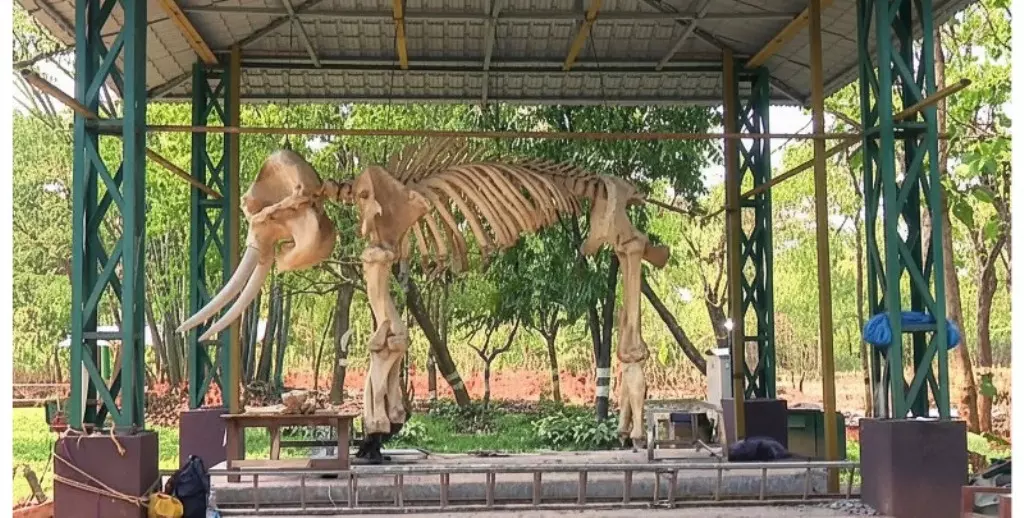
Bhubaneswar: In a distinctive blend of conservation and public education, the skeletal remains of an elephant named ‘Ramu’ are being meticulously reconstructed for display at the Godibari Nature Camp on the outskirts of Bhubaneswar, forest officials said on Monday.
The initiative aims to give the deceased tusker a renewed identity while sensitising visitors to wildlife preservation and the challenges faced by elephants in human-dominated landscapes.
Ramu’s remains were recovered from the Chandaka-Dampara Wildlife Sanctuary in December last year. Officials collected nearly 250 bone fragments, which are now being carefully assembled to recreate the animal’s full skeletal structure with anatomical precision.
A five-member expert team is overseeing the reconstruction, led by noted zoologist Siba Prasad Parida and former honorary wildlife warden Subhendu Mallick. The work is in its final stages, with the team ensuring scientific accuracy in the mounting process.
Once completed, the skeleton will be housed in a specially designed glass enclosure at the nature camp. The exhibit is expected to open to visitors by May, offering a rare opportunity to observe an elephant’s skeletal framework up close.
In addition to the display, authorities plan to install detailed panels narrating Ramu’s life, movement patterns, and habitat, turning the exhibit into an educational resource for tourists, students, and wildlife enthusiasts. Officials believe the initiative will become a key attraction while reinforcing the message of conservation and coexistence.
Ramu, estimated to have been around 41 years old at the time of death, was a well-known tusker that frequently moved between forests in Chandaka and Khurda, including the Bharatpur Reserve Forest. The elephant was also part of a radio-collaring attempt by the Odisha Forest Department in 2021.
According to forest officials, the elephant is suspected to have died due to electrocution. The carcass was found near the boundary wall of the Bharatpur Reserve Forest, with a cut mark on the trunk indicating possible contact with an electric source. The remains were later preserved at the Bhubaneswar wildlife range office for examination and documentation before reconstruction began.
