Dance Is My Language, Says Japanese Kathak Exponent Toshniwal

Amisha Toshniwal, daughter of Nalini, who is also performing in Hyderabad this time, began learning at six.
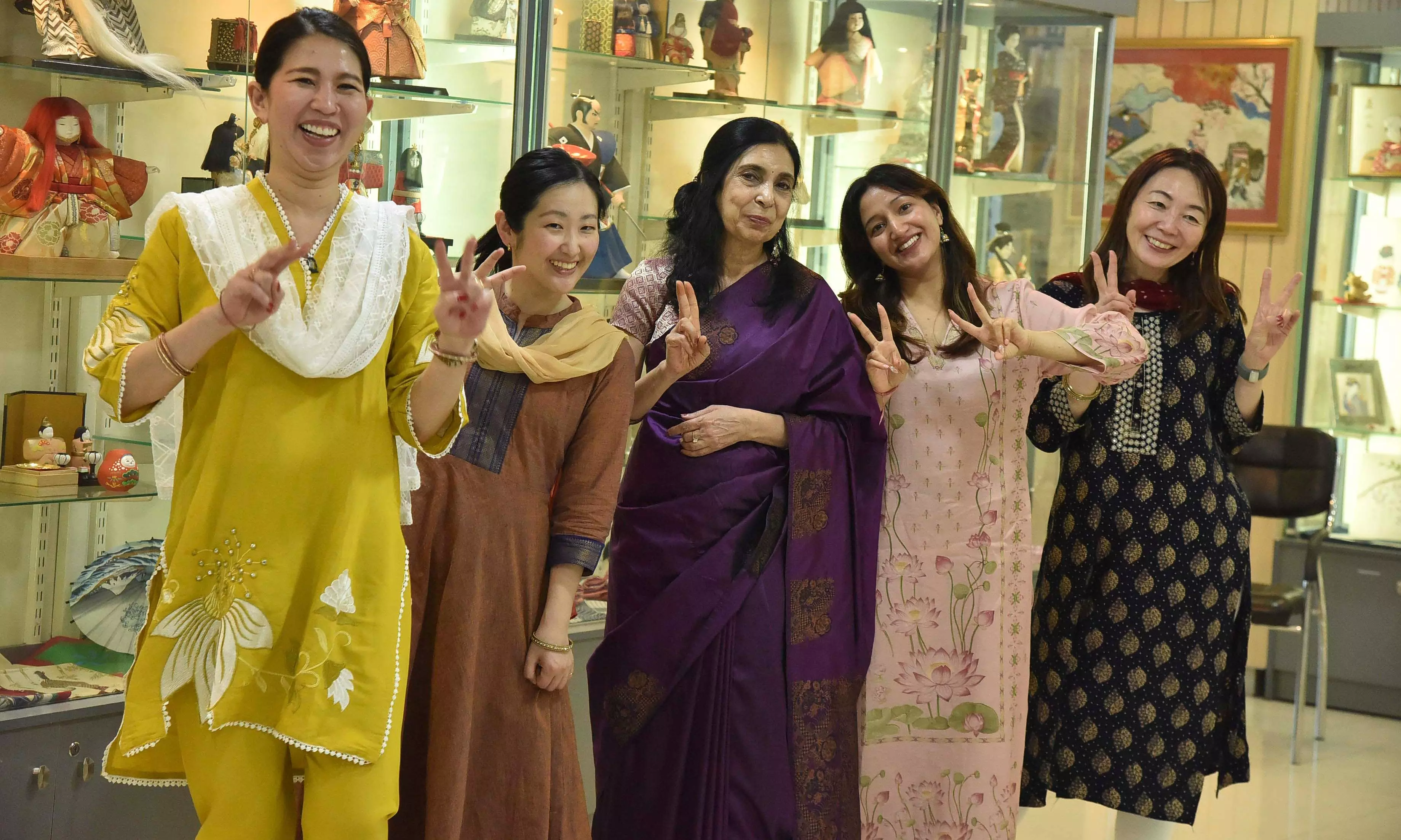
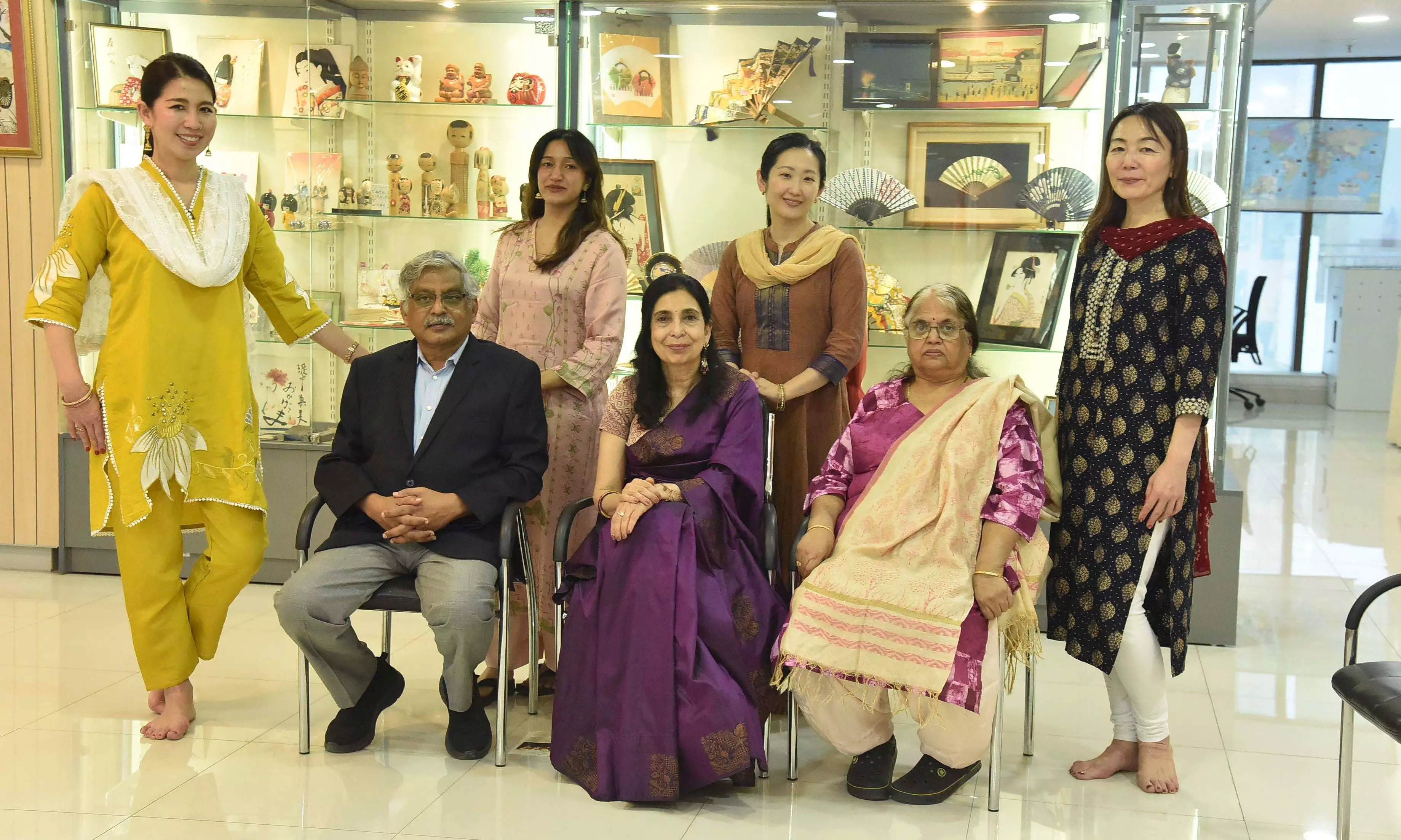
Hyderabad: Kathak exponent Nalini Toshniwal believes culture is the bridge of understanding between people. “Once you are out of your country then you realise that culture is the bridge of understanding and the importance of it. Understanding the culture of each other brings peace,” she says, while in Hyderabad this week with her ensemble of Japanese students performing across the city. The collaborative presentation, organised with NaRa Japan Hub, Hyderabad, began at Shilparamam and will conclude on February 26 after shows at university campuses.
Toshniwal was born in Kashmir and trained in Kathak after moving to Ajmer. “Dance was a passion from the very childhood. I started learning when I was nine.” Marriage took her to Japan decades ago where she started her Ruchika Indian Dance Academy in Osaka and kept going. “Kathak, strangely, grew on me in Japan.”
In Japan her dance circles grew. Japanese audiences were familiar with Bharatanatyam when she began teaching. “They didn’t understand there is another kind of dance that is very different from Bharatanatyam.”
She worked at it, inviting musicians and gurus, keeping what she calls home concerts. “Slowly my house became a cultural centre…we are like a family.” She insists classical dance cannot be reduced to transaction. “Classical dances cannot be taught with just you paying and we are teaching… it’s a very different relation.”
Her students speak less about theory and more about affection. Naoko Iwasaki is among the senior-most of those relations. A Konan University graduate who works in optical sensors, she has trained in Kathak for over 20 years.
“She has been with me throughout, went to all the countries, to Alaska, to America, to India. She has become a very good dancer.” Years of touring, she says, have been built on “dedication, hard work and passion.”
Amisha Toshniwal, daughter of Nalini, who is also performing in Hyderabad this time, began learning at six. She says, “I don’t want to leave Kathak because I feel like it’s been part of me since I was a kid.” Work now competes for her time, but she keeps returning to practice, perhaps her unspoken resolve to carry her mother’s legacy forward.
Yoshimi Kawakami laughs when asked about the city, and declares her love for India and its culture very openly. “I have been to India but Hyderabad is new for me…I would like to enjoy Hyderabad biryani and I love Telugu films also.” She has studied Kathak only since December but has been drawn to India much longer. “Some of the movements are quite similar to Japanese traditional movement dance, so I find it easy to connect with it. There is so much in common between India and Japan, even the saree and the kimono are similar in style, I feel.”
The traditional Japanese dance that Yoshimi speaks about is Nihon Buyo. Nalini also learnt it and sees correspondences in hand angles and gaze. “These gestures and the hand movements, the subtleties of all of that in Kathak is very similar to Nihon Buyo,” she says, adding, “The grace is similar.”
Rie Nagai and Mana Nakata are the other two students performing this week. Rie has been learning Kathak for a year now, and is quite passionate in her pursuit. While being a patent attorney she is continuing with learning both Kathak and Indian yoga and meditation from Nalini Toshniwal. “It has just been a year but I am so excited.”
Toshnial began by speaking of culture as a bridge and a week of performances later, that metaphor will feel less abstract. The exchange need not be grand, but it will widen, even if it is with just a handful of people who will stay back to say thank you. “Even if two people are happy and come to us and say they enjoyed our performance, our work is done,” she says. It sounds like enough.
