Navaratri 2025 Day 4: Goddess Kushmanda, Significance, Puja Timings, Mantras, Colours

25 Sept 2025 11:41 AM IST25 Sept 2025 11:41 AM IST
Each day is devoted to one of the goddess’ nine avatars. On Chaturthi, the fourth day of Navaratri, the Creator of the Universe, Kushmanda, is worshipped
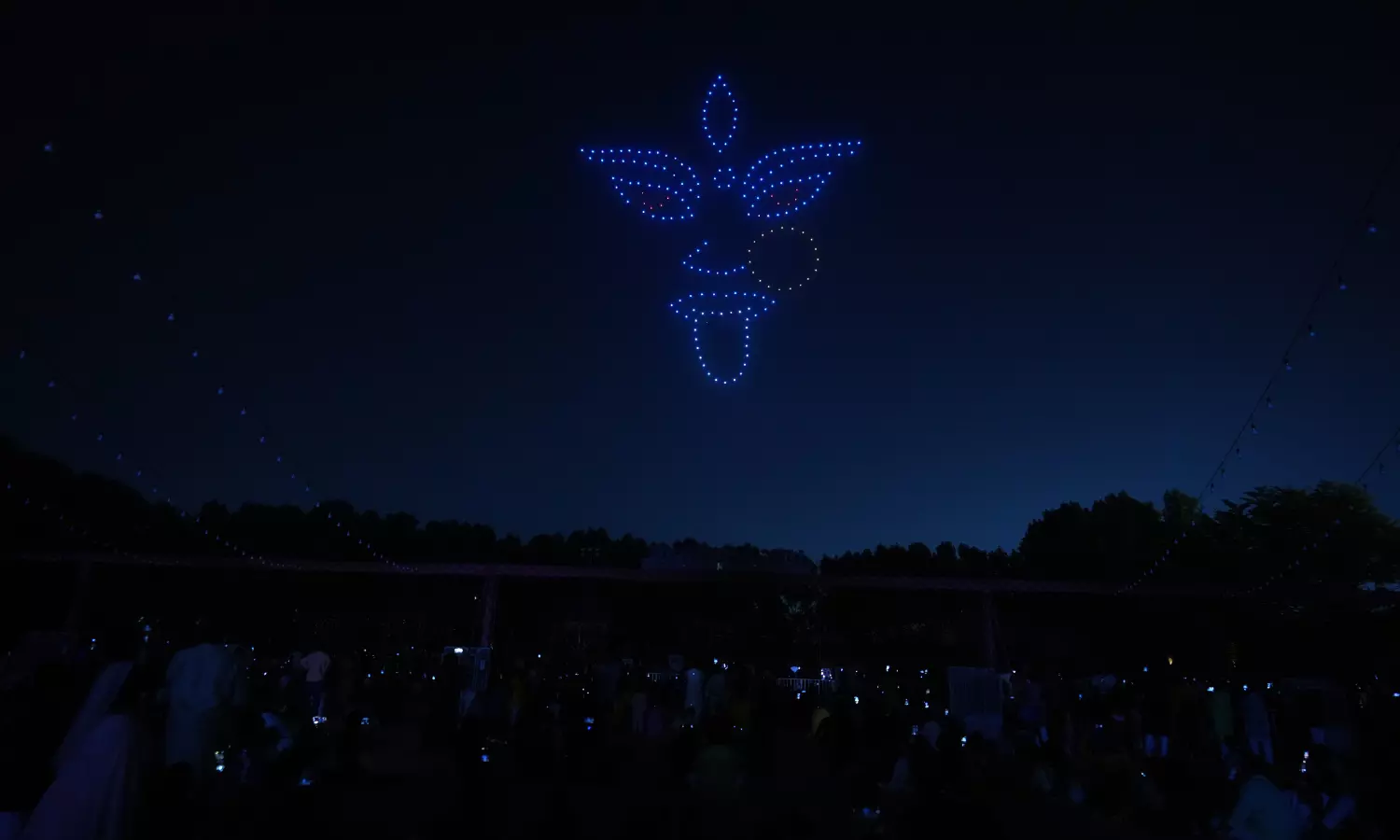
People watch a formation of Hindu goddess Durga during a drone show on the third night of Navratri, or nine night festival celebration, in Ahmedabad, India, Wednesday, Sept. 24, 2025. (AP Photo/Ajit Solanki)
Every year, devotees across India anticipate the Navaratris, a sacred 9-day period dedicated to the reverence of Goddess Durga and her nine manifestations. Beautifully adorned idols of Durga Maa can be seen all over the country, set up in pandals for public worship. This year’s Navaratri celebrations kicked off on Monday, 22nd September and will conclude on Thursday, 2nd October, with Dussehra or Vijaya Dashami.
Each day is devoted to one of the goddess’ nine avatars. On Chaturthi, the fourth day of Navaratri, the Creator of the Universe, Kushmanda, is worshipped.
The story of Goddess Kushmanda
The name ‘Kushmanda’ consists of three words: ‘ku’ meaning little, ‘ushma’ meaning energy or warmth, and ‘anda’ meaning egg, translating to ‘little cosmic egg’. The name ties into the story of how Kushmanda Devi created the cosmic egg of the universe. In the black, dark void, the goddess smiled, and from it, a little cosmic egg came to be. What was once dark was now filled with light. She then went on to create the first supreme beings from her three eyes – Mahakali, Mahalakshmi, and Mahasaraswati. The Trimurti and their consorts were born from these deities.
Goddess Kushmanda is known as ashtabhuja, possessing eight arms in which she holds a kamandal, bow, arrow, a jar of nectar, discus, mace, rosary, and lotus, riding a lion or tiger. She rules over the heart chakra, Anahata Chakra, that serves as a centre of love, compassion, and empathy, acting as an equilibrium in the body. It facilitates connection not only with others, but with oneself. As the source of life’s energy, Kushmanda Maa governs the Sun. It is believed that she resides in its core and provides direction to Lord Surya. Worshipping the goddess brings about creativity, vitality and emotional harmony in devotees.
Goddess Kushmanda’s colour – Yellow
Like the Sun itself, Kushmanda Devi is associated with the colour yellow, symbolising joy, optimism, and positivity. It represents the brightness and clarity that come with light, along with warmth, growth, and fertility. Wearing yellow invites happiness into the hearts of worshippers.
Today’s Puja Timings
Brahma Muhurta: 04:30 AM to 05:18 AM
Pratah Sandhya: 04:54 AM to 06:05 AM
Abhijit: 11:44 AM to 12:32 PM
Vijaya Muhurta: 02:08 PM to 02:57 PM
Godhuli Muhurta: 06:10 PM to 06:34 PM
Sayahna Sandhya: 06:10 PM to 07:21 PM
Amrit Kalam: 09:17 AM to 11:05 AM
Nishita Muhurta: 11:44 PM to 12:32 AM, Sep 26
Ravi Yoga: 06:05 AM to 07:09 PM
Mantra for Kushmanda Maa
ॐ देवी कूष्माण्डायै नमः॥
Om Devi Kushmandayai Namah॥
Chanting this mantra relieves devotees of anxiety and depression, removing obstacles in their spiritual journey and blessing them with abundance.
सुरासम्पूर्ण कलशं रुधिराप्लुतमेव च।
दधाना हस्तपद्माभ्यां कूष्माण्डा शुभदास्तु मे॥
Surasampurna Kalasham Rudhiraplutameva Cha।
Dadhana Hastapadmabhyam Kushmanda Shubhadastu Me॥
You can find the entire prayer for Goddess Kushmanda online on Drik Panchang.
This article is authored by Tejasree Kallakrinda, interning with Deccan Chronicle
( Source : Deccan Chronicle )

Next Story