Ugadi Brings New Hopes For Fresh Beginnings

According to the Brahma Puranam, the day on which Lord Brahma emanated from the Lotus in Lord Vishnu's navel is celebrated as Chaitra Suddha Padyami or Yugadi
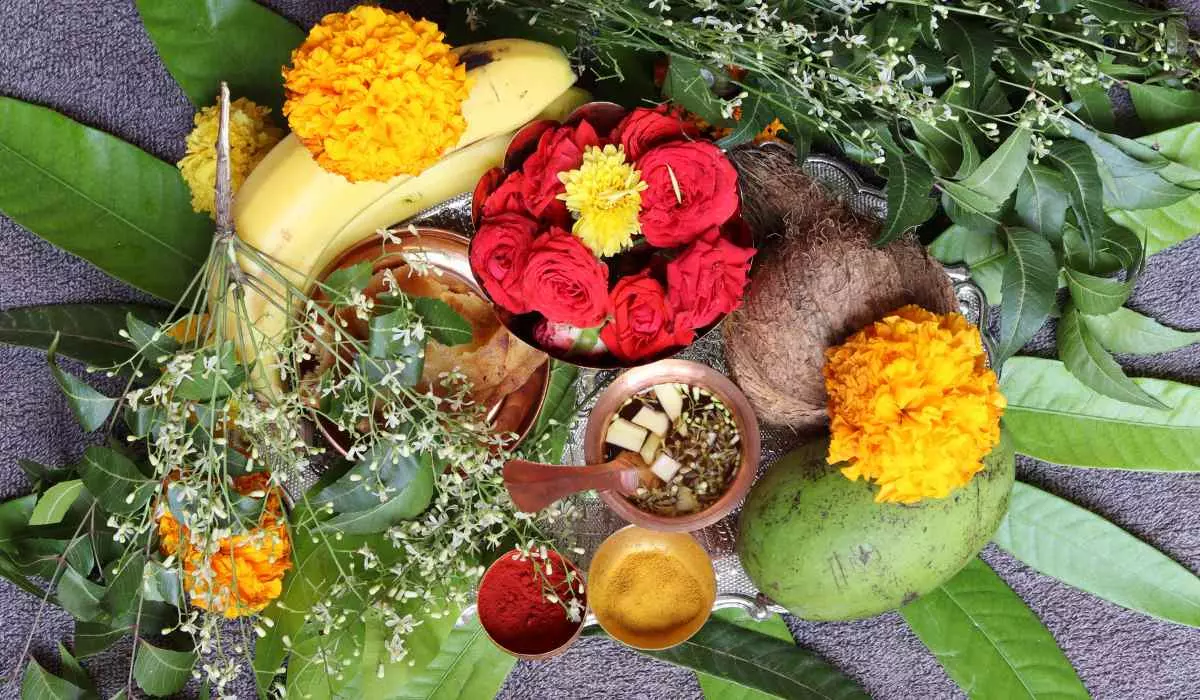
Hindu New Year Ugadi is a festival marking new beginnings. Celebrated on the first day of Chaitra month when spring season is at its best, the festival ushers in fresh hopes about new projects and initiatives. This year, Ugadi falls on March 19.
Though the name of the Telugu New Year this year is Paraabhava, with some negative connotations, there is no need to worry over its effects, say astrologers. As good and bad co-exist, so do the 60 Telugu new years from Prabhava to Akshaya. Nature always teaches humanity to overcoming challenges with self-confidence and determination.
MYTHOLOGY
According to the Brahma Puranam, the day on which Lord Brahma emanated from the Lotus in Lord Vishnu's navel is celebrated as Chaitra Suddha Padyami or Yugadi. In Valimik's Ramayanam, it is said that Lord Sri Rama travelled to Ayodhya from Lanka on Chaitra Suddha Padyami.
Mythology states that all the 60 names of Telugu years are Sage Narada's children. At one instance, the sage known for wandering the three Lokas gets incarnated as a woman due to Vishnu Maya. After getting married, the couple give birth to 60 babies but all of them die at a very early age. Devastated with the loss, Sage Narada worships Lord Vishnu, who consoles him saying that all the 60 would be included in the Time Cycle. By naming the Telugu New Years after them, they are being remembered for an eternity. While some of the names -- Prabhava, Vibhava, Pramodoota, Prajotpatti, have a positive connotation, a few others like
Virodhi, Durmati, Vikari, Rakshasa, Krodhana, have a negative overtone. However, astrologers say the names do not reflect the nature of the year. India declared itself a Republic in 1950, in Virodhi year. In 1962, China breached India's trust and encroached some of India's land, even when the name of the Telugu year was Subhakrutu, indicating blessings, at that time.
Hence, astrologers say when the year's name sounds positive, hope for better times and when it is negative, consider it as a caution and consciously choose bravery and walk in the path of dharma.
CELEBRATIONS
Not jsut the people, even the nature also reflects new hopes of fresh beginnings with new foliage.
Ugadi celebrations begin with bedecking the households with mango leaf thoranams and flowers, cleansing the body by applying oil and taking a headbath, called Mangalasnsanam, which is supposed to also clean the heart and activate the Sushumna nadi. New clothes are worn indicating new thought processes and consuming Ugadi Pacchadi is another ritual performed mandatorily.
Ugadi Pacchadi with the Shadruchulu, six types of tastes -- sour, sweet, and bitter primarily, is consumed as an indication that life has a multitude of experiences echoing different feelings that could make us feel good or bad, yet the journey has to be continued with resilience.
Panchanga Sravanam is another ritual observed mandatorily when the prospects of the year ahead are predicted by learned scholars and astrologers. The prediction is done to keep the people conscious of the changes in the period that are likely to occur in various sectors and people in the 12 rashis. A feast with special foods is also an integral part of the festival.
PREDICTIONS FOR PARAABHAVA
The prediction for Paraabhava naama samvatsaram indicates copious rains and good yield. As Jupiter is in a dominating position, the public will lead a healthy life. The price of valuable metals -- gold, silver and diamonds, is likely to increase further as Venus is in a weak position.
SPRING FESTIVALS
While Andhra Pradesh, Telangana and Karnataka celebrate Ugadi as the Hindu New Year, Maharashtra and Goa celebrate Gudi Padwa as the spring festival.
Puthandu in Tamil Nadu, Poila Baisakh in West Bengal and Assam, Vishu in Kerala, Bhog Bihu in Assam, Baisakhi in Punjab are also spring festivals, marking Hindu New Year.
