Surveillance Feminism: Why Meta is Selling Its Glasses Through Women

In Jenner's hands the glasses are just another accessory that adds to her cool quotient. To the consumer who by now is wired to find her lifestyle aspirational, the tech now looks harmless, and urgently needed
In India, Meta's most visible face for its Ray-Ban camera glasses hasn't been a beauty or lifestyle influencer - it's been Virat Kohli. In April 2026, Oakley and Meta launched their "Athletic Intelligence" campaign built entirely around Kohli's first-person point of view: training footage, match preparation, off-field routines.
Away from cricket, the reaction has been sharper. BLACKPINK's Jennie, who became Ray-Ban and Ray-Ban Meta's global brand ambassador in April 2026, faced criticism after an old promotional post resurfaced. Critics pointed to South Korea's ongoing struggle with molka - hidden-camera crimes - and asked how someone positioned as a feminist icon could front a device critics say enables exactly that kind of covert filming. "How are you, as a woman, promoting meta glasses that allow predators to secretly film and harass women without their consent," one widely shared post read, "and then brand yourself as a feminist?" Jennie's fans pushed back forcefully, arguing she wasn't responsible for how others misuse a legal product - but the debate itself became the story, running for days across K-pop and tech press alike.
Similar scenes played out when Indian lifestyle influencers posted videos endorsing the glasses. Criticism, feminism, claiming innocence from “misuse” of what the product could do.
Many note that netizens have been sharper with lifestyle influencers, particularly women influencers who identify as feminists, in a way Kohli was not subjected to. The question has been how could anyone call themselves a feminist while promoting a device that enables further unconsented surveillance of female bodies.
Feminismization of Surveillance Tech
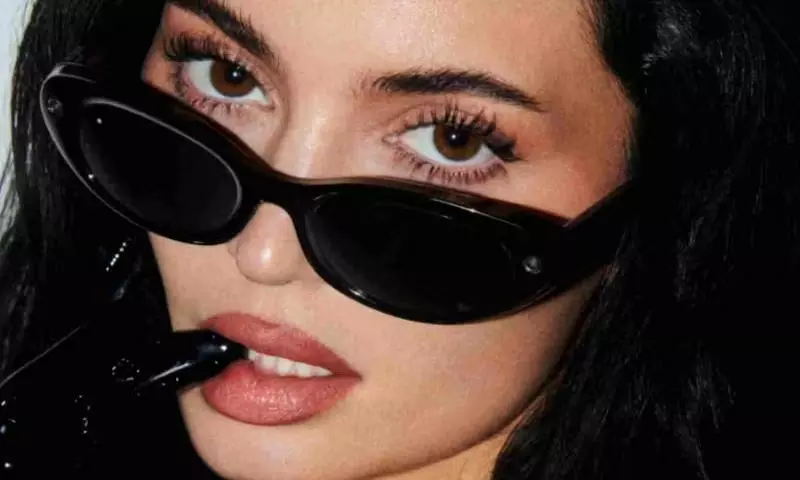
The most costly and controversial face that endorsed the Meta glasses were Kylie Jenner. Jenner, a celebrity who built her persona from reality TV, beauty brands and fashion, does not look out of place while she stares at the camera with pouty lips, long lashes, glasses on.
“The fastest way to make technology feel less threatening is to feminize it,” notes Sarah Saska, sociotechnologist who primarily works on designing equity into workplaces, products, and systems.
In Jenner's hands the glasses are just another accessory that adds to her cool quotient. To the consumer who by now is wired to find her lifestyle aspirational, the tech now looks harmless, and urgently needed. Its security threat is no biggie. Violation of privacy, forgotten. The only worry is if we can pull it off as effortlessly as Kylie does.
Singer Lorde, performing at Madrid's Mad Cool Festival, told the crowd bluntly: " F**k the glasses. Don't get the glasses. Not sexy." Jenner's own Instagram comments filled with users calling the campaign "so out of touch it's actually insane" and the glasses "creepy af."
"The feminization of AI happens when a contested technology is wrapped in beauty, femininity, and familiarity so it feels safer than it is," says Catharina Doria, an AI Ethics Expert from Brazil, asserting that this isn't incidental: "Gender does specific work here. Putting a surveillance device in Jenner's hands makes it familiar enough that we stop asking what it does and start asking whether it looks good on us."
Are our feminist influencers hearing this?
The pattern extends beyond glasses
Despite all this (or perhaps because of all this) sales have been through the roof.
EssilorLuxottica, the Ray-Ban maker, said it sold more than 7 million Meta AI glasses in 2025 - more than triple the roughly 2 million units it sold in 2023 and 2024 combined.
The glasses' controversy predates Jenner, or any of our beloved influencers entirely. The company's controversies regarding privacy, human rights predates even the glasses.
Meta had recently rolled out a feature letting users generate AI content using images from other people's public Instagram accounts, without those people's direct sign-off. Meta pulled the feature within days, telling reporters: "We've heard the feedback that this feature missed the mark, so it's no longer available." Not to forget the currently ongoing cases regarding child safety in multiple countries.
In the end, it is the companies that design, market and profit from these technologies that many critics argue should bear the greatest responsibility.