From Raagas to Runways: How IBTIDA is Reimagining India’s Cultural Legacy

At IBTIDA, nostalgia is not about looking back—it is about bringing heritage into the now. Founders Tanvi Singh Bhatia and Anubhav Jain talk about their journey of reimagining the traditional mehfil as a living, breathing cultural movement that bridges music, textiles, food, and storytelling for a new India.
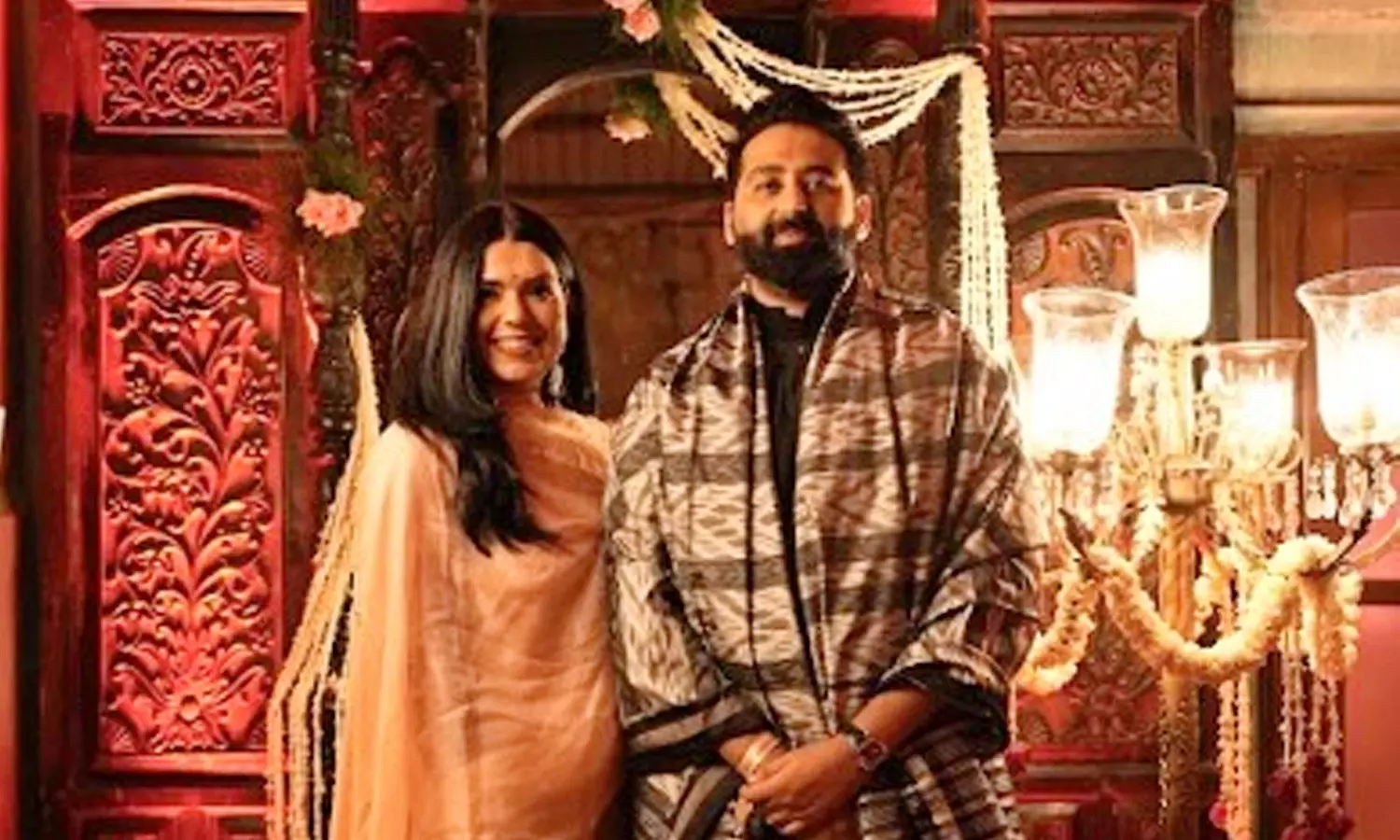
When Tanvi Singh Bhatia describes IBTIDA, her voice softens as if she’s recalling a memory rather than explaining a project. “We try to keep it as real and relevant in the modern times we live in,” she says. “Over the years, what we have realised is that people miss the conversations that used to take place. We are all digitally connected, but somewhere deeply disconnected. That’s where IBTIDA has a huge role to play.”
For her, IBTIDA is not simply about reviving music, but about recreating the intimacy of old mehfils—where voices, verses, and conversations mingled freely. “We try explaining the songs and verses of songs to a younger audience who would never understand the meaning of it otherwise,” she explains. “We always keep a textile and fashion element too, because that resonates with everyone. IBTIDA is not just music—it’s about celebrating India with all its facets and presenting it in the manner of the New India.”
That idea of “celebration” runs through every detail of an IBTIDA curation. The spaces are perfumed with desi gulab and mogra, tables carry recipes that feel like they have been whispered down through generations, and music is interwoven with stories. “In a world which is moving fast, the magic is to bring back everything that is forgotten—the old-world nostalgia and actually slowing down,” Tanvi says. “Music that carried stories, flowers that carried fragrance, food that was less about gastronomy and more for the soul. For me, it’s about bringing back a way of living that was rich in emotion, taste, and connection.”
Her own upbringing has much to do with this instinct. “I was fortunate to grow up around music, where music was not just heard but lived every single day,” she recalls. “My mother, a classically trained singer, filled our home with stories and humming. Those evenings of listening to her sing, of watching how music could transform a space and bring people together, shaped the very foundation of who I am.” Even though she did not pursue singing herself, she always knew her path would lead her back to the traditions she grew up with. “At my core, the calling was always there. I have always been India-proud—celebrating all things India through culinary, textile, and food—and it’s all showcased in my work. The ethos of intimacy, culture, and conversation that I now revive through my musical baithaks is exactly what I saw throughout my growing years.”
If Tanvi embodies the memory and intimacy of IBTIDA, Anubhav Jain brings structure and vision. Coming from a background in advertising, he looks at IBTIDA as more than an event series—it’s a cultural movement in the making. “Advertising taught me the grammar of persuasion,” he reflects. “But IBTIDA is where I chose to rewrite the story. In advertising, we built desire. In IBTIDA, we build belonging.”
For him, a mehfil is not just a performance—it’s an ecosystem. “Revival is not confined to music,” he explains. “It extends into craft, textiles, design, and the ways in which people experience culture. When you walk into one of our mehfils, you don’t just hear a raag, you see India’s artistry across every corner. You feel it in the fragrance carried in the gajra, you taste it in the hospitality that is as much ritual as it is service.”
Fashion, textiles, and luxury branding play a surprisingly central role here. “Fashion and textiles embody lineage and heritage,” Anubhav says. “We curate collaborations with India’s finest ateliers, weaving together shawls, saris, and contemporary couture with the same precision as we would a raag. Luxury branding too is not sponsorship—it is storytelling. When a brand partners with IBTIDA, they are woven into the narrative of revival, aligned with the mission to elevate India’s identity. This is not product placement, it is cultural placement.”
Perhaps his most radical vision, however, lies in how IBTIDA reaches younger audiences. He rejects the idea that tradition must be kept behind glass. “For me, the younger audience is not an afterthought, it is the pulse,” he insists. “Revival has no meaning unless it speaks to the generation that will carry it forward. The truth is, younger Indians are hungry for authenticity. They may live in a digital-first world, but there is a deep longing for roots, for rituals, for something that feels real in an era of screens.”
The baithak format, with its intimacy, offers exactly what they crave. “They don’t want to sit in rows of a concert hall,” Anubhav says. “They want to sit cross-legged, sip a drink, hear a story, feel part of something larger. That’s where the mehfil becomes powerful—it collapses the distance between artist and audience, and speaks directly to the youth.”
Collaborations are key to this. “We bring Sufi renditions alongside contemporary poetry, merge classical ragas with new-age narratives,” he adds. “The younger audience sees themselves in these intersections. They don’t feel like outsiders to a tradition; they feel like inheritors of it. Ultimately, our mission is not to preserve tradition in glass cases, but to revive it as living culture. And if the youth are with us, then the ‘purana zamana’ is not lost—it is reborn.”
Together, Tanvi and Anubhav have positioned IBTIDA as much more than a revival—it is a continuum. One that flows from memory to modernity, carrying the fragrance of mogra, the resonance of a raag, the texture of woven textiles, and the hum of voices in conversation. It is India reintroduced to itself, not as history, but as heritage alive in the now.
IBTIDA – Ek Mehfil to Make Hyderabad Debut in reviving the magic of Mehfils with The Legendary Ustaad Shujaat Hussain Khan on 27 September, 2025 at the Leela, Hyderabad.
