A Draped Tale Of Grace Woven In Chanderi

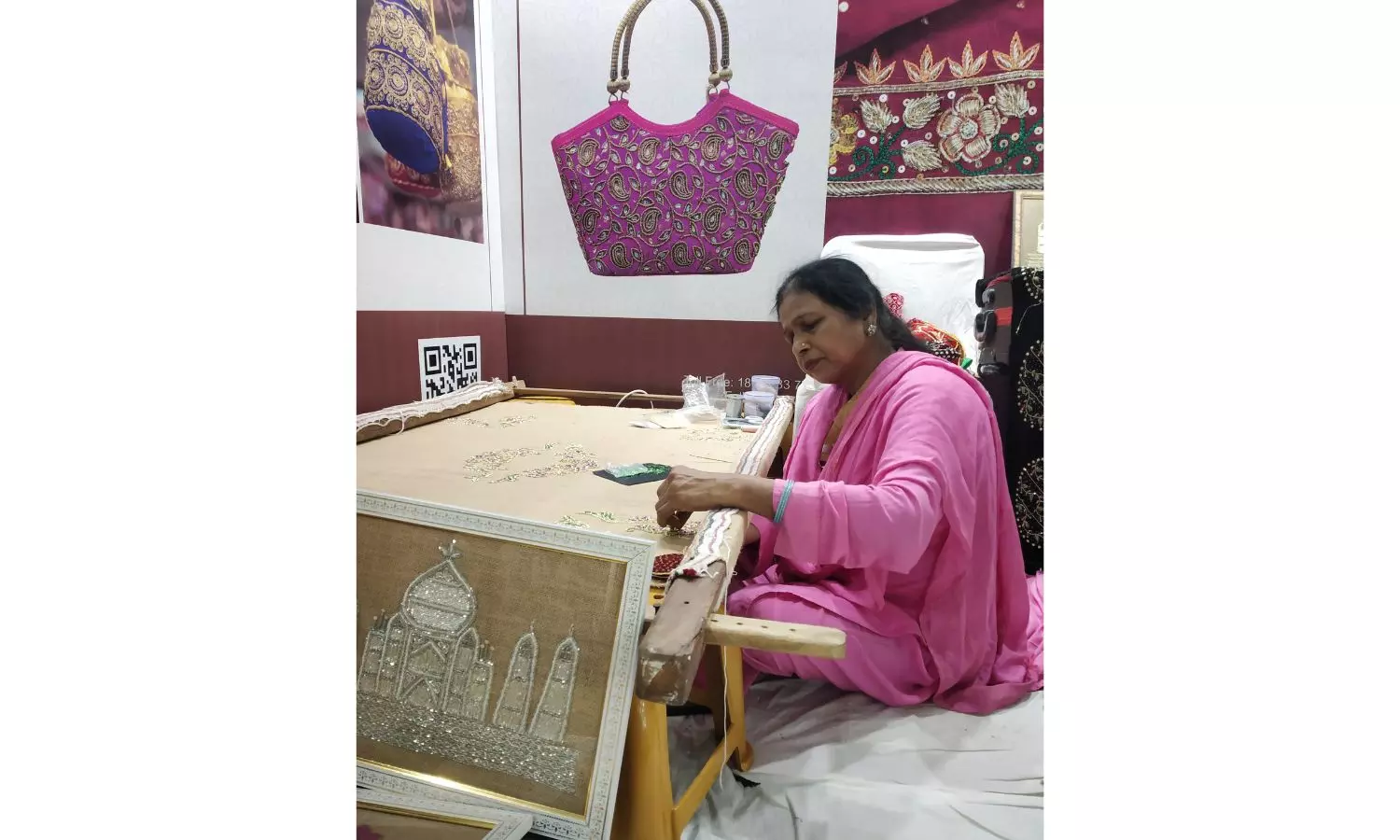
Chanderi and zari–zardozi are closely linked yet distinct. Chanderi refers to the woven fabric, while zari denotes the intricate embroidery that often adorns it
Bhopal: With their elegant, luxurious style and intricate zari–zardozi work, Chanderi saris exude timeless grace. Known for their lightweight and sheer texture, these exquisite saris originated from Chanderi, a quaint town in Madhya Pradesh.
In this picturesque town, every second house hums with the rhythmic melody of spinning looms. The artisans here weave nine yards of colourful dreams each day, crafting saris that narrate stories of heritage and elegance through every intricate bead and shimmering strand.
Most weavers work from home, while some run small workshops to train youth and women. Others are employed at the Handloom Park launched by the Ministry of Textiles, which houses nearly 300 looms to support and facilitate local artisans.
Chanderi and zari–zardozi are closely linked yet distinct. Chanderi refers to the woven fabric, while zari denotes the intricate embroidery that often adorns it.
Tracing back through history, references to Chanderi saris appear as early as the Mahabharata, where it is said that Shishupal discovered and introduced this finely woven fabric. Another legend speaks of a special root known as Koli Kanda, from which the fine cotton threads used to weave Chanderi were once extracted.
Sharing his experience, Manish, a weaver from Pranpur, says, “It takes about seven to ten days to weave a Chanderi sari, but depending on the sizing process and design, it can take more than fifteen days.” Pointing towards his loom, he adds, “Stree was filmed here in Pranpur, the first handloom village near Chanderi, where about 500 families depend on weaving for their livelihood. We hand over the finished products to traders and are paid according to the design and butis (motifs). A regular sari fetches me around Rs 2,000, while a zari-based one earns about Rs 5,000.”
In Bhopal, Asima runs a training centre in the New Market area, where she teaches young people and women the delicate art of zari work. The city’s markets are lined with shops that make and sell zari (gold threadwork) and zardozi (embroidery). One can find an array of batuas (purses), thailas (bags), and covers in myriad colours and intricate patterns.
Peer Gate and Moti Masjid areas are especially famous for their zari shops, where rows of Bhopali batuas adorn the stalls. Patronised by the Begums of Bhopal, batua making was originally introduced as a means of livelihood for women. Even today, the craft continues to empower them and contributes significantly to government initiatives for women’s employment.
The Madhya Pradesh government remains actively committed to supporting the textile sector and MSMEs, ensuring that the age-old traditions of weaving and embroidery continue to thrive with dignity and pride.
