Indigenous Communities Keeping India’s Oldest Food Traditions Alive

Chef Harshita Kakwani brings the flavours, ingredients and stories of India’s forests to Hyderabad through Forest & Fire, a one-of-a-kind culinary festival at Novotel Hyderabad Convention Centre.
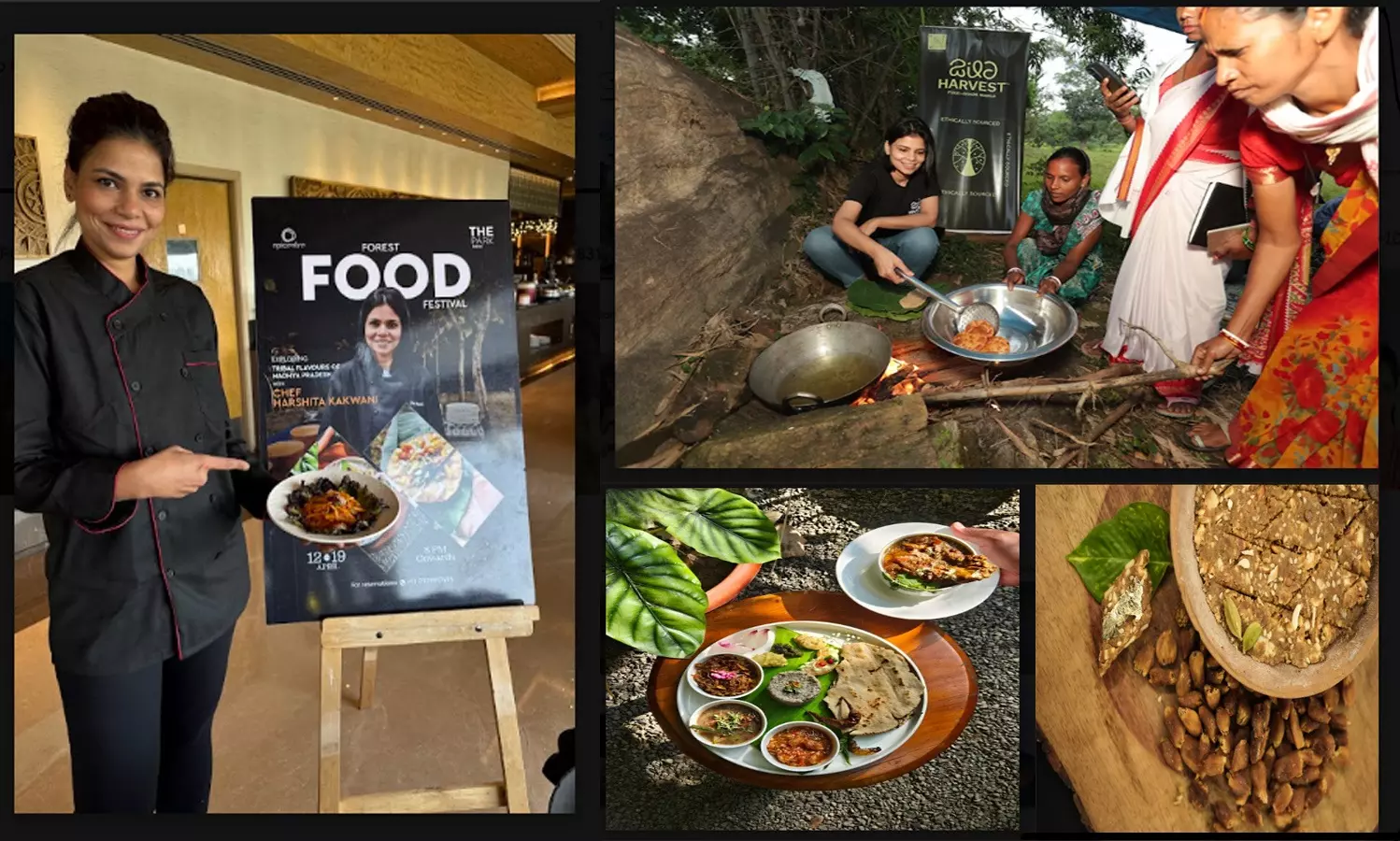
One of India’s oldest food traditions is making its way to Hyderabad through Forest & Fire, a culinary pop-up at Novotel Hyderabad Convention Centre. Curated by Chef Harshita Kakwani, the experience takes diners deep into the forests of Central India, celebrating indigenous ingredients, ancient cooking methods and stories that have quietly survived for centuries.
For Harshita, the idea began long before the festival.
“Forest & Fire is inspired by my years of living in the forests of Pench, where I discovered that some of India’s oldest food traditions are still alive through indigenous communities,” she says. “Long before agriculture shaped our diets, we lived as hunters and gatherers, relying on forests for nourishment, knowledge and survival. Many tribal communities continue to preserve fragments of that ancient food wisdom even today.”
Rather than presenting forest food as something exotic, Harshita wants diners to understand the people and traditions behind it.
“With this festival, I want guests to experience India’s forests through flavour, fire and storytelling. I hope Hyderabad’s diners leave with a deeper appreciation of our indigenous culinary heritage and an understanding that some of our oldest food traditions may also hold the key to a more sustainable future,” she says.
That philosophy shapes every course on the menu. Harshita believes indigenous cuisine deserves a much larger place in India’s food conversation because it reflects centuries of knowledge that often goes unnoticed.
“India’s indigenous communities have spent centuries developing food systems that work in harmony with nature. Their cuisine follows the rhythm of the seasons and celebrates biodiversity. Wild greens, flowers, mushrooms, forest fruits, roots, heirloom grains, freshwater fish, river crabs, game birds like quail and countless ingredients rarely appear on restaurant menus.”
She adds that this is far more than simple rustic cooking. “This cuisine is not simply rustic food. It represents generations of ecological knowledge, nutritional wisdom and cultural identity. At a time when the world is searching for sustainable food systems, tribal communities have quietly practised them for centuries. Giving this cuisine a place in mainstream dining is about recognising its value and preserving an important part of India's living heritage.”
Every dish at Forest & Fire carries a story. “Patrapoda, for example, is cooked without utensils. It is believed to have evolved out of necessity, when hunters spent long hours tracking game and had to cook with whatever nature provided. Meat or vegetables were wrapped in leaves and slowly roasted over embers, creating a dish that is as ingenious as it is delicious.”
She points to another signature preparation that reflects the same philosophy. “Paire Wali Machli is inspired by the age-old practice of hay-smoking fish over an open fire, creating flavours that modern kitchens simply cannot replicate.”
Desserts also carry their own history. “Chironji Halwa celebrates chironji, a nutty seed indigenous to the Indian subcontinent that, despite its incredible flavour, has spent most of its life playing a supporting role in desserts and festive milk preparations.”
The menu goes beyond these signature dishes, bringing together recipes from Madhya Pradesh, Chhattisgarh, Jharkhand, Maharashtra and neighbouring regions. Diners will find Burmarakas Chakri made with spiral taro leaves, steamed ragi preparation Dumbu, ceremonial lentil dish Indrahar, tangy Khatte Katwal, hay-smoked fish, seasonal river mud crabs, wood-fired breads, regional chutneys and desserts inspired by forest ingredients.
According to Harshita, the cooking technique is just as important as the ingredients themselves.
“Wood fire is more than a cooking technique. It is an ingredient in itself. It adds layers of smokiness, caramelisation and depth that simply cannot be recreated on a gas stove,” she says.
For her, these methods are deeply connected to history.
“Cooking over embers, roasting in leaves, slow-cooking in clay pots and smoking over hay are techniques that have endured for centuries. At Forest & Fire, the cooking method is just as important as the ingredients because it preserves the authenticity and character of these traditions,” she asserts.
Among the many ingredients featured during the festival, Harshita hopes one in particular will surprise Hyderabad’s diners. “Without a doubt, it is Mahua. Most people associate mahua only with traditional beverages, but it is one of India’s most versatile forest foods. The flower has a delicate natural sweetness and can be transformed into cakes, desserts, syrups, fermented foods and savoury preparations.”
She believes it deserves far greater recognition. “It is nutritious, sustainable and central to the culture and economy of many indigenous communities across Central India. Through this festival, I hope people begin to see mahua not as a forgotten ingredient, but as one of India’s original superfoods.”
The experience is designed to extend beyond the dinner table. Along with the dining experience, the festival also features an interactive masterclass and a specially curated bar takeover inspired by forest botanicals.
“The festival has been designed as an immersive experience rather than just a dining event. The masterclass allows participants to cook with ingredients like mahua, understand traditional techniques and hear the stories behind the recipes. Food becomes far more meaningful when you understand its cultural and ecological context.”
She says the bar experience completes the journey. “The bar takeover explores India’s forests through beverages inspired by native botanicals, flowers, herbs, fruits and spices. Together, these experiences encourage guests to see India’s forests not simply as landscapes, but as living pantries that have nourished communities for thousands of years.”
With Forest & Fire, Chef Harshita Kakwani is not only recreating forgotten recipes. She is bringing to the table a culinary tradition that has quietly endured for generations, reminding diners that some of India’s oldest food wisdom still has an important place in its future.
