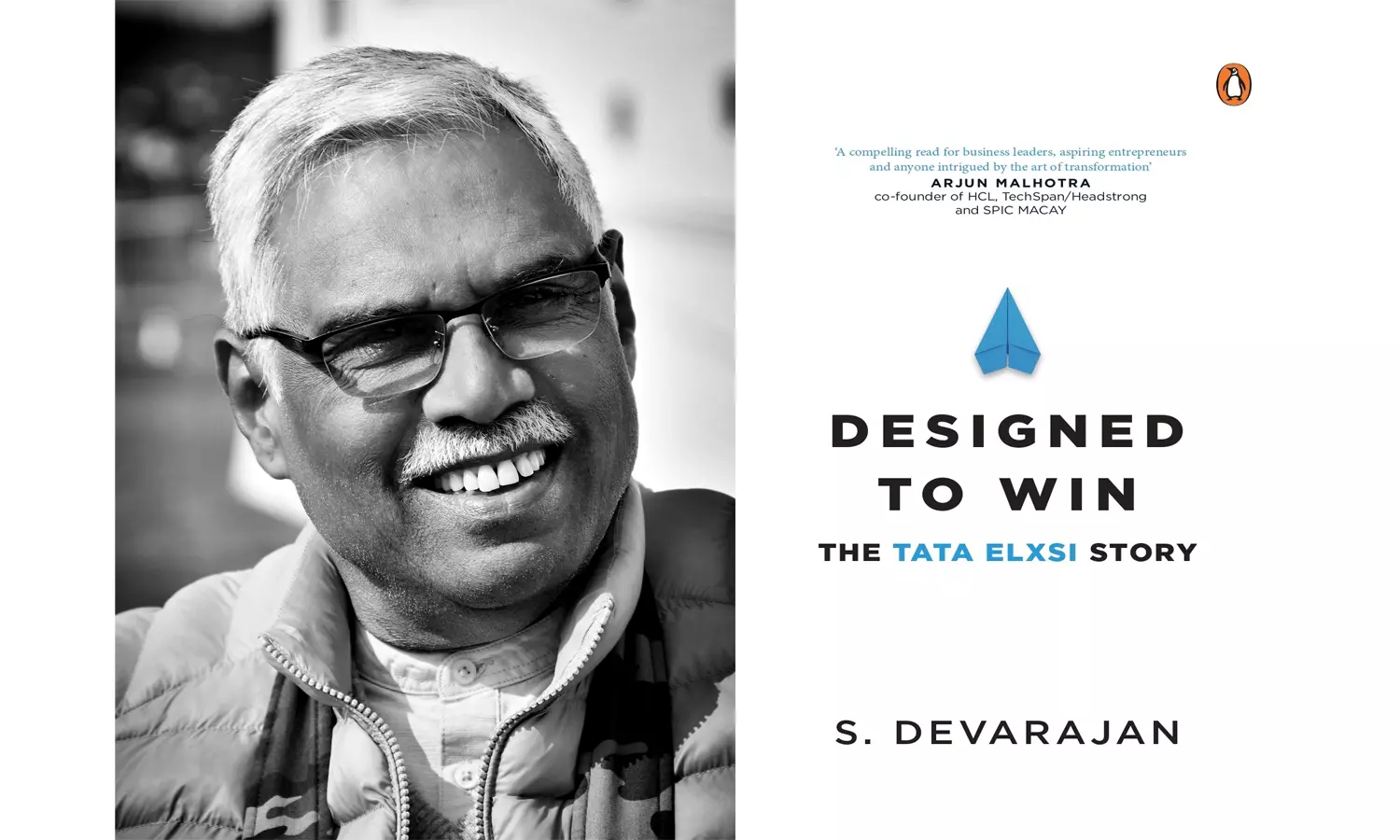
In a world increasingly obsessed with virality and instant visibility, S. Devarajan, former Managing Director of Tata Elxsi and author of the book ‘Designed to Win: The Tata Elxsi Story’, believes the debate between hype and consistency is often misunderstood. “I do not believe that one is more important than the other,” he says. “I think both are important because hype is some other way, an impolite way of saying good marketing.” To him, hype is outward-facing, meant to engage clients and the outside world, while consistency, stability, and discipline are what quietly hold an organisation together. “One is a back-office thing, the other one is a customer-facing thing,” he explains, adding that both are essential to building something that lasts.
One of the most defining moments in his leadership journey came when the very name Tata Elxsi was questioned. Rewinding to the company’s origins, Devarajan explains how Elxsi was originally a Silicon Valley firm founded in the mid-1980s, the first computer company started by an Indian in the US. “Elxsi actually stands for Electronic Times System Integration,” he says, describing how the company built powerful multiprocessing computers far ahead of their time. When Tata invested in the venture in the pre-liberalisation era, the idea was to enable technology transfer and global collaboration. But when the US entity shut down and the brand faded internationally, Tata Elxsi in India was left to define itself independently.
During discussions around a rights issue, Ratan Tata suggested reconsidering the company’s name. “He said, Elxsi doesn’t exist anymore, so why don’t we change the name of the company,” Devarajan recalls. For someone who had spent years building the brand in India, the suggestion was deeply unsettling. “I said, Mr Tata, we’ve worked very hard to create this brand, create this image. So I think we should retain it.” What followed was a moment that stayed with him. “He said, go ahead, retain the name.” It was unnerving at first, but also affirming. “There was respect and conviction to my saying, let’s retain the name. So it was a good feeling.” Today, Devarajan notes, Tata Elxsi stands among the most valued Tata companies in the country.
Turning around a struggling organisation required the courage to say no. At a time when Tata Elxsi was facing poor revenues and negative profitability, copying the strategies of large IT firms was never an option. “I couldn’t just be like an Infosys or a TCS or a Wipro and chase the same marketplace,” he says. “If I do that, what’s my differentiator?” Instead, the focus shifted to finding spaces where no one else was playing. A leadership insight shared by Ratan Tata during a Tata Group CEO conference left a lasting imprint. “Each one of you should be number one or number two in the business you are in, or don’t be there at all,” Devarajan recalls. “That stuck to me even today.” Going after underexplored areas became a way of building leadership rather than following scale.
Asked what set Ratan Tata apart as a leader, Devarajan avoids comparisons. “It’s unfair. Everyone is a leader, and everybody has their good things and not so good things.” What stood out to him was Tata’s ability to delegate with trust. As Tata Elxsi stabilised, Tata stepped back. “He would just measure the outcomes,” Devarajan says. Even when things did not go as planned, there was no blame. “Leaders are human beings.” For Devarajan, this human approach is inseparable from leadership. “Unless the EQ is high, you can’t get your team to deliver. You want them to play along. We are one soccer team, one cricket team, chasing the goal.”
Design-led thinking, a core idea in his book, ‘Designed to Win’, comes alive in Devarajan’s recollection of the Maya software story. At a time when animation tools ran only on expensive high-end workstations, he saw a different possibility. “Can we not down-port the software to powerful PCs?” he asked the Canadian company Alias. Concerns around intellectual property led to an unexpected solution through an Indian engineer named Nagendra. “Why don’t you move to India, work out of our office? I will build a team around you. You own the code,” Devarajan proposed. Thirteen months later, the software ran seamlessly on PCs. A casual conversation over dinner sparked another idea. “Why not a Sanskrit name for illusion, like Maya?” he suggested. “Maya was born in Bangalore at Tata Elxsi.” Today, he points out, it remains one of the world’s most widely used animation software platforms.
Looking back, Devarajan says no single decision defined Tata Elxsi’s transformation. “It was multiple decisions,” he says. What mattered most was the team staying together through uncertainty. “We worked as a family. I had almost zero attrition in those first three, four years.” One moment remains etched in his memory, when salaries had to be delayed by a week. “I actually cried within myself,” he admits. “My team said, don’t worry, we will wait.” They did, and the company emerged stronger.
Choosing unconventional paths became a defining trait. While the IT industry rushed towards North America, Tata Elxsi chose Japan. “People used to say, what the hell are you doing?” he recalls. “I said, when they decide, they will decide on us.” That confidence was backed by careful preparation, studying Japanese business culture, and adopting quality systems early. “When I say it now, it sounds nice. But we went through a lot of ripples.”
For young founders and engineers navigating an AI-driven, fast-scaling world, his advice is simple and deeply human. “Keep your team together. You are not you and the team. You are the team.” He urges them to resist following trends blindly. “Do something very, very different. The world is big. Consumption is big. You do it right, and you can win it. Don’t follow what others do. Lead and let others follow if they wish to,” Devarajan signs off.