Satras Prevented Assam from Joining Pakistan, Says Historian

9 March 2025 12:09 PM IST9 March 2025 12:09 PM IST
In 15th century Sankaradeva founded Satra institutions, the all-encompassing spiritual movement became a bulwark against proponents of Pakistan to grab Assam
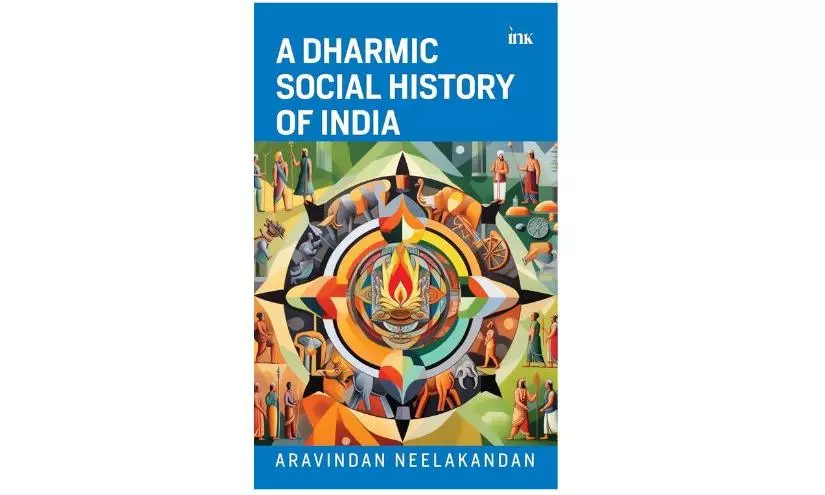
Cover page of A Dharmic Social History of India
Guwahati: Satras, a Vaishnavite monastery in Assam were a conscious innovation by Srimanta Sankaradeva in which he made Bhakti-based commune activities and social emancipation verily a mass movement (Yajña), wrote a social historian in new book. He credited the institutions to foster “a model that will be tremendously important for social emancipation in the coming years with digital connectivity, cost-effective technologies, and concepts of sustainable development”.
In 15th century Sankaradeva founded Satra institutions, the all-encompassing spiritual movement became a bulwark against proponents of Pakistan to grab Assam.
In 15th century Sankaradeva founded Satra institutions, the all-encompassing spiritual movement became a bulwark against proponents of Pakistan to grab Assam.
Aravindan Neelakandan in ‘A Dharmic Social History of India’ states: “Haridev Goswami of Dakshinpat Sattra made the society aware of the dangers of the Cabinet Mission Plan and played a role in integrating the state with the secular Indian Republic.”
Tracing evolution of Sankaradeva’s Satra, Neelakandan further states that “even into the 20th century, Satra’s institutional network became active in the national freedom movement. From the time of the Bengal partition to the ‘Quit India’ movement, the Sattra institutions and the trustees of the Satras, the Satradikars, helped the freedom movement dynamically.”
He quoted Assamese historian Dr Sagar Barua, saying that “when the Congress leaders were arrested, the active participation of the Satradhikar of Garmur Satra was a cause of alarm for the Government and hence it immediately imposed restrictions on the movement of Sri Sri Pitambardeva, confining him to the Satra.”
“Satra institutional networks also played a vital role in organizing Hindus in Assam and making them aware of the dangers of the Cabinet Mission Plan, placing Assam in the Class C category, which would make the state part of Pakistan,” added Neelakandan in the book, published by BluOne Ink.
He stated that “Hemachandra Goswami of Auniati Satra played an important role in forging Hindu unity appealing against casteism and untouchability”. Neelakandan deep dives into the history of Sankaradeva to argue that the leading Bhakti movement icon brought social innovations which continue to hold the socio-economic fabric of Assam.
“Who was the Guru of Sankaradeva? According to the tradition, he considered every bhakta as his guru. Thus, ordinary lay persons, men and women, from every social strata of the society, if a bhakta, was venerated by him as a guru. When seen in the context of orthodoxy essentialized as Hinduism, this statement appears quite unique,” added Neelakandan.
He further quotes writer Rustom Bharucha, who said that the idea of “ordinary Bhaktas venerated as the guru was an extraordinarily nuanced position that compels one to rethink the political beyond the controversies and immediacies of the realpolitik today”. “In the context of pan-Hindu Bhakti traditions from all over India, where tradition equates every bhakta, particularly from socially excluded or downtrodden classes, as equal to God himself, this is the most natural and spontaneous statement for the originator of a bhakti tradition,” added Neelakandan, who credited Sankaradeva of overwhelming caste differences to build an all-inclusive Assamese society.
The social historian credited Sankaradeva for farsightedness to initiate a people’s movement even when kings courted him. “Koch king expressed a desire to embrace the path of bhakti. But to his credit and vision, Sankaradeva declined royal conversion and instead worked to build a people’s movement of bhakti,” writes Neelakandan in the book.
Thus, states the author, Sankaradeva “revived an ancient system of institutions in Assam, which remains important in the cultural and social life of Assam even today”. Neelakandan spotlights “institutional egalitarianism” of the movement launched by Sankara Deva with an essence of “spiritual oneness of all”.
Neelakandan further states that Sattra of Sankaradeva became flagbearers of socio-economic advancement of all sections of the people in Assam. “Though Satra itself became a centre of various activities, it was a self-sustained community with porous borders. But it was not a gated community or a cult in isolation but rather engaged itself in active interaction as well as exchange of goods and services with the outer economic and cultural life of the society,” writes Neelakandan in the book.
Satra institutions became not only centres of religious and cultural renaissance but also economic development for regions around, states the author. “Satra is thus Yajña institutionalized through Bhakti and evolved to serve the spiritual, cultural and socio-economic developmental needs of the community,” states Neelakandan in the book.
Tracing evolution of Sankaradeva’s Satra, Neelakandan further states that “even into the 20th century, Satra’s institutional network became active in the national freedom movement. From the time of the Bengal partition to the ‘Quit India’ movement, the Sattra institutions and the trustees of the Satras, the Satradikars, helped the freedom movement dynamically.”
He quoted Assamese historian Dr Sagar Barua, saying that “when the Congress leaders were arrested, the active participation of the Satradhikar of Garmur Satra was a cause of alarm for the Government and hence it immediately imposed restrictions on the movement of Sri Sri Pitambardeva, confining him to the Satra.”
“Satra institutional networks also played a vital role in organizing Hindus in Assam and making them aware of the dangers of the Cabinet Mission Plan, placing Assam in the Class C category, which would make the state part of Pakistan,” added Neelakandan in the book, published by BluOne Ink.
He stated that “Hemachandra Goswami of Auniati Satra played an important role in forging Hindu unity appealing against casteism and untouchability”. Neelakandan deep dives into the history of Sankaradeva to argue that the leading Bhakti movement icon brought social innovations which continue to hold the socio-economic fabric of Assam.
“Who was the Guru of Sankaradeva? According to the tradition, he considered every bhakta as his guru. Thus, ordinary lay persons, men and women, from every social strata of the society, if a bhakta, was venerated by him as a guru. When seen in the context of orthodoxy essentialized as Hinduism, this statement appears quite unique,” added Neelakandan.
He further quotes writer Rustom Bharucha, who said that the idea of “ordinary Bhaktas venerated as the guru was an extraordinarily nuanced position that compels one to rethink the political beyond the controversies and immediacies of the realpolitik today”. “In the context of pan-Hindu Bhakti traditions from all over India, where tradition equates every bhakta, particularly from socially excluded or downtrodden classes, as equal to God himself, this is the most natural and spontaneous statement for the originator of a bhakti tradition,” added Neelakandan, who credited Sankaradeva of overwhelming caste differences to build an all-inclusive Assamese society.
The social historian credited Sankaradeva for farsightedness to initiate a people’s movement even when kings courted him. “Koch king expressed a desire to embrace the path of bhakti. But to his credit and vision, Sankaradeva declined royal conversion and instead worked to build a people’s movement of bhakti,” writes Neelakandan in the book.
Thus, states the author, Sankaradeva “revived an ancient system of institutions in Assam, which remains important in the cultural and social life of Assam even today”. Neelakandan spotlights “institutional egalitarianism” of the movement launched by Sankara Deva with an essence of “spiritual oneness of all”.
Neelakandan further states that Sattra of Sankaradeva became flagbearers of socio-economic advancement of all sections of the people in Assam. “Though Satra itself became a centre of various activities, it was a self-sustained community with porous borders. But it was not a gated community or a cult in isolation but rather engaged itself in active interaction as well as exchange of goods and services with the outer economic and cultural life of the society,” writes Neelakandan in the book.
Satra institutions became not only centres of religious and cultural renaissance but also economic development for regions around, states the author. “Satra is thus Yajña institutionalized through Bhakti and evolved to serve the spiritual, cultural and socio-economic developmental needs of the community,” states Neelakandan in the book.
( Source : Deccan Chronicle )

Next Story