Photographing Presence and Absence: Dayanita Singh’s Zakir Hussain Archive

A quiet, tender archive where Dayanita Singh traces four decades of seeing, learning, and loss through her lens on Zakir Hussain
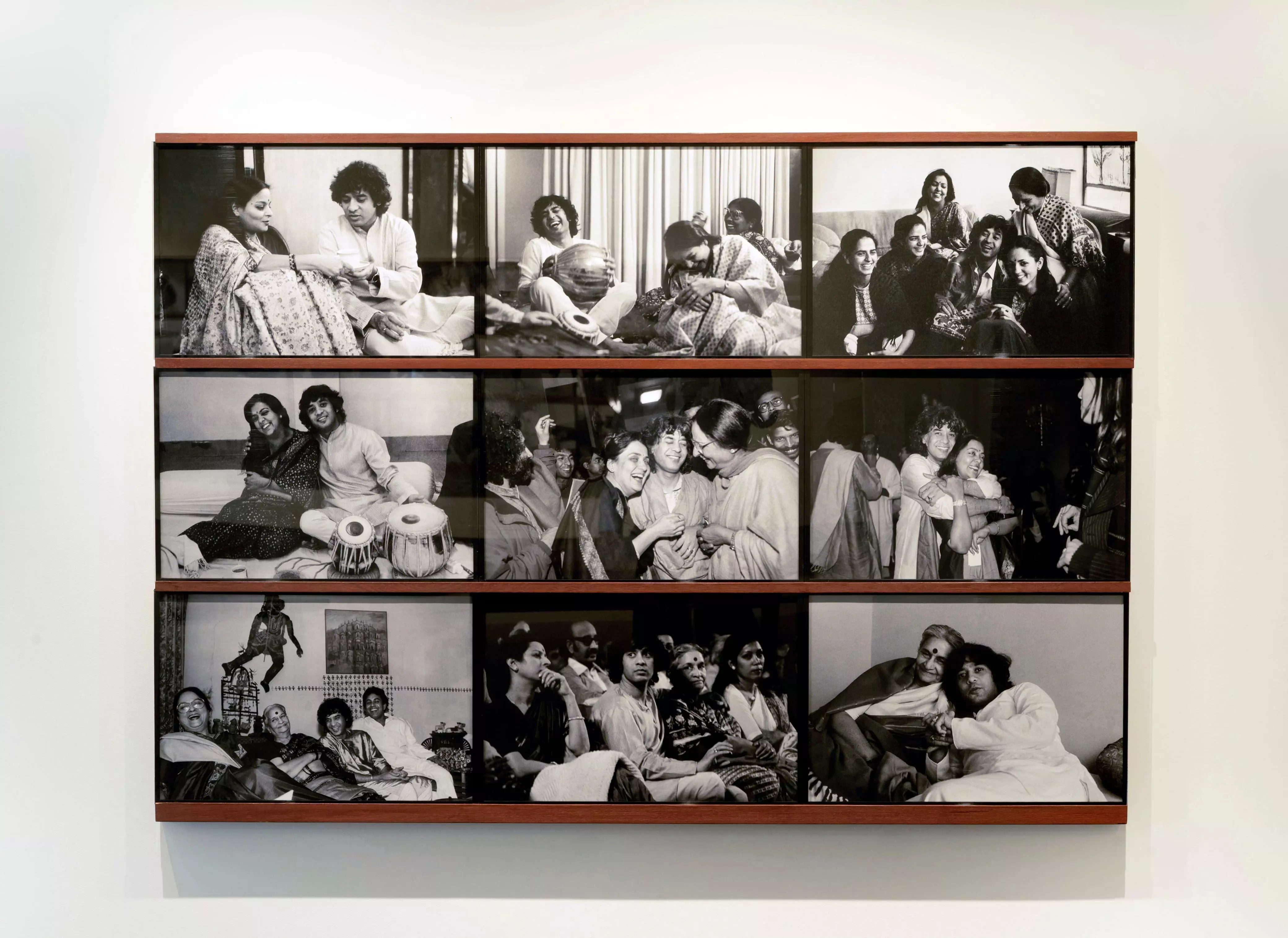
In a deeply personal conversation, photographer Dayanita Singh reflects on four decades of photographing Zakir Hussain—from casual, unguarded moments to an intimate museum shaped by rhythm, memory, and grief. The exhibition, Zakir Hussain — Learning to Learn, which is currently on at Dilip Piramal Art Gallery within Mumbai's NCPA, is both an ode to an ustad and a record of her own becoming as an artist.
You have photographed Zakir Hussain for over four decades—how has your way of seeing him changed over time?
I started photography by photographing Zakir. The first decade was a time of innocence, as I did not see myself as a photographer, and neither did the musicians we travelled with. There were no women in photography at that time, and people were not so conscious of being photographed. So the images have a very casual and tender quality—an ease, if you like. I had limited film, and a photo may have been made between hours of listening to music or to conversations between the maestros.
By the time we came into the ’90s, I was becoming a “photographer” and Zakir was becoming an ustad. He had an image, and it was not always easy to get past it. I had also internalised the idea of a “good photograph.” So the images became more Dayanita Singh images, especially once I switched to the Hasselblad and started to photograph empty spaces.
This exhibition is deeply personal—was there ever a moment you hesitated to make such intimate work public?
The hesitation was about how to start looking at the contact sheets, as they are a diary of the time I spent travelling with Zakir or being in Simla House. Once I got through that anxiety, I just worked. Day and night, I edited. I felt this is what Zakir would want me to do. “Just get on with it,” he would have said—and somehow, I did.
“Learning to Learn” suggests process over perfection—what did Zakir sahib teach you about remaining a lifelong student?
Zakir taught me to never stop learning, to never feel that I had mastered my medium, regardless of what people said—to know there was always more to do. He showed me what it is to commit to the life of an artist, to get to a place where riyaaz is in your breath.
How does this exhibition extend your idea of the museum as a living, evolving form?
Architecturally, the museum can be constantly rearranged, changing the space, and equally, the images can keep changing while we speak. But more than that, I think I will just keep adding images and ephemera to this museum. It is a complete archive of my work with Zakir, but also of my becoming a photographer. Sadly, I had thought I would photograph him all my life. That there will be no more photos of him is very strange for me. I think it is the same for all those whose lives he touched.
Discipline and repetition are central to both music and photography—where do these rhythms intersect in your practice?
It is in making this museum that I have realised how much rhythm has been part of how I edit and sequence, and even build my museums. It used to annoy me that other photographers were unable to work in this way. It is only now that I realise how deeply the concept of rhythm informs all that I do.
When viewers walk through this show, what feeling do you hope stays with them long after they leave?
Most of all, I feel the show brings them some solace—the feeling that they have spent time in his presence. From the far corner of the show, it feels as though Zakir is looking at you from every direction. I made the museum to deal with his loss. At the opening, I still thought he would somehow turn up, tablas in hand, but now I accept that this archive of him will have no new photos.
