Looking at Japanese Culture Through the Eyes of a Collector

As Cherish Vintage Finds brings its Japanese vintage collection to Hyderabad’s JOY— Japan Opportunities for Youth on October 11, co-founder Abhinav Vinayakh Shankarnarayanan talks about craftsmanship, cultural connections and why collecting objects from another country can deepen our understanding of our own traditions
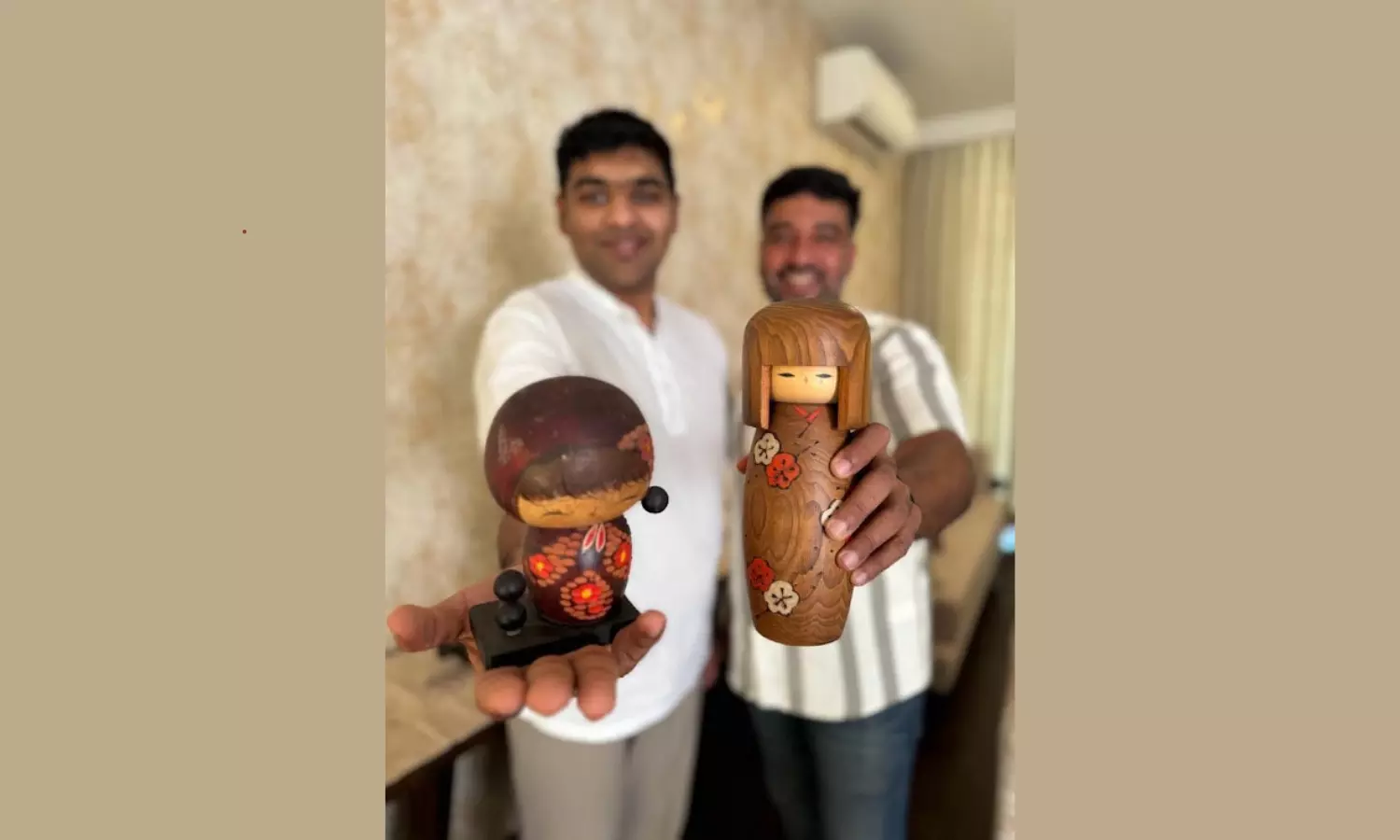
As Cherish Vintage Finds brings its Japanese vintage collection to Hyderabad for JOY - Japan Opportunities for Youth on October 11 at Cyber Gardens, Hitec City, co-founder Abhinav Vinayakh Shankarnarayanan is looking at Japanese culture through objects that also remind him of traditions closer to home. For him, the interest began with early exposure to old objects and grew through travel, collecting and curiosity about cultural similarities.
“I think my definition of beauty came from growing up in my grandparents’ homes,” says Abhinav. Both sides of his family travelled extensively, and he grew up around objects ranging from brassware and Burmese lacquerware to Ravi Varma prints.
He later travelled extensively during a decade and a half in the corporate world, as well as through his involvement in Ultimate Frisbee, which he plays and coaches at the highest level. Those travels gave him the opportunity to encounter different cultures and draw parallels with his own.
Japan, in particular, offered several such connections. Abhinav says the similarities become especially visible when looking at art and cultural practices. One example he often returns to is Hina Matsuri, Japan’s Doll Festival and its display of dolls for a limited period.
“The arrangement is so similar to our own culture of Navratri and Golu dolls. The steps are the same,” he says. The dolls are handmade, displayed for a short time and then carefully put away.
That emphasis on making things slowly, with patience and care, is another aspect of Japanese culture that drew him towards collecting. He says there is also a strong tradition of preserving these objects for the next generation.
Abhinav has travelled to Japan and met collectors and dealers across Southeast Asia, observing how they preserve and narrate the stories behind their collections. He believes those stories are relevant beyond their country of origin.
“I think that is a very important story to be told across the world, regardless of which culture you are from,” he says.
Cherish Vintage Finds, now in its third year, has built a Japanese vintage collection that includes Hina Matsuri dolls, Kokeshi dolls, Arita and Imari porcelain, Tokoname teapots, Yunomi teacups, vintage bowls and plates, handmade fans, Furoshiki wrapping cloths, Ikebana vases, kimonos, obi belts and other folk art and collectibles.
For Abhinav, however, the objects are not simply things to be placed behind glass. “These are all things that people could put in their showcases, but I would love for them to use them every day,” he says.
The Hina dolls are among the objects through which he tries to explain the craftsmanship involved in Japanese traditions. He points to the handmade construction, embroidered silk costumes, Gofun-finished faces made using crushed seashells and the glass eyes that give the dolls their distinctive appearance.
For him, understanding how an object is made adds another layer to its appeal.
“I think for somebody quickly passing by, yes, it catches the attention. But I think there is a lot of value in telling the story,” he says.
That approach also extends to the similarities he finds between Japanese objects and Indian traditions. He draws a connection between Kokeshi dolls and the handmade Kondapalli dolls in Andhra Pradesh, which is familiar across South India. He also sees a parallel between traditional Japanese fans and the handmade fans once commonly made from palm and coconut leaves in India.
“My grandmother used to sit in the courtyard and fan herself using that. I distinctly remember that. Japanese culture also has a very strong connection with that,” he says.
He finds another parallel in the use of flowers. “Just like we have our kolams, they have their flower arrangements (something like pookalams in Kerala). These are the parallels that I draw,” he says.
The collection also includes objects that may be less immediately associated with Japanese cultural traditions, including cast-iron ashtrays and other collectibles, Furoshiki wrapping cloths, Ikebana vases and traditional kimonos and obi belts. This year, Abhinav is also introducing small clutches made from vintage kimono silk.
He sees collecting as a way of opening conversations between cultures rather than restricting cultural appreciation to objects from one’s own country.
“I know there are several people who might think, why are they dealing with Japanese culture? You should be dealing only with Indian culture. I think there is a lot to learn from other cultures as well,” he says.
For him, art can provide a way to make that exchange more accessible. With JOY bringing together language, food, martial arts, education and other aspects of Japan, he sees art and collecting as another way to build a connection between the two countries.
“Having two cultures relate to each other through art is one of the really nice ways to bring people together,” he says. “Art is something that connects people beyond the language barrier. Sometimes even beyond the cultural barrier.”
This will be the second time Abhinav and his co-founder (Sundhar Sankar), is bringing the collection to Hyderabad. The response to his first appearance was strong, with the collection nearly selling out. He has also participated in Japan Habba (festival in Kannada) in Bengaluru and says the response there was similarly significant, with the collection selling out before the event ended.
For him, that response reflects an existing interest in Japanese culture among Indian audiences. The challenge is to keep finding ways for people to encounter it beyond familiar contemporary references and through objects that carry older traditions.
“I am just looking to find new ways to bring the collection home,” he signs off.
