British Writers Portrayed India as Disaster-prone Country

Nayar uses the term “imperial vulnerability” to describe how British writers framed India as inherently vulnerable while presenting colonial science and administration as the remedy. Yet those same records often revealed weaknesses within the empire itself.
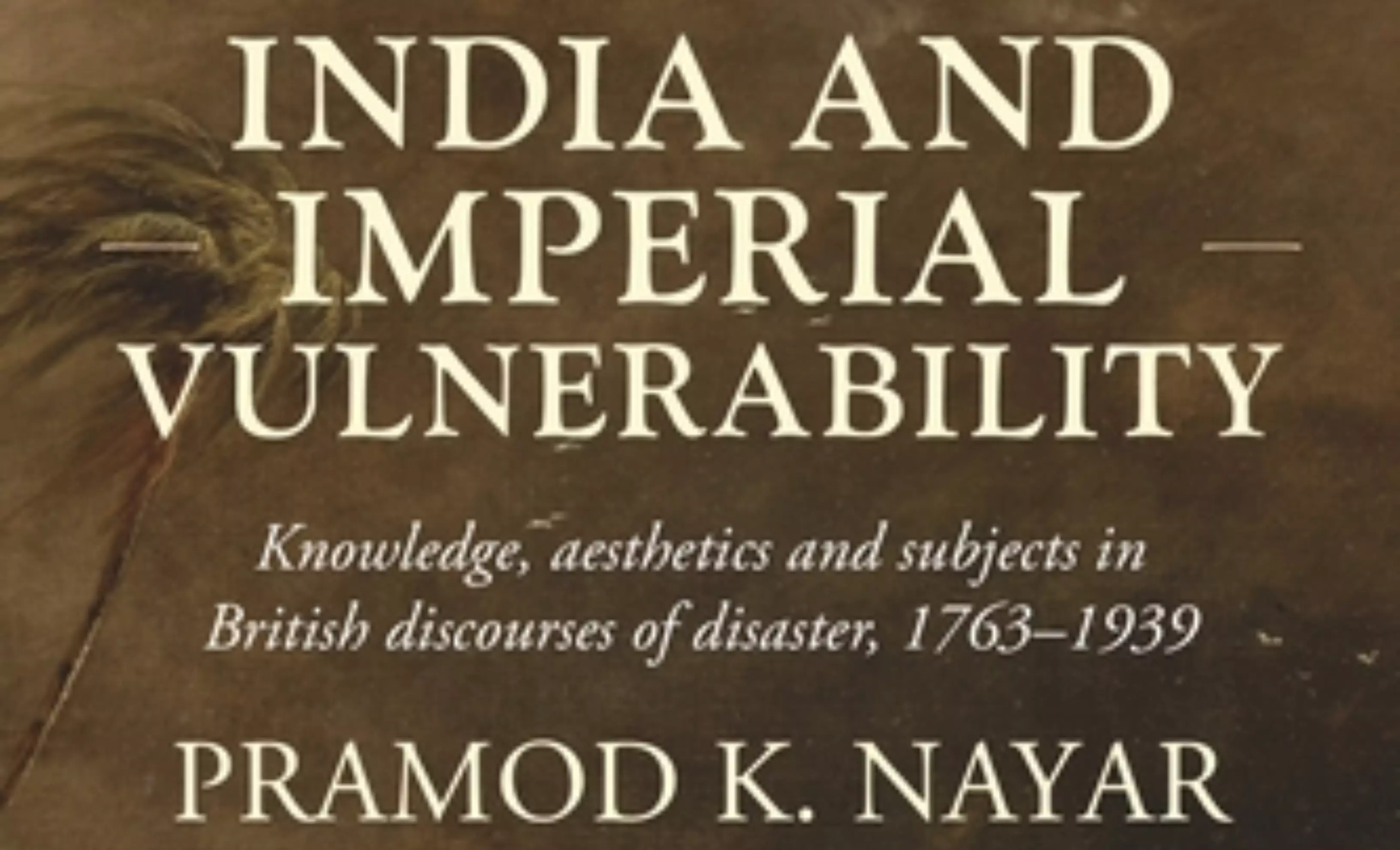
Hyderabad: British accounts of famines, cyclones and earthquakes did more than document natural calamities — they helped create enduring ideas about India, its people and its place in the world, according to a new book by University of Hyderabad professor Pramod K. Nayar.
In ‘India and Imperial Vulnerability: Knowledge, Aesthetics and Subjects in British Discourses of Disaster, 1763–1939’, Nayar studies nearly 200 years of colonial writings on disasters, ranging from famine reports and scientific records to travel narratives and eyewitness accounts.
Speaking to Deccan Chronicle, Nayar said the project grew out of more than two decades of research on British colonial writings. While famines and their controversial management were already well known, he found extensive material on cyclones, earthquakes, meteorology and colonial knowledge systems.
“Digging through the material, I found a vast amount of writings on cyclones, earthquakes and of course famines,” he said. “I found several interesting aspects of the disaster writings, notably the construction of colonial networks of knowledge, the emerging science of meteorology and the colonial interest in seismology.”
The book argues that colonial writings repeatedly portrayed India as a place of constant disaster and its people as dependent on Western scientific understanding. “The writings constructed the people and place as unruly but knowable, superstition-ridden, prone to disaster, awaiting the Englishman’s intervention,” he said.
Nayar uses the term “imperial vulnerability” to describe how British writers framed India as inherently vulnerable while presenting colonial science and administration as the remedy. Yet those same records often revealed weaknesses within the empire itself.
“Writings by other British pointed to the disasters’ origins in their own policies,” he said, citing famines linked to failures in grain distribution and poorly planned relief efforts despite warnings of food shortages.
The book also examines how disasters became political through the language used to describe them. “A disaster is defined in a particular language,” Nayar said. “When famine victims were described as deserving victims or undeserving victims, or lazy victims, these categorisations determined how much relief they were entitled to.
He points to colonial famine codes that allowed some higher caste and higher class groups to receive relief at home rather than through public distribution systems. “These are political and governance decisions, and they hinged on the language used to describe the victims and their state of being,” he said.
Nayar argues that scientific reports, newspapers, memoirs and travel writing shaped public opinion in Britain by presenting India as “a place of mysterious disasters, awaiting interpretation and of course aid”.
He sees echoes of those narratives today. “The continued narrative of the non-modern Global South, the supposed lack of scientific discipline and rigour, and the humanitarian initiatives of the Global North are legacies of the colonial period,” he said.
For readers, Nayar hopes the book offers a broader lesson about the power of historical storytelling. “Events cannot be understood outside the narrative about the events,” he said. “It is crucial to understand how history gets written, interpreted and acted on.”
