Muslim women seem to be doubly marginalised, both by religious identity and by patriarchy, and even the ‘dynasts’ among them have stepped in only due to the death, absence or imprisonment of the male family member
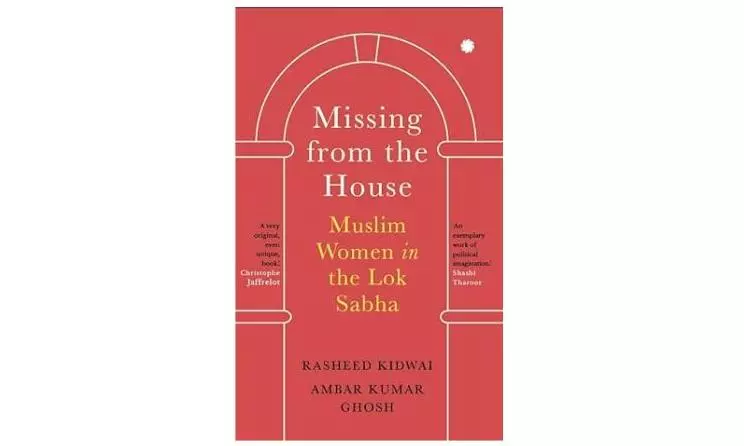
In 2023, the much-debated Women’s Reservation Bill (this time pompously named ‘Narishakti Vandan Adhiniyam’) was finally passed in both Lok Sabha and Rajya Sabha, though its implementation was put on hold for the foreseeable future. Two years later comes Missing from the House: Muslim Women in the Lok Sabha (pub: Juggernaut), a shocker that zooms even closer in on the issue of under-representation. Co-authored by Rasheed Kidwai and Ambar Kumar Ghosh, the journalist-political scientist duo, it unravels some disturbing facts, such as: Out of 7,500 MPs elected since the first election in 1951-52, only 18 (0.6 per cent) happened to be Muslim women, among whom 13 may have failed to make it had they not hailed from political dynasties.
Muslim women seem to be doubly marginalised, both by religious identity and by patriarchy, and even the ‘dynasts’ among them have stepped in only due to the death, absence or imprisonment of the male family member. Hence, they are readily reduced to the “bahin, beti, bahu” image. Also, of the 18 Lok Sabhas constituted till 2025, five did not have a single Muslim woman. While most of these parliamentarians come from Uttar Pradesh, West Bengal, Assam, even Madhya Pradesh and Gujarat, most of the states and UTs never sent a single Muslim woman to the Lower House. These included the five southern states, otherwise known for their superior literacy rates. The number of Muslim women elected to Parliament in one tenure never crossed the figure of four (Iqra Hassan is the sole Muslim woman in the present LS.)
Next, as case studies and statistics criss-cross with story-telling, we delve into the fascinating lives of the 18 Muslim women who did make it — ranging from housewives to Gandhian activists, ex-queen to ex-cricketer, former first lady to actress and doctor to educationist — including early pioneers like Maimoona Sultan and Mofida Ahmad as well as recent trailblazers like Mausam Benazir Noor and Iqra Hassan, and dynasts like Begum Noor, Abida Ahmed and Mehbooba Mufti as well as grassroots warriors like Zohraben Akbar Bhai Chavda and Mamtaz Sanghamita. As for Kashmir, both Akbar Jehan Abdullah, representing National Conference of Kashmir, and Mehbooba Mufti, the face of her party’s arch-rival PDP, have carved their own spaces. However, few women have served as long-term MPs or become ministers. Furthermore, the book evaluates whether they influenced policy, legislation and national discourse, or acted as mere upholders of patriarchal/familial/partisan agenda. The answer varies from person to person.
The book is ambiguous about its stand on feminist politics and endeavours, to cite the “not-feminist-but-humanist” views of certain eminent female politicians. It sometimes borders on eulogising them claiming none of these women faced charges of corruption, while Nusrat Jahan was actually probed by ED and most of them were scarcely visible in their constituencies. Nevertheless, boasting a sharply written foreword by Shashi Tharoor, the book tears apart the smokescreen of equal representation in Parliament promised by our Constitution. The BJP often poses to be the self-appointed rescuer of the Muslim women (penalising triple talaq and polygamy), but it should rather ensure that they are well-represented in Parliament. Let the subaltern voices speak for themselves is this writer’s suggestion.
Missing from the House: Muslim Women in the Lok Sabha
By Rasheed Kidwai and Ambar Kumar Ghosh
Juggernaut
pp. 308; Rs 599

