Book Review | What Manipur Riots Could Not Destroy

16 May 2026 12:34 PM IST16 May 2026 12:34 PM IST
What is even more puzzling is the Indian government's apparent inability to douse the ethnic fires and then to bring about a just resolution of the political problem at the root of the violence
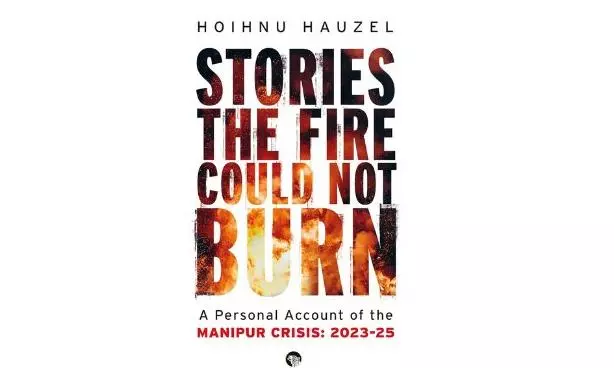
Cover image of Stories the Fire Could Not Burn
For many Indians the horrific ethnic violence that erupted in Manipur in 2023 seems too remote to comprehend or empathise with. Yet, it is one of the most tragic and distressing incidents in India's recent history, and one that continues to simmer in some form or the other. The riots led to hundreds of deaths, widespread vandalism and the displacement of an estimated 60,000 people from their homes. As far as the victims of the violence are concerned, the problem remains unresolved. They have neither received justice nor can they return to their former homes.
Hoihnu Hauzel, a New Delhi based journalist, whose family lost everything in the 2023 riots, has broken the silence over the true extent of the horrors suffered by the Kuki-Mizo community that bore the brunt of the attacks. Her book Stories that Fire Could Not Burn is about lives broken by the riots, which include anecdotes about her family and innumerable others from her community.
“I will never forget the night of 3 May 2023,” she writes, “The night my parents, along with countless others, fled our home in Imphal. Imphal, the capital of Manipur, is predominantly inhabited by the majority Meitei community. The Kuki-Zomi/Mizo communities with origins and enclaves in the city dating back several decades, have over 25 colonies scattered in and around Imphal. In one night, everything changed. Those colonies were thrown into chaos, and their residents fled in all directions, ultimately leaving Imphal.”
What is even more puzzling is the Indian government's apparent inability to douse the ethnic fires and then to bring about a just resolution of the political problem at the root of the violence. The nation seemingly had turned its head away.
This despite the fact that the country’s Opposition have been demanding answers since the Monsoon session of 2023. “An issue that might otherwise have lingered on the margins was thrust firmly into the heart of Parliamentary debate,” the author writes. “Opposition parties, rallying under the INDIA bloc, boycotted the valedictory sittings of both Houses to protest the persistent refusal to permit a full-fledged discussion on the Manipur crisis in the Rajya Sabha.”
Subsequent media investigations and stories of rape, killings and mayhem trickling out of Manipur, made the world aware of the terrible events that has transpired. The book is an intensely sad narrative not just about the Manipur tragedy but also about the pain of losing one’s home. This loss is as great as the loss of livelihood, dignity or honour. It cuts at the roots of one’s identity and sets one adrift in the utter loneliness of an undefined universe.
As the author observes: “Words often betray us when we need them most. They falter in the face of grief, lose their strength when asked to hold pain, and remain powerless before the scale of violence some communities are made to endure. No sentence, no matter how carefully crafted, can truly carry the weight of a people’s suffering. They cannot resurrect the dead, nor can they console the displaced or erase the nightmares of the violated.”
Stories the Fire Could Not Burn
By Hoihnu Hauzel
Speaking Tiger
pp. 231; Rs 499
( Source : Deccan Chronicle )

Next Story